


King Charles III’s visit to Washington arrived wrapped in ceremony but edged with quiet tension.
The British monarch stood before Congress, took part in a formal state dinner, and delivered a gesture that seemed carefully chosen for its symbolism: the presentation of the bell from the HMS Trump, a patrol vessel launched in 1944 and deployed in the Pacific during World War II. It was a gift rooted in shared military history, one that leaned on the familiar language of alliance without directly addressing the more recent points of friction.
🚨 LMAO! The White House is ENRAGING Democrats nationwide with this banger
“TWO KINGS 👑 “ 😂🇬🇧🇺🇸 pic.twitter.com/OY03iYWsFJ
— Eric Daugherty (@EricLDaugh) April 28, 2026
Those points were not hard to find. Disagreements over strategic priorities, including the handling of the Strait of Hormuz, have lingered beneath the surface of US-UK relations. British reluctance to move in lockstep with Washington drew quiet frustration, particularly among those who viewed the region as requiring a more assertive, coordinated response. By the time London signaled greater involvement, critics argued the timing made the effort look reactive rather than collaborative.
Against that backdrop, the optics of the visit carried added weight. Every handshake, every shared appearance, and every carefully worded remark served a dual purpose: honoring tradition while attempting to smooth over the recent strain.
https://t.co/xychAG0MFH pic.twitter.com/Dt3A7bqoTD
— Congressman Shri Thanedar (@RepShriThanedar) April 28, 2026
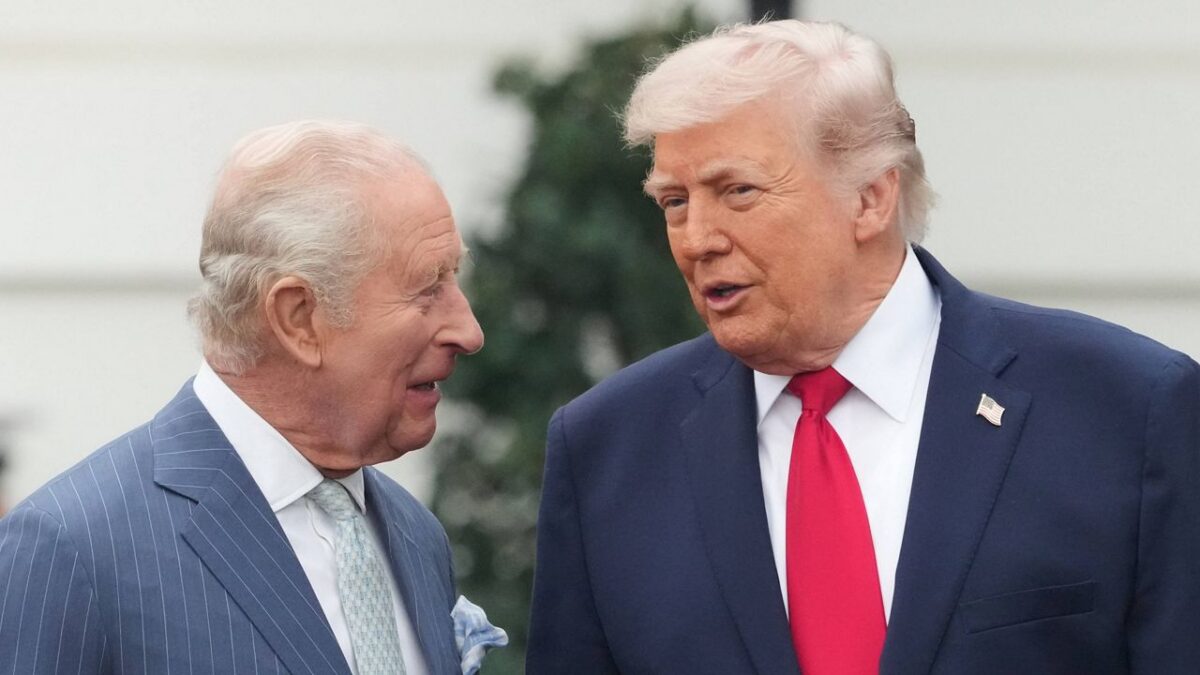
The White House leaned into that balancing act with a moment that quickly took on a life of its own. A photograph of President Trump alongside King Charles III was posted with the caption “two kings,” a phrase that was as deliberate as it was provocative.
The reaction was immediate and divided. Supporters treated it as a sharp piece of political humor, a knowing jab that played into ongoing cultural and political debates. Critics saw it as tone-deaf or inflammatory, particularly given the historical sensitivities surrounding monarchy and American identity.
This is America, we don’t do Kings. https://t.co/BvUrRKsR3e
— Rep. Shontel Brown (@RepShontelBrown) April 29, 2026
The image itself was unremarkable in composition—two figures standing side by side—but the caption reframed it into something more pointed, turning a standard diplomatic photo into a flashpoint.

— Tony Kinnett (@TheTonus) April 28, 2026
In the end, the visit functioned on multiple levels at once. It reaffirmed a longstanding alliance, attempted to patch over recent disagreements, and, in at least one instance, stepped directly into the realm of modern political theater.