

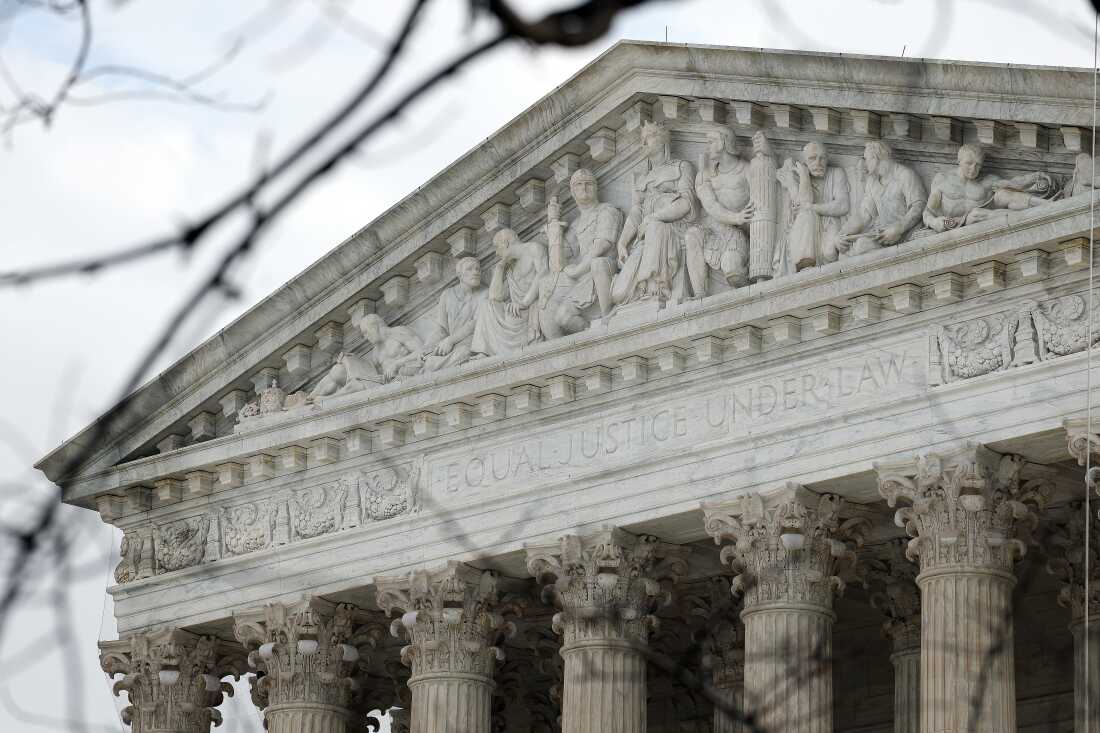

The Supreme Court’s decision in Louisiana v. Callais lands with the weight of both legal precision and political consequence, cutting directly into a years-long dispute over how far states must go—or are allowed to go—when race intersects with redistricting.
Writing for the 6–3 majority, Justice Samuel Alito laid out a firm boundary: Louisiana’s creation of a second majority-Black congressional district was not required under Section 2 of the Voting Rights Act, and without that requirement, the state lacked a sufficient justification to make race a central factor in drawing its map.
The ruling effectively dismantles SB8, the 2024 map that stretched District 6 in an elongated path from Shreveport to Baton Rouge, linking disparate regions in a configuration critics had long described as engineered.
Alito’s reasoning hinges on a detailed rejection of the earlier lower court finding in Robinson v. Ardoin. That case had concluded Louisiana’s prior map likely diluted Black voting strength, prompting lawmakers to redraw district lines. But the Supreme Court found that the plaintiffs in Robinson did not meet the legal thresholds required under the Court’s updated framework for Section 2 claims.
According to the majority, their proposed maps leaned too heavily on partisan outcomes, potentially reshaping districts in ways that would disadvantage incumbents like Rep. Julia Letlow by overwhelming them with voters from the opposing party.
The opinion also takes aim at the analytical tools used to justify the second district. Alito noted that the plaintiffs’ racial polarization analysis failed to adequately separate race from party affiliation, a distinction the Court has increasingly emphasized.
He further criticized the reliance on Louisiana’s historical record of discrimination, arguing that Section 2 is not meant to serve as a retroactive corrective for past injustices but as a safeguard against present-day violations. Citing Shelby County v. Holder, he underscored that the law’s purpose is forward-looking, not punitive.

In dissent, Justice Elena Kagan warned that the majority’s approach fundamentally alters how Section 2 operates. Joined by Justices Sonia Sotomayor and Ketanji Brown Jackson, she argued that the decision revives an intent-based standard that Congress explicitly rejected decades ago, potentially making it far more difficult to challenge maps that dilute minority voting power without clear evidence of discriminatory intent.
The ruling leaves Louisiana with a narrowed path forward. Without the federal requirement to maintain two majority-Black districts, the state may revert to a map with only one such district, a shift that could reshape its congressional delegation.