

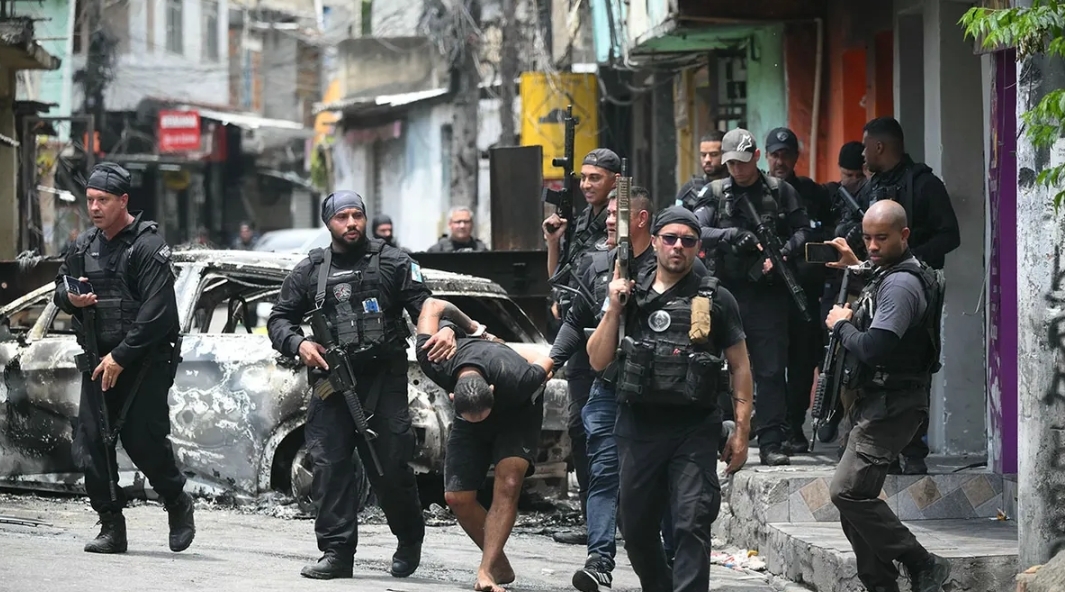

Brazil is reeling after the deadliest police operation in its history left at least 132 people dead in Rio de Janeiro, just one week before the city is set to host high-profile global climate events. The sprawling raid, which state police say was meticulously planned over two months, targeted the Comando Vermelho — one of the country's most powerful and violent drug factions.
The operation, launched without coordination or even notification to the federal government, was described by officials as necessary but tragically bloody. As the numbers mount — 132 dead, 113 arrested, and 118 firearms seized — the scope and tactics of the raid are drawing fierce scrutiny from human rights organizations, civil society groups, and international observers.
Residents of the Penha neighborhood, one of the areas hit hardest by the raid, awoke to scenes of horror. Dozens of bodies were recovered from the nearby forest and lined up in the street — over 70 corpses placed in a chilling row, a visceral symbol of what had unfolded. While the police insisted those killed were armed criminals, firing from the forest, locals and rights groups are demanding transparency and accountability.
Victor Santos, head of public security for Rio state, acknowledged the high death toll, calling it “expected but not desired.” Yet Governor Claudio Castro was unequivocal in defending the operation, asserting that the casualties were “criminals” and that the true victims were the four police officers killed in the operation. His comments have further inflamed a debate over state violence in Brazil’s marginalized communities — particularly in the favelas, where the brunt of such operations is often borne.
This is not a new phenomenon in Rio, but it is one of unprecedented scale. In 2021, a raid in Jacarezinho left 28 dead — at the time, the deadliest such operation in the city. The latest numbers have more than quadrupled that grim record. For comparison, the infamous 1992 Carandiru prison massacre in São Paulo, long considered one of Brazil’s darkest moments, saw 111 inmates killed during a riot.
Perhaps most striking is the context: these killings occurred just days before Rio is set to host the C40 summit of global mayors, tied to the broader COP30 climate agenda, with dignitaries such as Prince William expected to attend. While state officials deny any connection between the timing of the raids and the international attention soon to descend on Rio, the optics are stark — a massive state show of force, unprecedented in recent memory, carried out ahead of a moment designed to project stability, progress, and leadership on the global stage.
President Lula da Silva, blindsided by the operation, reportedly met with cabinet members and the vice president in Brasília after learning of the events. His Justice Minister, Ricardo Lewandowski, was candid in expressing concern and is now considering sending more federal security personnel to the city — not necessarily to aid in the crackdown, but perhaps to regain some measure of oversight.

Meanwhile, international observers are not staying quiet. The UN Human Rights Office issued a statement condemning the violence and calling for an urgent investigation, noting a disturbing pattern of highly lethal police actions in Brazil's poorest communities. The numbers speak for themselves, but the broader implications — about justice, accountability, and state power — remain unresolved.