

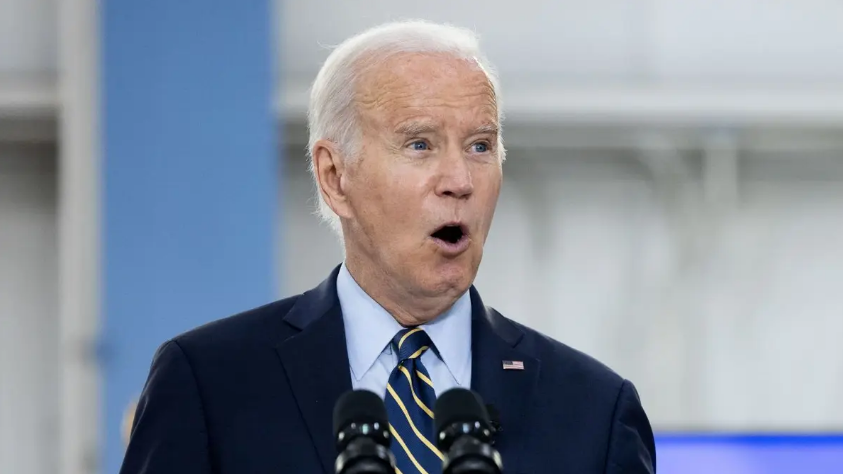

The collapse of President Joe Biden’s inner-circle narrative has unfolded in classic Washington fashion: protect the principal at all costs—until it’s politically safe to say what everyone already knew.
In newly released testimony from the House Oversight and Government Reform Committee, more than a dozen former aides and advisors painted a starkly different picture of Biden’s presidency than the public ever saw. The Committee’s investigation, dubbed the inquiry into Biden’s “autopen presidency,” sought to uncover just how often critical decisions—or even the simple act of signing legislation—were done without the president’s direct involvement or awareness.
What they uncovered wasn’t just a matter of delegation. It was a portrait of a presidency increasingly managed from the outside in, where the president’s top advisors were more gatekeepers than collaborators, and where reality was sanitized for public consumption.
Chief of Staff Jeff Zients, who once gushed on national television about Biden's “energy” and reelection viability, told a very different story behind closed doors. He recounted Biden’s mounting difficulty recalling names—even of those he saw daily—and admitted to modifying the president’s physical environment to reduce fall risks by “reducing the number of steps” he had to take. These aren’t the kinds of adjustments made for a vigorous commander-in-chief—they’re the kind of quiet accommodations usually made in assisted living.
Anita Dunn, a senior communications strategist who publicly praised Biden’s post-debate resilience, admitted to the committee that the president’s voice had weakened and that his childhood stutter—long absent from public life—had returned under stress. The very same debate she downplayed on MSNBC was, privately, a source of grave concern.
Perhaps the most revealing moment came from former Chief of Staff Ron Klain, who recalled the exact moment during Biden’s disastrous CNN debate when he realized the reelection campaign was in peril. After Biden stumbled through a rambling and incoherent response, he inexplicably concluded with “We beat Medicare.” Klain’s reaction, reportedly unfiltered and immediate, was: “We’re f***ed.”
Yet just weeks earlier, Klain had assured the public that Biden was “great in meetings.” The dissonance is no longer surprising—it’s expected.

Other insiders were no more candid in public. Mike Donilon, a longtime Biden strategist, admitted during his testimony that efforts had been made to restrict Biden’s travel schedule and physical demands. He noted that flying from Europe to Los Angeles was “a lot to ask” of the president. That reality, however, didn’t stop him from appearing at Harvard months later to tout Biden as “the voice in the room” at global summits.
Then there’s Karine Jean-Pierre, the former press secretary who appears to be standing on an island of unwavering loyalty. In both her book and committee testimony, she insisted there was never a moment that gave her pause about Biden’s cognitive fitness. When pressed for clarity, she deferred to a memo by White House physician Kevin O’Connor—who, when subpoenaed, repeatedly invoked the Fifth Amendment.
The implications are not simply political—they are structural. The president of the United States is not a ceremonial figurehead. He is the constitutional center of the executive branch. If decisions were being made without his understanding—or worse, in his absence—then the American people were sold a presidency in name only.