


The migration patterns reshaping the United States over the past decade have moved from anecdotal observation to measurable trend, and the implications are becoming increasingly difficult for state leaders to ignore. States like California and New York, long considered economic powerhouses, are facing sustained outflows of both residents and businesses. Meanwhile, states such as Texas and Florida continue to absorb that movement, benefiting from comparatively lower costs of living, lighter tax burdens, and regulatory environments often perceived as more business-friendly.
Kathy Hochul making a weak plea for wealthy people who have left New York (to red states like Florida) to come back to pay their high taxes to fund failing (unaccountable) social programs:
“I need people who are high net worth to support the generous social programs we have in… pic.twitter.com/7quhsFyWyn
— Matt Whitlock (@MattWhitlock) March 18, 2026
This backdrop sets the stage for a growing political and economic dispute, one that is now playing out in public rhetoric. California Governor Gavin Newsom’s recent attempt to reframe his state’s tax structure as competitive with red-state rivals represents a notable shift in messaging. The claim, which has drawn sharp rebuttals, highlights the tension between perception and policy reality. Critics, including Florida Governor Ron DeSantis, point to California’s consistently high rankings in income, sales, and gas taxes as evidence that such assertions are disconnected from widely available data.
New York Gov. Kathy Hochul admits that New York's tax cattle were "captives" stuck in Manhattan, and that remote work enabled thousands of them to leave. Now the state is going broke and she's begging them to return (she also begs "patriotic millionaires" to "cut me a check,"… https://t.co/oy2bVhLXn4
— Blake Neff (@BlakeSNeff) March 18, 2026
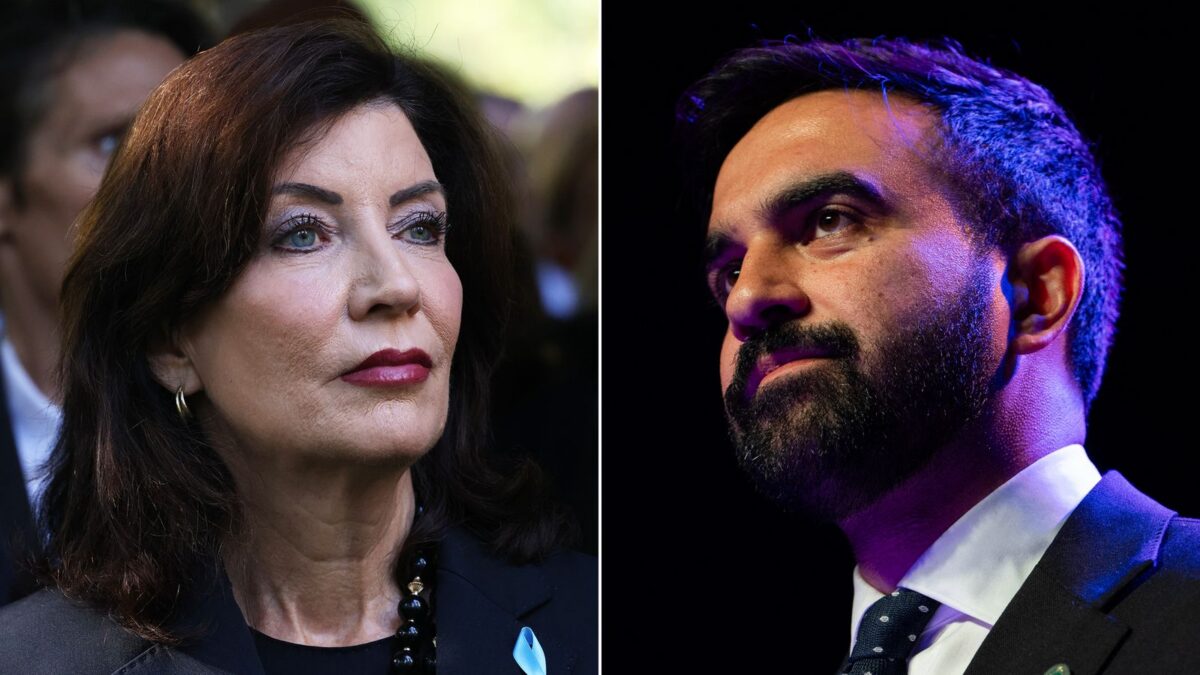
New York presents a parallel, if not more acute, case. Ranking near the bottom of U-Haul’s migration reports for consecutive years signals a persistent pattern rather than a temporary fluctuation. Governor Kathy Hochul’s recent remarks underscore a recognition of the problem, particularly her emphasis on the erosion of the state’s tax base. Her appeal to high-net-worth individuals—both those who remain and those who have relocated—reveals a reliance on a narrow segment of taxpayers to sustain expansive public programs.
However, the language used in making that appeal has drawn scrutiny. Referring to workers as “captives” of the state prior to the rise of remote work introduces a stark characterization of the relationship between taxpayers and government. It also reflects a broader shift brought on by technological change, where geographic ties to employment have weakened, giving individuals greater flexibility to relocate based on economic preference.
So many New Yorkers have fled South to Florida that New York Governor Kathy Hochul has to now host fundraisers in Palm Beach. pic.twitter.com/uaGojFYMFV
— Reza Chowdhury (@RezaC1) January 4, 2024
What emerges from this dynamic is a fundamental competition between states, one defined not only by tax rates but by broader economic conditions, quality of life considerations, and governance philosophies. Relocation is rarely impulsive; it involves significant financial, logistical, and emotional investment. The decision to leave is often the culmination of sustained dissatisfaction rather than a reaction to a single policy.