

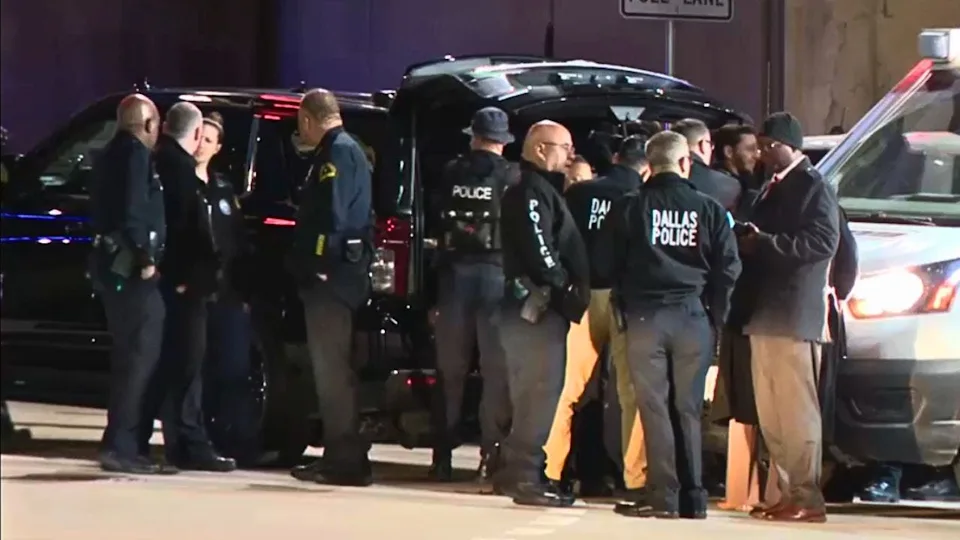

The release of body camera footage from the March 11 SWAT standoff in Dallas has added a dramatic and deeply revealing layer to an already complex case—one that blends deception, institutional vulnerability, and fatal confrontation. At the center is Diamon Maziarre Robinson, also known as “Mike King,” a man whose carefully constructed façade ultimately collapsed under the weight of his own operations.
According to Dallas Police, Robinson was not merely skirting the edges of legitimacy—he was operating entirely outside of it. Authorities say he impersonated a federal agent, fabricated credentials, and built a fraudulent security business that, remarkably, managed to contract real law enforcement officers for off-duty assignments. The scope of the deception is striking. Robinson allegedly drove a replica undercover vehicle outfitted with stolen federal license plates, wore convincing uniforms, and presented identification tied to agencies that, investigators confirmed, do not exist.
BREAKING🚨: Dallas Police have released bodycam footage of the fatal shooting of Jasmine Crockett’s longtime security guard in a Children’s Hospital parking garage.
The man, identified as Diamon Robinson (aka Mike King), was shot and killed by officers late Wednesday night after… pic.twitter.com/UH0aaE4rgD
— Officer Lew (@officer_Lew) March 16, 2026
The unraveling began in late February when Irving Police flagged a black SUV bearing stolen government plates. That detail triggered recognition from a Dallas officer who had encountered the vehicle during an off-duty assignment—an encounter that, in hindsight, underscores how deeply Robinson had embedded himself into legitimate channels.
Court records paint a longer timeline. Dating back to at least 2009, Robinson had accumulated arrests tied to theft, probation violations, and tampering with government records. At the time of the standoff, he was also wanted on charges including impersonating a police officer and theft-related offenses. When SWAT officers moved in to execute the warrant, the situation escalated quickly. Police say Robinson brandished a firearm—later identified as stolen—prompting officers to open fire.
The aftermath has shifted attention beyond Robinson’s actions to the systems that allowed him proximity to sensitive roles, including reported work connected to Congresswoman Jasmine Crockett’s security arrangements. Crockett’s office has stated that all required protocols were followed and that the vendor in question had been approved through existing channels, also noting that the company had worked with other entities and alongside law enforcement.
As a former public defender, I’ve always believed people are more than the worst thing they’ve ever done. I believe in redemption. The man we knew showed up with respect, care, and commitment to protecting others.
We’re still learning the full story, but today we mourn a life… pic.twitter.com/AmKWU4ider
— Jasmine Crockett (@JasmineForUS) March 16, 2026
Her statement frames the incident as a systemic failure—an example of how gaps in vetting processes can be exploited. That explanation, however, raises further questions rather than resolving them. How a fabricated identity, supported by non-existent agencies and a documented criminal history, navigated layers of approval tied to security for a federal office is likely to become a central focus of ongoing investigations.
Law enforcement officials have already emphasized the scale of the operation. Eleven firearms were recovered, including the weapon Robinson held during the standoff. The combination of impersonation, access, and weaponry presents a scenario that extends well beyond routine fraud.
