

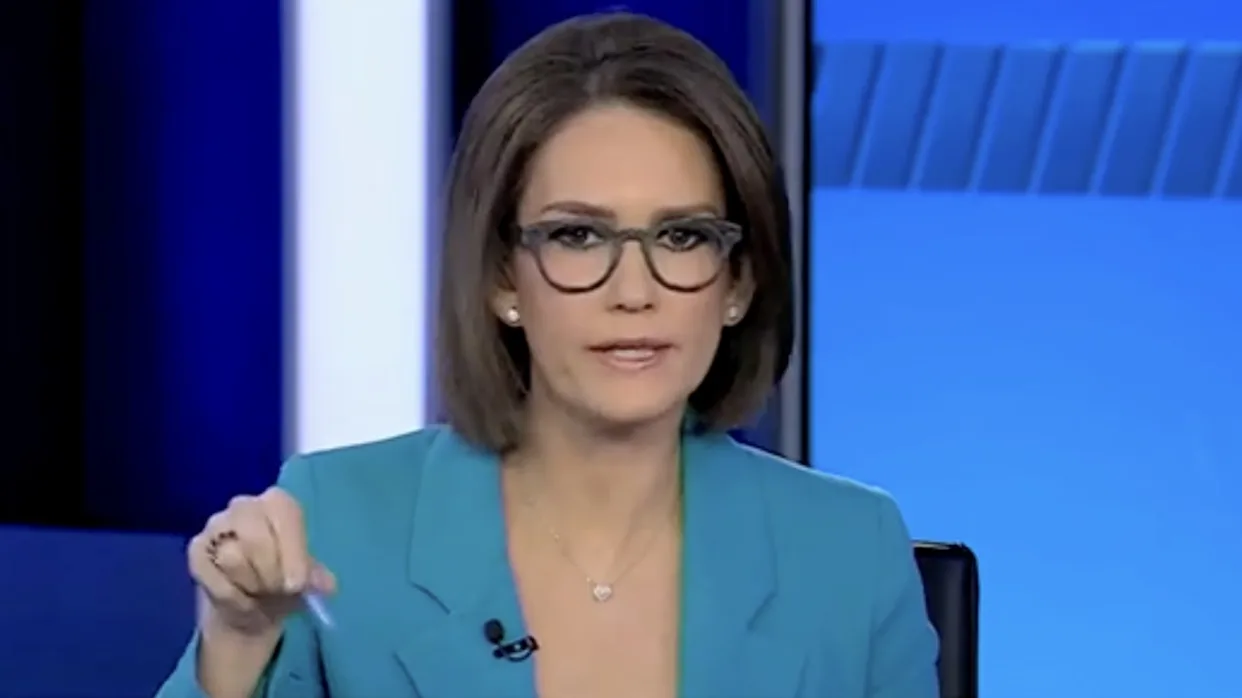

Some arguments don’t collapse under scrutiny—they unravel almost immediately. That’s the tension at the heart of Jessica Tarlov’s latest remarks on the SAVE Act, a proposal that has already cleared a key procedural step and continues to gain measurable public support.
The broader debate over voter identification laws is not new, but the framing of opposition to this bill has once again exposed a familiar pattern: sweeping claims that struggle to withstand even basic factual pressure.
Tarlov, a consistent liberal voice and co-host on The Five, has built a reputation as a capable counterweight in a panel often dominated by conservative perspectives. At times, she delivers sharp, well-structured arguments that force meaningful engagement. But in this instance, her critique of the SAVE Act leaned heavily on assertions that critics argue are both exaggerated and internally inconsistent.
Oh Jessica just stop already 🤦♀️ pic.twitter.com/GJJTDQavW4
— Karli Bonne’ 🇺🇸 (@KarluskaP) March 17, 2026
Central to her argument is the claim that voter ID requirements—and by extension, the SAVE Act—would disenfranchise large groups of Americans, including women, adoptees, and others who may face bureaucratic hurdles in obtaining identification.
This line of reasoning echoes a broader narrative frequently deployed in opposition to voter ID laws: that significant portions of the population lack access to basic identification and are therefore at risk of exclusion from the electoral process.
Yet this claim runs into a notable contradiction. Public opinion polling, including data from institutions like Harvard, has repeatedly shown strong bipartisan support for voter ID requirements, with approval numbers often exceeding 70 percent. That support also extends across demographic lines, including among minority voters—undermining the assertion that such laws are widely perceived as discriminatory or suppressive.
The counterargument, voiced sharply by Tarlov’s co-hosts Greg Gutfeld and Dana Perino, centers on practicality. Identification is required for a wide range of everyday activities in modern life, from boarding flights to opening bank accounts. The suggestion that millions of Americans are fundamentally unable to obtain ID raises questions not just about policy, but about the assumptions underlying that claim.

As the SAVE Act continues to move forward, debates like this will likely intensify. What remains clear is that the issue is no longer confined to abstract legal theory—it is now a political flashpoint shaped as much by rhetoric and perception as by policy details.