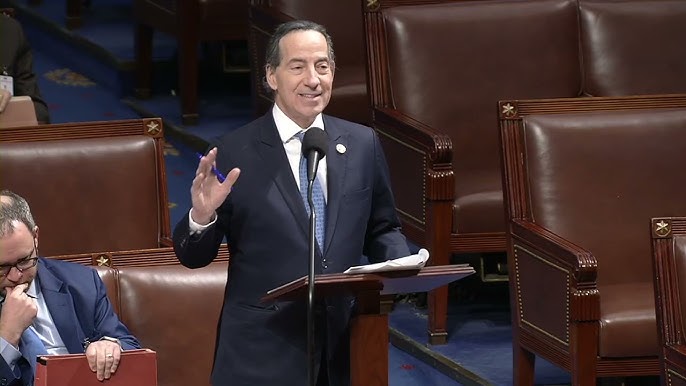

The exchange between Rep. Jamie Raskin and Rep. Jim Jordan offers a revealing snapshot of a broader trend in modern political discourse: the attempt to reinterpret historical figures through the lens of contemporary ideological frameworks. It is a method that often generates more confusion than clarity, particularly when applied without regard for historical context.
Raskin: "Thomas Paine was an undocumented immigrant."
Jordan: "How was he an illegal immigrant? He was born in the UK and came to America, then a British colony."
Raskin: "I didn't say he was an illegal immigrant. He was an undocumented immigrant." pic.twitter.com/3H6fDV02rf
— Greg Price (@greg_price11) March 18, 2026
Raskin’s assertion that figures like Thomas Paine and Thomas Jefferson could be described as “undocumented” reflects this tendency. While perhaps intended as a rhetorical device, the claim quickly unraveled under scrutiny. As Jordan pointed out, Paine was born in England and later moved to the American colonies—territory that, at the time, was part of the British Empire.
The concept of immigration law as it exists today simply did not apply in the 18th century. Attempting to retrofit modern legal terminology onto that period ignores the fundamental realities of how borders, citizenship, and national identity were understood at the time.
The subsequent clarification—shifting from “illegal” to “undocumented”—did little to resolve the issue. In modern usage, the distinction carries political and cultural weight, but when projected backward onto a pre-nation-state context, it becomes largely meaningless. The colonies were not governed by immigration systems comparable to those of the present day, making such labels anachronistic at best.
LOST HIS MIND — Jamie Raskin is now
claiming Thomas Paine and Thomas Jefferson were
undocumented immigrants. 🤦♂️ pic.twitter.com/e7nDr6QiRZ— Townhall.com (@townhallcom) March 18, 2026
This exchange highlights a recurring pitfall: the urge to filter history through present-day moral and political language. While reexamining the past is a valuable and necessary exercise, it requires careful attention to context.
Historical figures operated within systems, norms, and legal frameworks that differ dramatically from those of today. Ignoring those differences risks distorting the very history being discussed.
Moreover, debates like this often drift away from substantive analysis and toward semantic disputes. The focus shifts from understanding historical realities to scoring rhetorical points, with language becoming a tool for framing rather than clarifying. In the process, the discussion can lose its grounding in fact altogether.