

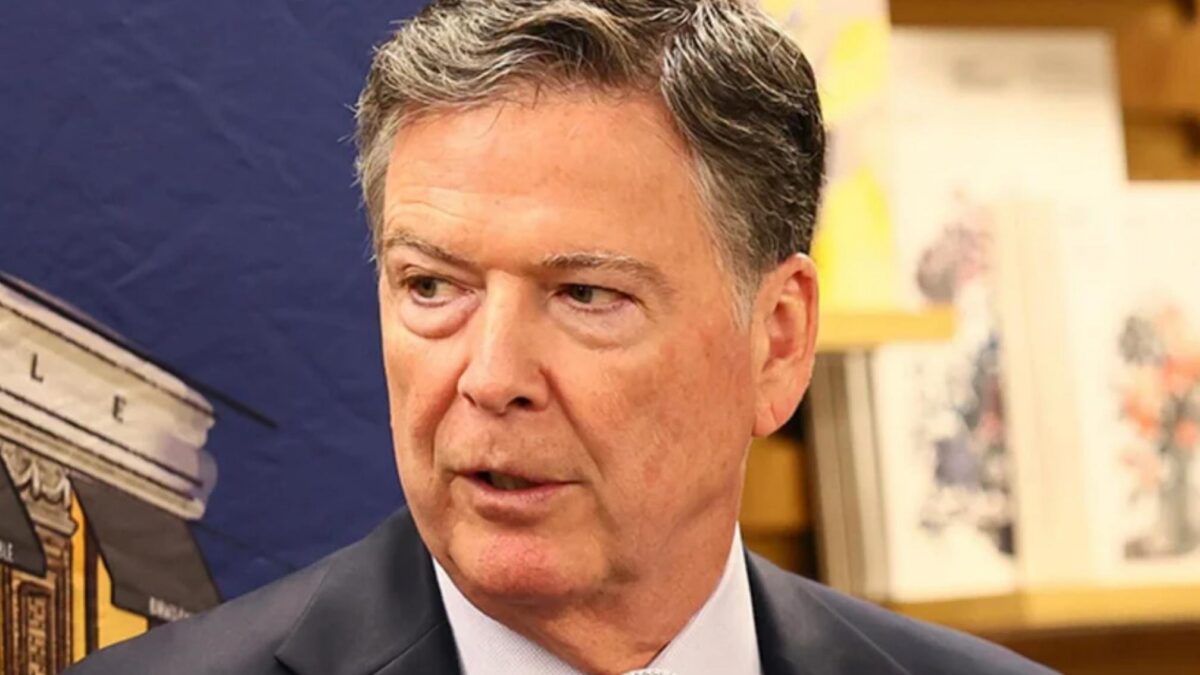

James Comey has once again found himself at the center of an unusual kind of public attention, not for legal commentary or institutional insight, but for his increasingly conspicuous enthusiasm for pop music icons.
In a recent video posted to his Substack, the former FBI director spoke at length about his admiration for Beyoncé, even recounting a moment in which he quoted her lyrics during an official FBI briefing. The image is a striking one: a man once tasked with overseeing one of the most powerful law enforcement agencies in the world casually weaving pop culture references into high-level discussions.
NEW: Former FBI Director James Comey says he once started singing Beyoncé's song 'Sandcastles' in a crowded room while being briefed on an important operation.
"The briefer started by saying the operation was codenamed Sandcastles..."
"So I said, 'Oh, like the Beyonce… pic.twitter.com/rrtS6miy7z
— Collin Rugg (@CollinRugg) March 15, 2026
For some observers, the moment lands as lighthearted and humanizing, a reminder that even figures associated with gravitas and authority have personal tastes that fall far outside expectations. Yet for others, the tone of the video veers into something more awkward, even jarring.
Comey, now 65, appears fully comfortable aligning himself with fandoms typically associated with younger demographics. His previous self-identification as a “Swiftie,” openly celebrating Taylor Swift, already raised eyebrows. This latest declaration of admiration for Beyoncé only reinforces the perception that his public persona is shifting in an unexpected direction.
OMG. This might be the creepiest video in the history of social media!
Listen to James Comey talking about his weird obsession with Taylor Swift followed by an even weirder discussion of his hatred for MAGA.This is what a completely broken man looks and sounds like! 😂😂😂 pic.twitter.com/Be8Sr86gxI
— Vince Langman (@LangmanVince) August 17, 2025
The reaction online has been swift and divided. Supporters see a man embracing cultural touchstones and expressing genuine appreciation for widely influential artists. Critics, however, question whether these displays are calculated attempts to remain culturally relevant or to reshape his public image in the years following his tenure in government. The fact that this content appears on a personal Substack platform—rather than in a formal interview or memoir—adds another layer of intrigue, suggesting a deliberate effort to cultivate a more informal, accessible presence.
It still blows my mind that this guy was the head of the FBI.
— Collin Rugg (@CollinRugg) March 15, 2026
Adding to the conversation is a wave of speculation among commenters who suggest that Comey’s messaging may carry deeper meaning. In an era where public figures are often scrutinized for hidden signals or coded language, even a seemingly innocuous discussion of music can become a canvas for interpretation. Whether such theories hold any substance remains unclear, but their existence highlights the level of skepticism that continues to surround Comey’s public communications.