

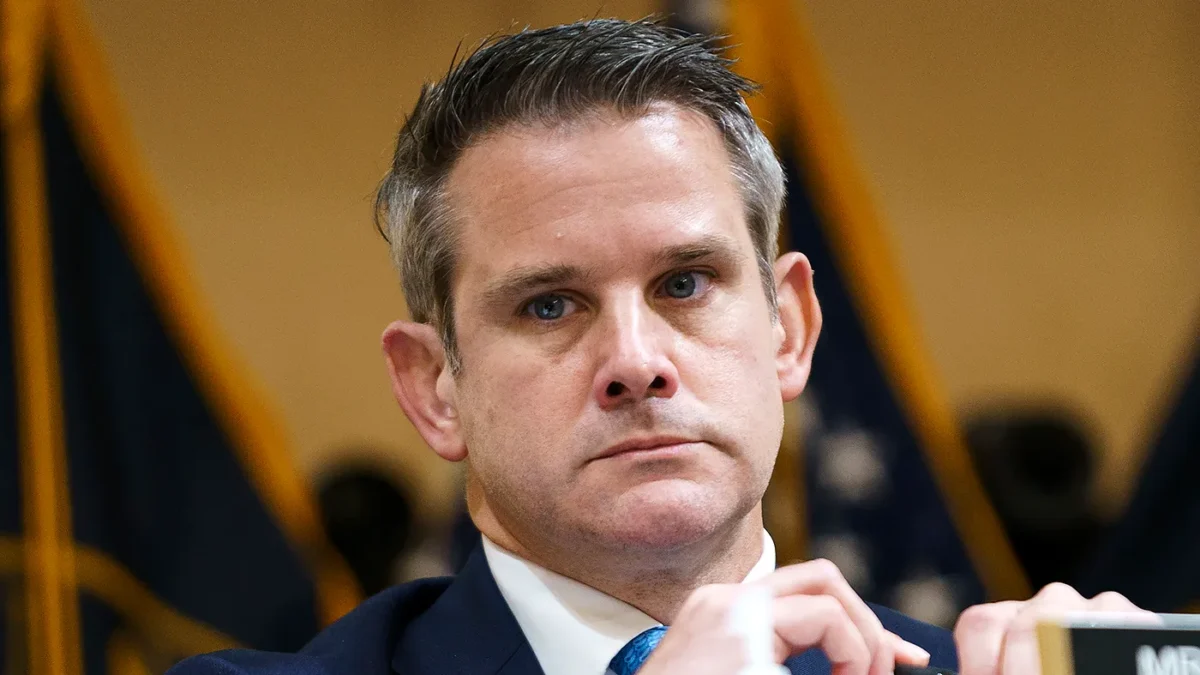

Adam Kinzinger’s recent online presence has become a study in tension, contradiction, and carefully managed restraint. As the United States and Israel intensify military action against Iran, the former congressman—never known for subtlety—has adopted a noticeably cautious tone. For a figure who has built much of his post-congressional identity on outspoken criticism and moral certainty, the relative silence on direct opposition to the conflict stands out.
Brad Todd on President Trump's decisive action in Iran:
“This is 7 presidents too late. He’s the first president who’s had the guts to take out the force that has caused chaos and mayhem and killed Americans almost every administration going all the way back to Jimmy Carter.” pic.twitter.com/jOQWAAbEY7
— RNC Research (@RNCResearch) March 15, 2026
Instead, Kinzinger’s commentary has drifted toward familiar territory: continued emphasis on the Russia-Ukraine conflict and amplification of narratives that question the competence and planning behind the Iran operation. This shift does not appear accidental. Openly condemning military action against Iran would place him at odds with positions he has previously supported, particularly regarding interventionist policies and the projection of American power abroad. The result is a rhetorical balancing act—one that avoids direct contradiction while still signaling disapproval through adjacent critiques.
Kingzingers face is priceless. I thought his head was going to spin around and fall off.
— Gary-Sarah Stumbo (@GStumbo36373) March 15, 2026
The dynamic became particularly visible during a recent CNN panel appearance. As fellow panelist Brad Todd spoke in favor of decisive action against Iran, Kinzinger’s reaction drew attention. His expression, captured in a split-screen format, seemed to convey discomfort, if not outright frustration. It was a moment that underscored the broader predicament he faces: navigating a political identity that has increasingly aligned with opposition to Donald Trump, while confronting a policy decision that overlaps with positions traditionally supported by his own party.
Everyone knew that the Ayatollah was evil and killing Americans -- how was he going to be stopped unless by this way?
Note: killing is not moral; but by the theory of utilitarianism -- the world is a better place because of this. https://t.co/FnUDNFKYtB
— Dalip Mahal (@AppenaDicendo) March 16, 2026
This tension reflects a deeper challenge for public figures who define themselves primarily through opposition. When political identity becomes anchored to rejecting a specific ব্যক্তি or movement, it can limit the ability to respond flexibly to complex events. In Kinzinger’s case, endorsing or even acknowledging the effectiveness of the Iran operation risks undermining a narrative he has consistently promoted. At the same time, outright opposition could expose inconsistencies in his past positions on national security.
Brad Todd on President Trump's decisive action in Iran:
“This is 7 presidents too late. He’s the first president who’s had the guts to take out the force that has caused chaos and mayhem and killed Americans almost every administration going all the way back to Jimmy Carter.” pic.twitter.com/jOQWAAbEY7
— RNC Research (@RNCResearch) March 15, 2026
Complicating matters further is the shifting attention of the public. While Kinzinger continues to highlight Ukraine as a central geopolitical concern, the immediacy of developments involving Iran has captured greater focus. This divergence may contribute to the perception that his messaging is increasingly out of sync with current events.