


The United Nations, long regarded as the symbolic heartbeat of international diplomacy, is sounding an alarm—not over war, famine, or climate—but over what it sees as an emerging global threat: the growing independence and unchecked power of multinational corporations, especially those in the tech sector.
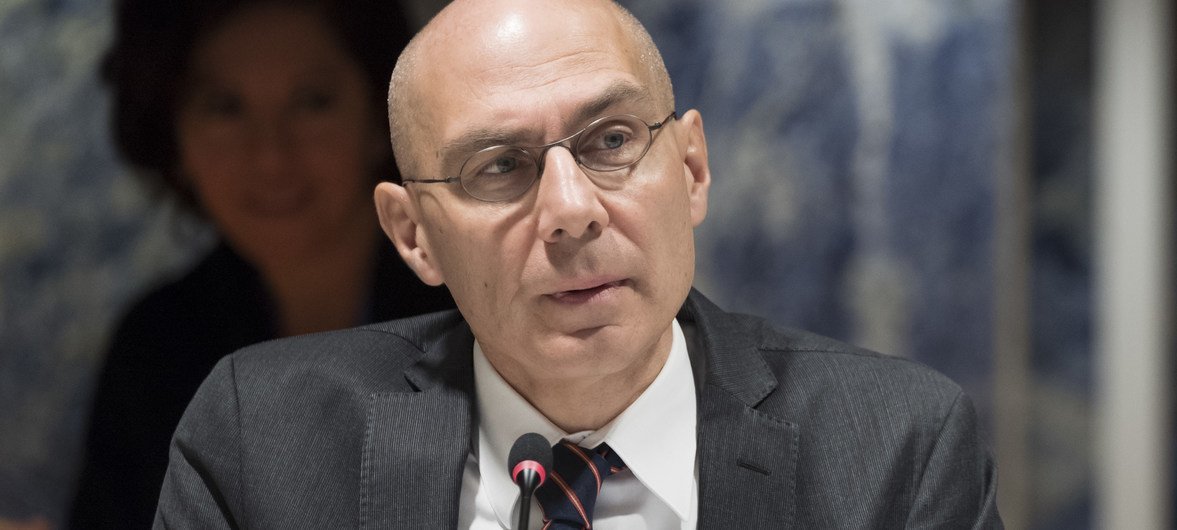
In a recent interview with Agence France-Presse, U.N. human rights chief Volker Turk expressed deep concern about the accelerating influence of a small group of private companies—particularly in Silicon Valley—that now rival or surpass the economic weight of sovereign nations. “They have amassed an immense amount of power,” Turk warned. “And power, we all know, if it is not circumscribed by rule of law… can lead to abuse.”
The United Nations is a totally worthless entity pic.twitter.com/mPmrTUe4yV
— Breitbart News (@BreitbartNews) February 28, 2025
His remarks were less a policy proposal and more a philosophical grievance—a warning that corporate autonomy, when unbound by the frameworks of international law and human rights, could challenge the traditional authority of global institutions like the U.N. It’s a quiet confession of relevance lost.
Turk’s statements follow an increasingly visible trend: elite tech giants, from Tesla to OpenAI to Meta, are not merely shaping consumer habits—they are now actively influencing public discourse, national economies, and in some cases, political outcomes. Elon Musk, perhaps the most visible symbol of this new frontier, was referenced explicitly after Tesla shareholders approved a compensation package reportedly valued at up to $1 trillion. That vote, and Musk’s continued defiance of political orthodoxy, appears to have struck a nerve in Geneva.
And then there’s generative AI—another arena Turk claims is slipping through the U.N.’s grasp. While he acknowledged the technology’s potential to solve major global problems, Turk was quick to note its disruptive capacity: “AI that is unregulated can be a huge source of distraction,” he said, suggesting it diverts attention away from defending democratic norms and restraining authoritarian influence.
Elon Musk called the left “the party of murder” during a remote appearance he made at a giant freedom rally in London on Saturday. https://t.co/fbEDR7VwEs
— Breitbart News (@BreitbartNews) September 15, 2025
But Turk’s deeper message is not easily dismissed. In a world where the balance of power is shifting from parliaments to platforms, from states to servers, a fundamental question remains: Who governs the governors when the governors are no longer governments?
That question, unanswered and growing more urgent by the day, sits at the very heart of what the U.N. now fears: irrelevance.
