

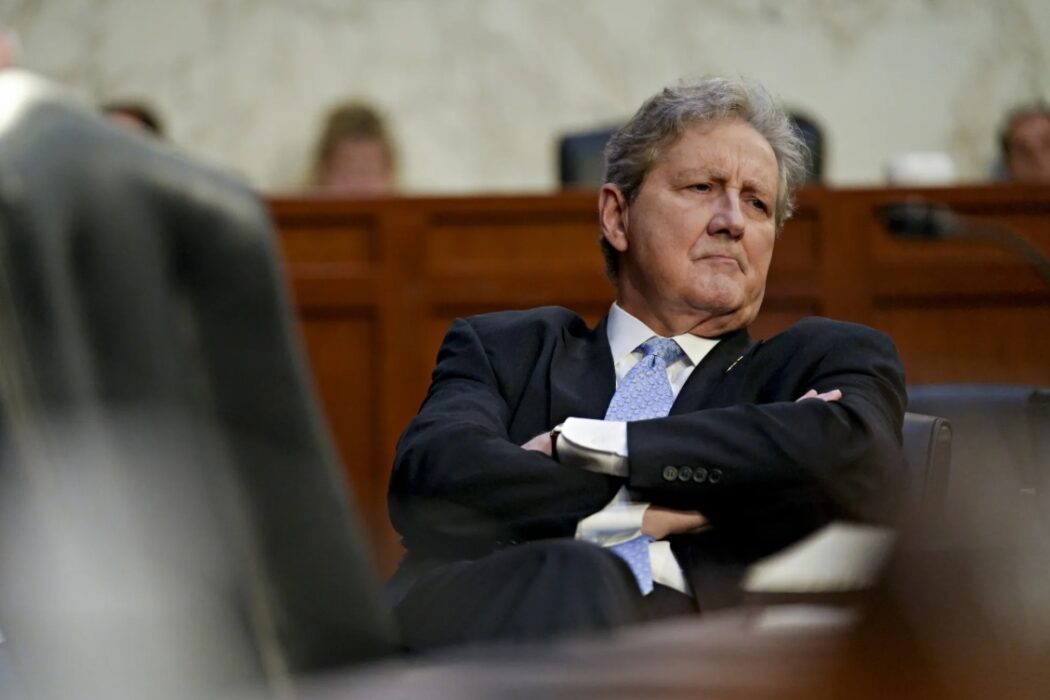

In a candid moment that cut through the procedural fog of Washington politics, Sen. John Kennedy (R-LA) voiced his frustration Monday over what he calls a glaring failure of leadership: Congress getting paid while ordinary Americans go without during a government shutdown.
Speaking on The Will Cain Show, Kennedy expressed disappointment that his provision—aimed at withholding lawmakers’ pay during shutdowns—was left out of the continuing resolution (CR) that moved through the Senate over the weekend. The senator had introduced two bills requiring congressional salaries to be withheld or placed in escrow when the government is not fully funded. The proposals were intended to underscore the principle of “shared sacrifice,” but Kennedy says his own party leadership blocked the measures.
“My only disappointment in the deal that we have, I strongly wanted a provision added that senators cannot be paid during a shutdown,” Kennedy said. “It’s called shared sacrifice. It’s called leadership.”
That principle, Kennedy noted, isn’t theoretical. During the last shutdown, air traffic controllers, military personnel, and congressional staff went unpaid—even as senators continued collecting their salaries. Kennedy himself declined to accept pay, but argued that lawmakers shouldn’t have the option. “We were getting paid, but our staff wasn’t… I thought it was the hype of hypocrisy,” he remarked.
Despite this setback, at least 55 senators—more than half the chamber—chose to forgo or donate their salaries in solidarity with furloughed workers. That group includes a mix of 26 Republicans, 28 Democrats, and one independent, reflecting a rare moment of bipartisan conscience.
The CR’s journey to passage wasn’t without drama. It cleared the Senate’s 60-vote threshold on Sunday, setting up a return trip to the House and, if successful, a final signature from President Donald Trump. Yet the vote exposed deeper fractures within the Democratic ranks, particularly over the absence of an extension for Affordable Care Act (ACA) tax credits set to expire December 31.
House Minority Leader Hakeem Jeffries and progressive Democrats fumed at Senate Majority Leader Chuck Schumer and the eight Democrats who advanced the CR, despite its failure to address healthcare funding. Schumer himself publicly stated that he opposes the CR for this very reason, calling the omission part of a broader failure to confront the growing healthcare crisis.

Still, in the end, a compromise took shape. House Speaker Mike Johnson and Senate Republicans agreed to reverse the layoffs of 4,000 federal employees and promised to schedule a vote on extending ACA subsidies once the government reopens. That assurance was enough to peel off critical Democratic support and push the resolution forward.
Sen. Kennedy, meanwhile, remains undeterred. He pledged to keep reintroducing his no-pay-for-Congress bill, pressing the case that leadership means more than speeches and symbolism—it means skin in the game. For a chamber often accused of insulating itself from the consequences of its inaction, Kennedy’s message is a reminder that optics matter—and so does accountability.