

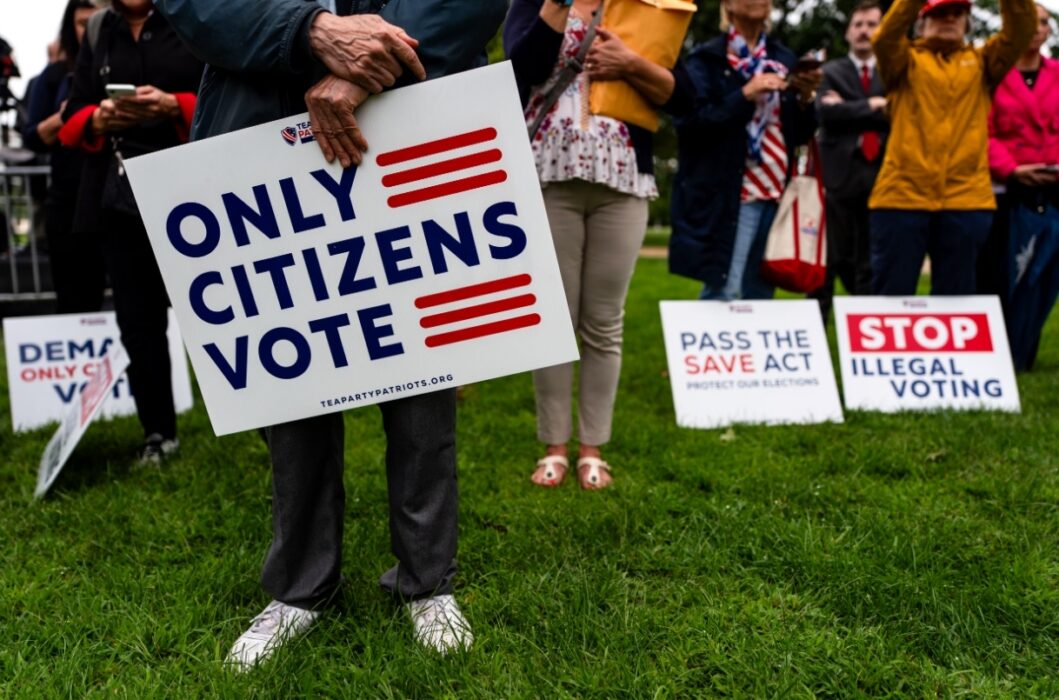

The Senate delivered another reminder that having a majority does not always translate into getting legislation across the finish line.
On Thursday night, the Safeguard American Voter Eligibility (SAVE America) Act failed to advance as part of the budget reconciliation process, with four Republican senators joining Democrats to block the effort. The amendment, offered by Sen. Lindsey Graham of South Carolina, received a 48-50 vote, falling short of what was needed to move forward.
🚨 BREAKING: The US Senate has just REJECTED the SAVE America Act as part of budget reconciliation, 48-50 — would've required voter ID and proof of citizenship nationwide
REPUBLICAN NAYs: Thom Tillis, Lisa Murkowski, Mitch McConnell and Susan Collins
UNBELIEVABLE!!
It needed… pic.twitter.com/sTCsOgn4B3
— Eric Daugherty (@EricLDaugh) June 4, 2026
For supporters of the proposal, the result was a frustrating setback. Republicans currently control the White House, the House of Representatives, and the Senate, yet one of the party’s most discussed election-integrity measures remains stalled.
The vote immediately drew attention because of the Republican opposition. Sens. Thom Tillis, Lisa Murkowski, Mitch McConnell, and Susan Collins voted against the amendment, placing them at odds with many Republicans who have made election security a central issue. Their votes quickly became the focus of criticism from conservatives who argue that measures such as voter identification requirements and proof-of-citizenship standards enjoy broad public support.
Why would you do this unless you wanted to cheat. https://t.co/unymBF4EBV
— Tim Burchett (@timburchett) June 5, 2026
Tennessee Rep. Tim Burchett was among those questioning the outcome, asking why lawmakers would oppose the proposal. That sentiment was echoed by Utah Sen. Mike Lee, who argued there is no valid reason to reject the legislation.
Lee urged supporters not to view the vote as the end of the fight. He maintained that the bill would make voting easier while making election fraud more difficult, and he called for the Senate to return to the issue once funding matters involving the Department of Homeland Security are resolved.
Why would you do this unless you wanted to cheat. https://t.co/unymBF4EBV
— Tim Burchett (@timburchett) June 5, 2026
The debate escalated further when President Donald Trump weighed in. Trump praised Graham for forcing the vote and used the opportunity to restate several policy positions that he says should be priorities for Republicans. In a statement, Trump thanked Graham for championing the measure and reiterated his support for voter identification requirements and proof-of-citizenship provisions. He also tied the issue to other policy concerns that have become staples of his political platform.

There’s NO valid argument against the SAVE America Act.
My bill would make it easy to vote.
And hard to cheat.
As soon as DHS is fully funded (as it should be within 48 hours), the Senate should resume consideration of it—and stay on the bill until it passes.
Pass it on.… https://t.co/PzHvOIf5bQ
— Mike Lee (@BasedMikeLee) June 4, 2026
Trump’s endorsement carried an additional political dimension because he paired it with a strong endorsement of Graham ahead of South Carolina’s upcoming Republican primary contest. The president declared that Graham has his “complete and total endorsement,” signaling that he views the senator as a key ally despite occasional disagreements in the past.
The failed vote is unlikely to end the debate. Election laws remain one of the most contested issues in American politics, and supporters of the SAVE America Act are already signaling that they intend to bring the measure back for consideration.