


The hits just keep coming for Republicans as the 2026 midterm election cycle begins to take shape, and while there have been no shortages of warning signs for the GOP in recent months, one result out of Texas has landed with particular force.
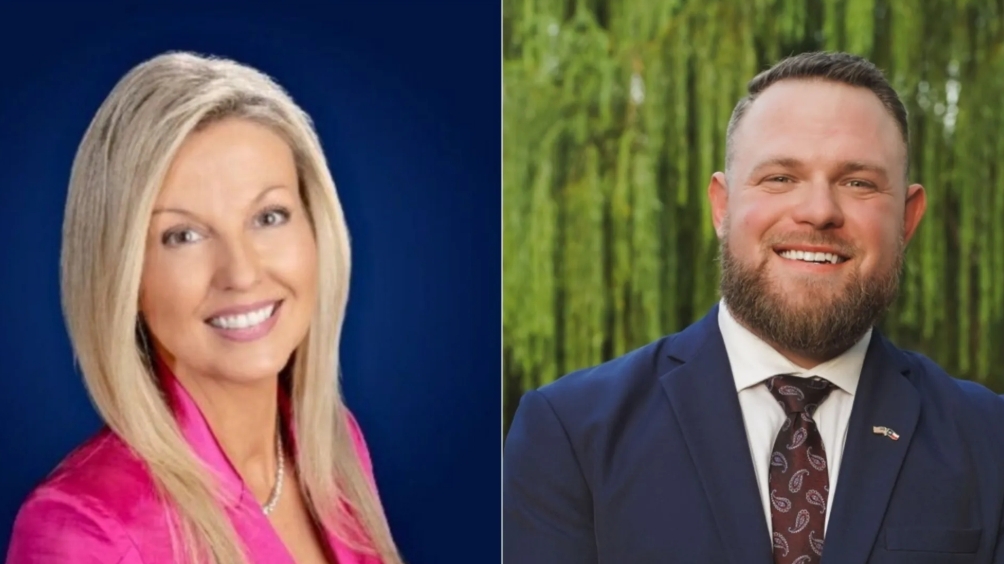
In a Fort Worth–area state Senate district that has long been considered safely Republican, Democrat Taylor Rehmet pulled off a decisive runoff victory, defeating Republican Leigh Wambsganss by a 57%–43% margin. In an era already defined by electoral volatility, this result stands out not merely as another Democratic overperformance, but as one of the most striking upsets of the post-2024 landscape.
To appreciate the scale of the shift, it helps to look at the recent baseline. President Donald Trump carried this district by roughly 17 points in the 2024 election. Rehmet’s 14-point win therefore represents a margin swing of about 31 points, a figure that places this race among the most dramatic special election performances Democrats have posted in recent years.
While Democrats have repeatedly exceeded expectations since Trump’s return to the White House, most of the high-profile congressional specials last year featured overperformances in the high teens or low twenties. This Texas race blew past that benchmark. It also marked the first time since the early 1980s that a Democrat will represent the northern part of Tarrant County in the Texas state Senate, underscoring how historically unusual the outcome really is.
The size of the district only adds to the significance. With just 31 state Senate districts compared with 38 congressional districts in Texas, each state Senate seat represents nearly one million people. That scale makes the result harder to dismiss as a quirk of a tiny electorate. It is also notable that the race drew intense national attention. Republican leaders poured resources into the contest, and Trump himself weighed in repeatedly, posting three times in the closing days in hopes of driving Republican turnout. Yet Democrats not only held their advantage but actually performed better on Election Day than in early voting, an increasingly rare pattern that further weakens the argument that Republican voters were merely waiting to show up later.
Fundraising dynamics make the outcome even more jarring. Wambsganss outraised Rehmet by a massive margin, pulling in more than $2.5 million compared with Rehmet’s less than $400,000. Conventional wisdom would suggest that such a financial imbalance should have insulated the Republican candidate, particularly in a district with deep conservative roots. It did not.
Geography matters here as well. Tarrant County has long functioned as a political bellwether, both in Texas and nationally. Home to major defense contractors and a strong tradition of conservative activism, it was once a Tea Party stronghold during the Obama years.

Yet it has grown increasingly competitive, and this result reinforces the sense that the county sits at the fault line of broader political change. For Democrats, it offers a tantalizing glimpse of what might be possible in Texas, including the distant but persistent hope of eventually flipping a U.S. Senate seat in a state they have not won statewide since the 1990s.
Still, caution is warranted. Special elections often magnify enthusiasm gaps, and Trump’s coalition has repeatedly shown itself to be less reliable in lower-profile contests. Turnout was low, with fewer than 100,000 votes cast on an unusual Saturday election held during unseasonably cold weather. Local dynamics also played a role, as Wambsganss was closely associated with a social conservative push in local school boards that appears to have alienated some voters.