

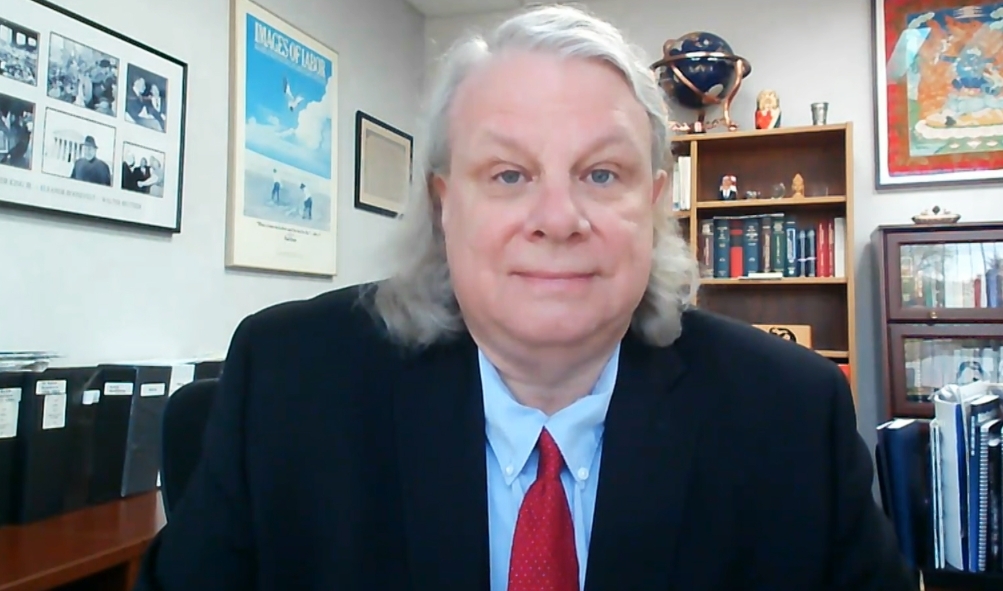

A remark from a prominent Michigan Democratic consultant has ignited controversy after he suggested that the state should abandon the United States and instead join Canada, a comment that came in response to an international speech sharply critical of American power. While the idea itself is far from realistic, the episode underscores the increasingly sharp rhetoric surrounding U.S. leadership, global alliances, and domestic political frustration ahead of the next election cycle.
Former Michigan Democratic Party Chair Mark Brewer made the comment on X after Canadian Prime Minister Mark Carney delivered a speech to world leaders in Davos, Switzerland. Carney’s address, widely reported by The New York Times, took aim at the policies and posture of the 47th president of the United States without mentioning President Donald Trump by name. In his remarks, Carney warned against what he described as complacency in the face of growing American influence, arguing that global leaders too often “go along to get along” in hopes of avoiding conflict.
Can Michigan become a Canadian province so we have a smart, rational national leader? https://t.co/Z2y82mIyLv
— Mark Brewer (@MarkBrewerDems) January 21, 2026
Carney framed the current moment as one defined by great power rivalry and the erosion of the so-called rules-based international order. He urged “middle powers” to act collectively, warning that nations not actively shaping global decisions risk being sidelined altogether. His comments were widely interpreted as a call for coordinated resistance to Trump’s assertive foreign policy approach.
Brewer, an election law attorney who advises Michigan Democratic campaigns, praised the speech and posted a provocative response online. “Can Michigan become a Canadian province so we have a smart, rational national leader?” he wrote, linking to coverage of Carney’s remarks. The comment immediately drew attention, not only for its tone but for the broader political context in which it landed.
Trump has recently made headlines of his own by floating the idea of annexing both Canada and Greenland, with Greenland becoming a focal point of discussions at the Davos summit. In the days leading up to the meeting, Trump suggested imposing tariffs on countries opposing U.S. acquisition of Greenland, citing national security concerns tied to the Arctic. Those proposed tariffs were later shelved after negotiations with NATO Secretary General Mark Rutte resulted in what Trump described as a framework for future cooperation on Arctic security.
Trump also referenced additional talks related to the “Golden Dome,” a $175 billion, multilayered missile defense system authorized during his first week back in office that would deploy U.S. weapons in space for the first time. The initiative has further amplified international debate over American military and strategic ambitions.
Meanwhile, Canada’s political leadership remains in flux. After former Prime Minister Justin Trudeau dismissed any notion of merging with the United States, he resigned earlier this year, with Mark Carney assuming leadership of the Liberal Party. Since taking over, Carney has spent extensive time abroad pursuing trade agreements aimed at reducing Canada’s dependence on the U.S., even as domestic concerns over inflation and housing affordability continue to grow.