


Whether one recoils at the mere mention of Donald Trump or regards him as a once-in-a-generation political force, there is no serious denying a simple reality: Trump operates on a plane of political provocation that no modern figure has ever mastered.
For more than a decade, he has demonstrated an uncanny ability to dominate not only elections and headlines, but the emotional bandwidth of his opponents. The phenomenon long labeled Trump Derangement Syndrome has proven remarkably durable, infecting Democratic politicians, legacy media institutions, and cultural tastemakers with an almost reflexive outrage that Trump appears to anticipate, provoke, and then amplify.
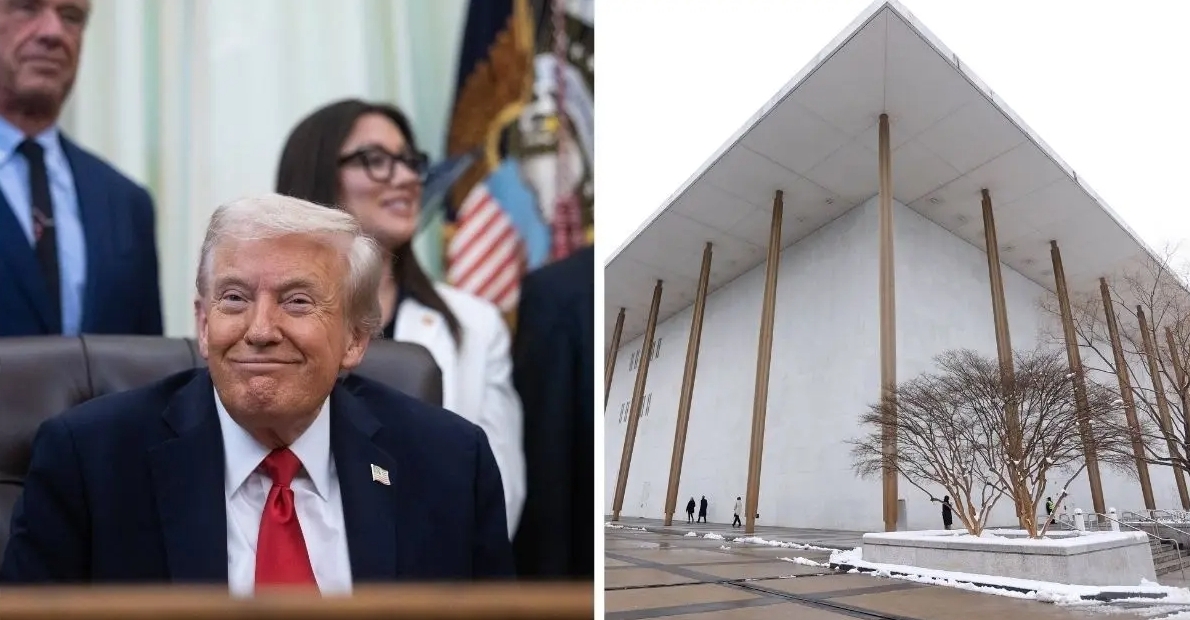
The mid-December announcement that the John F. Kennedy Center for the Performing Arts would be renamed The Donald J. Trump and the John F. Kennedy Memorial Center for the Performing Arts was a textbook example.
The reaction from the Left was immediate and theatrical. Predictable denunciations followed, accompanied by vows of boycotts from celebrities, musicians, and political figures whose moral indignation seemed carefully curated for maximum visibility. The symbolism alone was enough to ignite weeks of commentary, but it soon became clear that the renaming was merely the opening act.
Trump’s subsequent Truth Social announcement raised the stakes considerably. The declaration that the newly named Trump Kennedy Center would close on July 4, 2026 — the nation’s 250th anniversary — for a full two years of sweeping renovations landed with surgical precision.
Framed as a pragmatic decision based on expert review, the plan emphasized speed, quality, and long-term excellence over piecemeal construction. The rhetoric was familiar: close it, rebuild it properly, and reopen something unmatched in beauty and scale. For supporters, it echoed Trump’s long-cultivated image as a builder. For critics, it was another provocation layered atop an already intolerable insult.
The outrage, however, largely missed the strategic brilliance at play. By anchoring the closure to Independence Day and tying the reopening to national pride, Trump folded cultural institutions directly into his broader vision of American renewal.

He also preemptively neutralized one of the Left’s favorite talking points by asserting that financing was already secured, though that has not stopped predictable claims of taxpayer abuse from surfacing anyway.
Long after the political shouting fades, these structures will remain. That, ultimately, may be the point. Trump’s genius has never been confined to policy alone; it lies in his ability to provoke, to brand, and to ensure that his presence — cultural, political, and now architectural — endures well beyond the news cycle. In that sense, the reaction tells the story as clearly as the projects themselves.