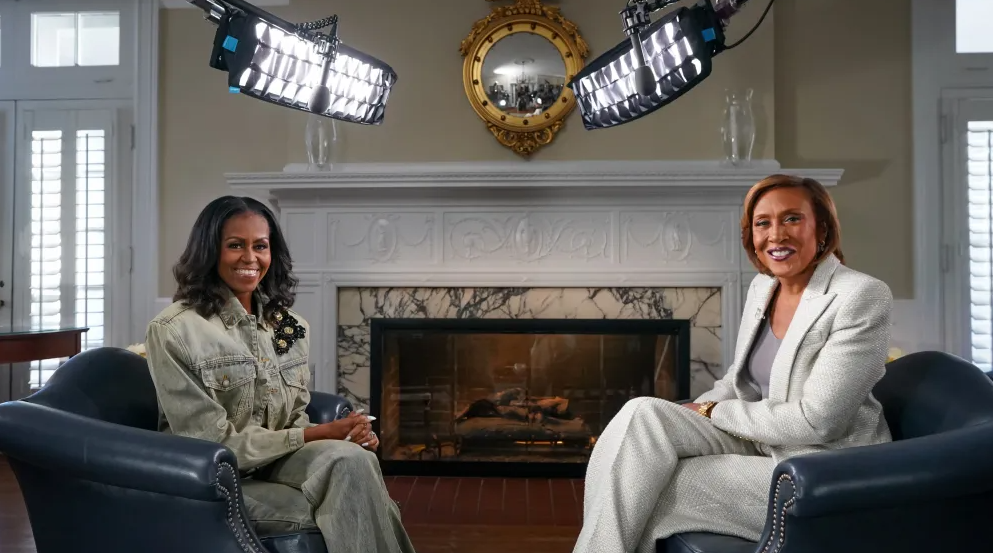

Michelle Obama’s reflections continue to raise eyebrows — not because they’re new, but because they seem to echo a familiar refrain that often feels detached from the reality she now occupies.
In a new special with Good Morning America co-host Robin Roberts, the former First Lady revisits themes that have marked many of her public appearances since leaving the White House: the weight of race, the scrutiny of her position, and a sense of persistent grievance. “As the first Black couple, we couldn’t afford any missteps,” Obama wrote in her latest book, The Look. She adds, “As a Black woman, I was under a particularly white hot glare.” When Roberts asked her if she truly felt that, Obama responded without hesitation: “For sure.”
That experience — feeling judged, watched, and held to a higher standard — is something many public figures can relate to. But when it comes from someone who occupied one of the most visible and celebrated roles on the world stage for eight years, it raises a complex question: When does legitimate reflection turn into chronic resentment?
Starting to feel like maybe Michelle Obama is a bitter malcontent addicted to complaining about her incredibly privileged life.
pic.twitter.com/1JN7Mi8dMt— Buck Sexton (@BuckSexton) November 1, 2025
Michelle Obama was not a figure relegated to the margins. She was lauded, profiled, and praised across media, culture, and politics — from magazine covers to international accolades. Her tenure as First Lady saw approval ratings that soared well above most political figures, crossing partisan lines. Yet in her telling, those years were marked more by isolation and criticism than celebration.
This isn’t the first time she’s expressed discontent with life in the White House. In past interviews, she’s mentioned the burdens of paying for food, family travel, and other expenses — facts that are technically accurate under federal ethics rules, but rarely aired by those who served in the role. The Obamas’ post-White House life, estimated to be worth over $70 million, stands in sharp contrast to those grievances.
Michelle Obama complains that hairstyles are racist because black people have to spend more money and time to achieve them.
— ALX 🇺🇸 (@alx) October 29, 2025
And the focus on race — while valid in many social contexts — seems to dominate her narrative. From complaints about hair styling norms for Black women, to revisiting her oft-quoted line in 2008 that she was proud of her country “for the first time” only after her husband’s political success, Obama often seems to frame her public experience less as a triumph and more as a trial.
It’s clear Michelle Obama views her time in the White House through a complex lens, shaped by both genuine challenges and personal perceptions. But for many Americans — including those who celebrated her historic role — there’s a growing disconnect between the privileges she now enjoys and the persistent tone of grievance that follows her commentary.