


Criticism of the modern media cycle has become so common that many people barely react anymore. Outrage comes and goes in waves, and stories that once would have sparked weeks of debate now disappear within days. Yet every so often, a piece of reporting appears that reminds observers why distrust of major media institutions remains so widespread.
The recent coverage surrounding Ayman Mohamad Ghazali is one such example.
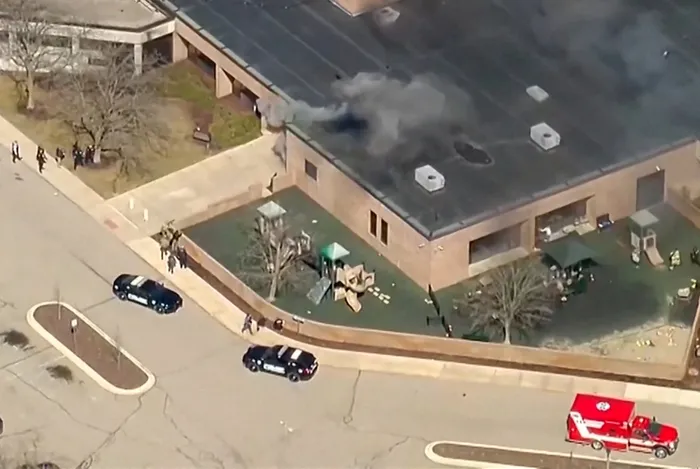
Last week, Ghazali drove through the entrance of Temple Israel, a synagogue in West Bloomfield, Michigan. Armed security on site stopped the attack and prevented what could have been a far more devastating outcome. No innocent bystanders were harmed. In the immediate aftermath, the story seemed straightforward: a violent assault on a Jewish house of worship that ended before it could escalate further.
It bears mentioning that the “family" were Hezbollah fighters and rocket operatives
They needlessly contextualize perpetrators and deliberately leave out key incriminating facts. Their goal?
Complete moral inversion pic.twitter.com/q2SrmASVU2
— Melissa Chen (@MsMelChen) March 16, 2026
But controversy emerged not from the attack itself, but from how parts of the media chose to frame the story afterward.
National Public Radio produced a report focusing heavily on Ghazali’s personal background and the tragedy that had struck members of his family overseas. According to the report, several of Ghazali’s relatives in Lebanon were killed in an Israeli airstrike that targeted a home connected to a Hezbollah commander. The article described the destroyed house, the scattered belongings, and the grief of relatives who helped recover bodies from the rubble.
For many readers, the emotional weight of those details overshadowed the central fact that Ghazali carried out an attack on a synagogue in the United States.
NPR has found the real victims of the Michigan synagogue wannabe suicide bomber: not the 140 American babies he tried to massacre, but his Hezbollah relatives.
You do not hate the media enough. https://t.co/TI7gJ9aGkC
— Batya Ungar-Sargon (@bungarsargon) March 15, 2026
The NPR story included interviews with relatives and community members who described Ghazali as kind and gentle, while others suggested his actions may have been motivated by grief or revenge. The piece also noted that Israeli officials identified one of the deceased relatives as a Hezbollah commander involved in rocket operations targeting Israeli civilians.

Critics argue that this type of framing risks shifting attention away from the victims and toward the attacker himself. When reporting places extensive emphasis on the personal suffering or background of someone who commits an act of political violence, the result can appear to soften the moral clarity of the event.
Supporters of such reporting, however, maintain that understanding the motivations and circumstances behind an attack is a legitimate journalistic function. They argue that explaining context does not excuse the act itself but helps audiences grasp the broader geopolitical forces that sometimes drive individuals toward violence.
What. The. Fresh. Hell. Is. This. @NPR @hadeelalsh pic.twitter.com/J4pdRgTUbH
— Ariel Sterman (@ArielSterman) March 15, 2026
The dispute ultimately reflects a larger tension in modern journalism. Should coverage focus primarily on the act of violence and the victims involved, or should it devote equal attention to the background of the perpetrator in order to explain how such attacks occur?
In the case of the Michigan synagogue attack, that debate has reignited longstanding accusations that parts of the media instinctively frame certain stories through a sympathetic lens when the perpetrator’s motivations are tied to international conflicts.