

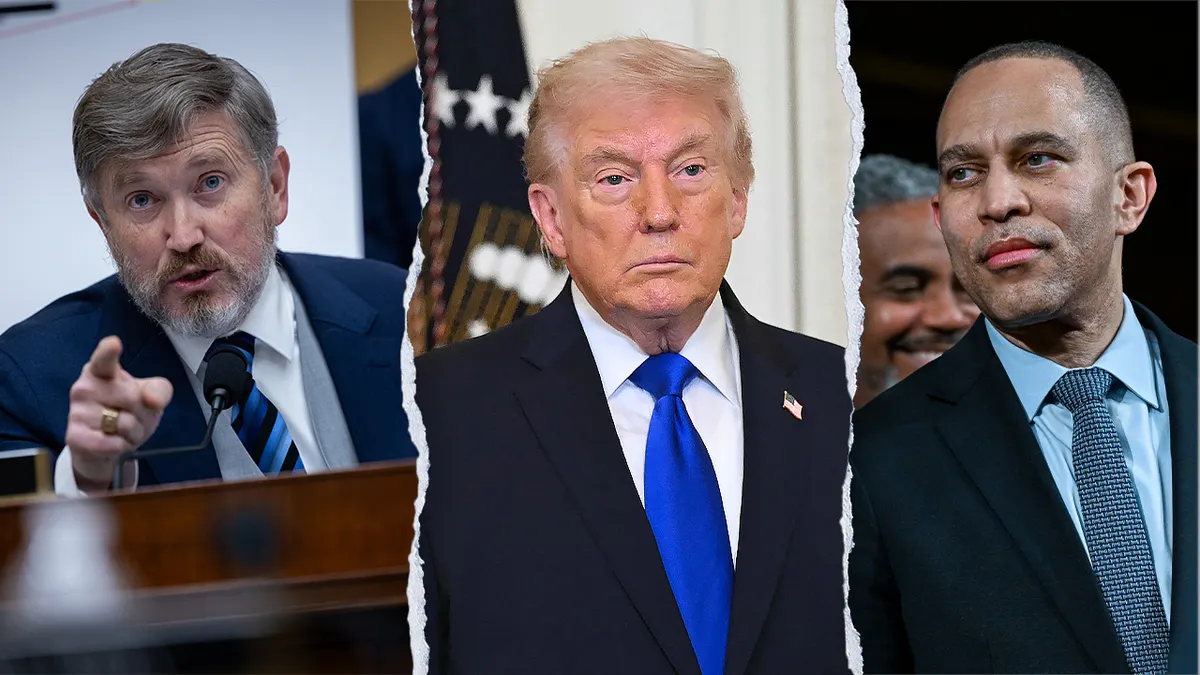

As Operation Epic Fury unfolded with sweeping U.S. strikes against the Iranian regime, a familiar fracture line inside the Republican Party quickly resurfaced. Rep. Thomas Massie of Kentucky, long known for staking out libertarian-leaning and contrarian positions, aligned himself with a chorus of Democratic critics questioning President Donald Trump’s motives. At the center of the controversy is Massie’s suggestion that the military action may be tied to distracting from renewed attention surrounding allegations linked to the Epstein files—an argument that has also circulated among prominent figures on the Left.
PSA: Bombing a country on the other side of the globe won’t make the Epstein files go away, any more than the Dow going above 50,000 will.
— Thomas Massie (@RepThomasMassie) March 1, 2026
The timing of Massie’s remarks has drawn particular attention. In the early hours of the operation—while American forces were engaged in what officials described as one of the largest coordinated strikes in the region in decades—critics began floating theories about ulterior political motives. That Massie’s commentary echoed narratives promoted by outspoken Trump opponents, including media personalities and activist groups historically hostile to the president, intensified backlash from segments of the Republican base.
Epstein. https://t.co/NpToH563l4
— Rick Wilson (@TheRickWilson) February 28, 2026
Massie has often positioned himself as an institutional skeptic, wary of executive power and foreign intervention. His voting record reflects consistent opposition to expansive military engagements abroad, and he has frequently invoked constitutional arguments regarding congressional authority over war powers. Supporters argue that his stance on Iran is an extension of those long-held principles. Critics, however, contend that the framing of his critique—particularly the reference to alleged cover-ups—crossed from policy disagreement into speculative insinuation.
Remember what you're fighting for overseas boys and girls, never forget pic.twitter.com/xtmHDwQhEB
— Polling USA (@USA_Polling) February 28, 2026
The political implications are significant. Trump’s coalition remains heavily influenced by a populist-nationalist current that prioritizes strong executive action on national security. Public displays of intraparty dissent during active military operations tend to generate swift and emotional reactions.
In recent years, Massie has increasingly become a lightning rod for that tension, often clashing with party leadership and high-profile conservative figures. His critics argue that his brand has evolved into one defined less by legislative victories and more by high-profile social media disputes.
Whether Massie’s intervention reshapes the debate or further isolates him within his own party remains to be seen. What is clear is that in moments of geopolitical escalation, internal fractures become magnified. As the conflict with Iran develops, so too will the political aftershocks at home—where loyalty, principle, and political calculus continue to collide in real time.