

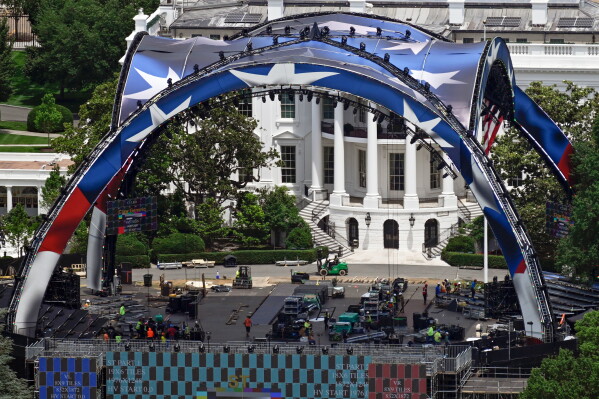

As the United States approaches its 250th anniversary, one of the more unusual events on the celebration calendar has become the subject of a legal fight. President Donald Trump’s planned UFC event on White House grounds is drawing criticism from a pair of plaintiffs who have gone to court in an effort to stop it, arguing that the spectacle is inappropriate for such a historic setting.
The lawsuit, filed just days before the June 14 event, targets a celebration being organized by the Ultimate Fighting Championship. Preparations for the event have already transformed portions of the White House grounds, with a massive steel structure erected on the South Lawn as part of the venue setup. The event is also expected to include ceremonial fighter weigh-ins at the Lincoln Memorial.
You thought you hated liberal boomers? You don’t hate them nearly enough.
A 69-year-old retired bureaucrat from Alexandria, Virginia, Susan F. Douglas, is suing to stop the planned UFC Freedom 250 event at the White House as part of America’s 250th birthday celebration.
Her… pic.twitter.com/UMIpJ9aiiK
— Bad Hombre (@Badhombre) June 8, 2026
According to the lawsuit, the White House and other federal spaces are being used in a way that was never specifically authorized by Congress. The filing also argues that UFC President Dana White and his company stand to benefit from the exposure and branding opportunities that come with staging a major sporting event at some of the country’s most recognizable landmarks. The complaint further points to Trump’s investment interest in UFC’s parent company as a potential concern.
The New York Times framed the dispute largely around questions of government property, private profit, and executive authority. But the lawsuit itself also contains another element that is difficult to ignore.
The plaintiffs, Susan Douglas, a retired political organizer, and Paul Romano, a Vietnam veteran, state that they frequently visit the area and object to the appearance and atmosphere created by the event. They argue that the transformation of spaces surrounding national monuments is offensive and inconsistent with the character of those locations.
That aspect of the case has drawn just as much attention as the legal arguments. Critics of the lawsuit see it as an attempt to block an event simply because they dislike its aesthetics or its association with Trump. To them, the complaint reads less like a pressing constitutional dispute and more like a protest dressed up as litigation.
The timing has also fueled that perception. With the anniversary celebrations approaching and construction already underway, opponents of the lawsuit question why a pair of individuals who merely claim to visit the area should have the power to derail a nationally publicized event.

Whether the court agrees with the plaintiffs remains to be seen. What is clear is that a UFC fight card on White House grounds was always going to attract attention. Now, thanks to a lawsuit from two individuals who say they are offended by the spectacle, the legal battle surrounding the event is becoming almost as prominent as the event itself