

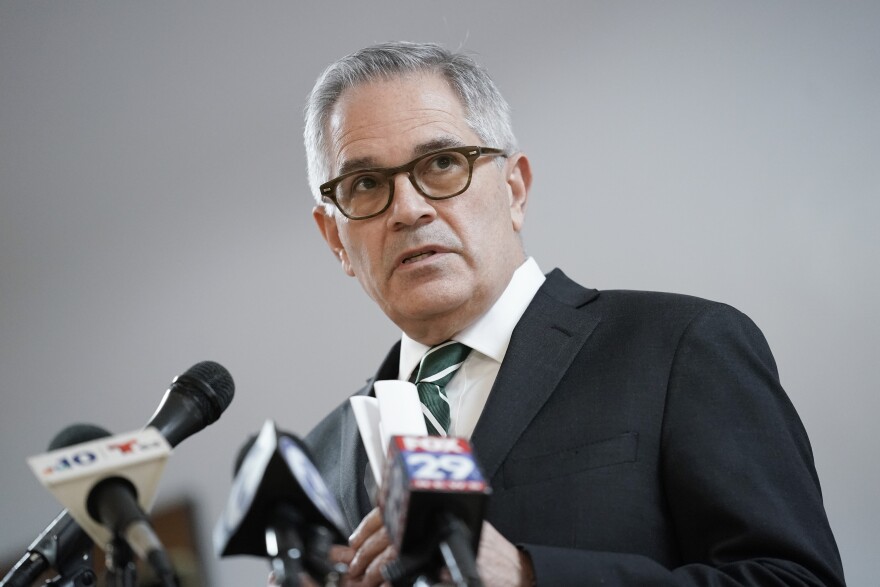

Philadelphia District Attorney Larry Krasner has escalated his rhetoric against federal immigration enforcement, signaling a willingness to pursue state charges against Immigration and Customs Enforcement (ICE) agents operating within his jurisdiction. His statements mark a sharp and highly public clash between local prosecutorial authority and federal law enforcement responsibilities.
Krasner can't arrest them, and he can be arrested for interfering with federal officers. He knows this. https://t.co/fORdfhVf74
— @instapundit (@instapundit) March 25, 2026
Krasner has publicly labeled ICE agents in extreme terms and asserted that any alleged misconduct occurring within Philadelphia, including at the city’s airport, would fall under his prosecutorial authority. He has emphasized that, in his view, federal pardons would not shield individuals from state-level charges. This position reflects an aggressive interpretation of local jurisdiction, particularly as it intersects with federal operations.
Philly DA Larry Krasner threatens ICE agents working at the airport with arrest:
"The president cannot pardon you. I will put you in handcuffs. And if necessary, I will put you in a jail cell."
Krasner was promising to hunt down ICE agents like Nazis a couple of months ago. pic.twitter.com/dJFnhmYffm
— Western Lensman (@WesternLensman) March 25, 2026
However, the legal framework surrounding such claims is complex. Federal officers acting within the scope of their duties are typically afforded certain protections under federal law, including potential immunity from state prosecution in specific circumstances. Additionally, airports that receive federal funding often operate under layered regulatory structures, complicating jurisdictional boundaries. Recent judicial developments, including rulings from higher courts, have further underscored these legal tensions, though their full implications remain subject to interpretation and ongoing debate.
From January:https://t.co/rjnU6oz0p2
— Western Lensman (@WesternLensman) March 25, 2026
Krasner’s remarks also arrive against the backdrop of broader criticism of his prosecutorial record. Opponents have pointed to past decisions involving repeat offenders as evidence of inconsistent enforcement priorities. One frequently cited case involves Keon King, a repeat offender whose prior charges were reduced or dismissed before he was later implicated in a fatal crime. Cases like this have intensified scrutiny of Krasner’s approach to public safety and charging decisions.
This is a clear violation of the supremacy clause and a LITERAL act of insurrection
If anybody should be in handcuffs it's this jerk off
— Dr. Chris Hemsworse (@GodofBlunder247) March 25, 2026
At the same time, Philadelphia continues to face significant challenges related to violent crime, consistently ranking among major U.S. cities with elevated crime rates. This context has amplified concerns about resource allocation and enforcement focus, particularly when local and federal priorities appear to diverge.