
The reaction to the strikes on Iran has exposed a sharp divide in how the operation is being framed, with Democrats and the Trump administration describing the same set of actions in fundamentally different terms.
Critics within the Democratic Party have focused heavily on process and risk. Their argument centers on whether the strikes amount to a broader military engagement requiring clearer authorization from Congress, and whether the administration has adequately explained its objectives and endgame.
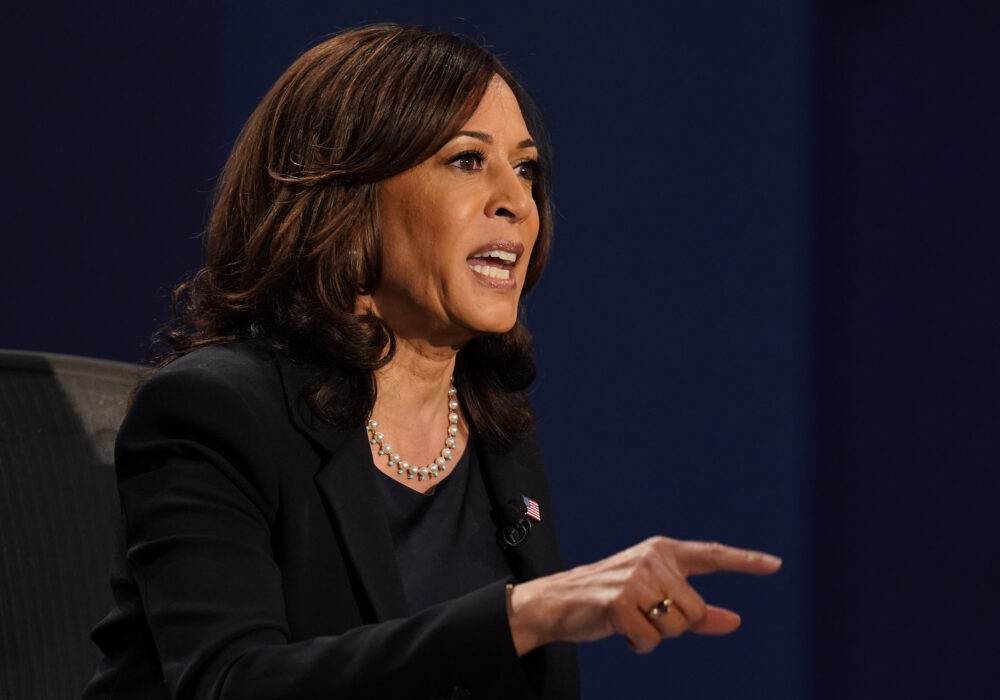
Concerns about escalation, civilian impact, and potential long-term consequences have also been a consistent part of their response. Statements like the one from Kamala Harris reflect that framing, emphasizing the dangers of rhetoric, the possibility of overreach, and the absence—at least from their perspective—of a clearly defined strategy.
This you? https://t.co/8nXhuxJjUL pic.twitter.com/VQfXXnuvR2
— Peter Daou (@peterdaou) April 7, 2026
At the same time, it’s accurate that concern over Iran’s nuclear ambitions has long been bipartisan. Figures across both parties, including Democrats such as Sen. John Fetterman, have publicly stated for years that preventing Iran from obtaining a nuclear weapon is a top national security priority.
That position hasn’t changed, but the disagreement now lies in how to act on it—specifically, whether direct military action advances or undermines that goal.
On the question of operational transparency, there is a longstanding tension between public accountability and military security. During active operations, administrations from both parties have historically limited the release of tactical details, arguing that premature disclosure can compromise missions and personnel. Critics, however, often push for more clarity on scope and authorization, especially when U.S. forces are engaged in sustained or potentially escalating conflict.
This is Kamala Harris in 2024:
“Iran is our biggest advisory”
“What we need to do, to ensure that Iran never achieves the ability to be a nuclear power, is my highest priority”
These people are so dishonest. Total sociopath! pic.twitter.com/gn0CKKqGCE
— Matt Wallace (@MattWallace888) April 7, 2026
The dispute over Trump’s “whole civilization” remark reflects another familiar dynamic: opponents interpreting rhetoric in its most literal or alarming sense, while supporters argue it was clearly hyperbolic or directed at a regime rather than a population. That gap in interpretation tends to widen during high-stakes foreign policy moments, where language carries both strategic and political weight.