

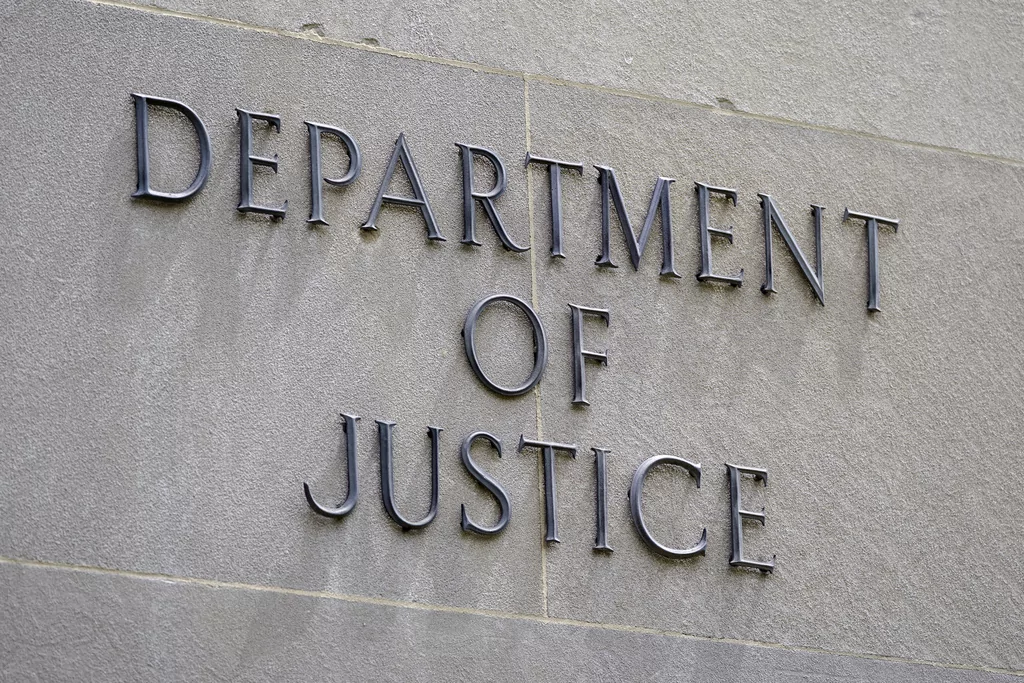

The Justice Department has stepped up its efforts to strip U.S. citizenship from individuals who obtained it through fraud or by concealing criminal activity, securing two denaturalizations and moving forward with a third case in federal court.
Attorney General Pamela Bondi framed the actions as part of a broader enforcement push, stating that citizenship is a privilege tied directly to honesty during the immigration process. The cases outlined by the department center on individuals who were granted naturalization despite conduct that would have disqualified them under federal law.
One of the most detailed cases involves Vladimir Volgaev, a Ukrainian national whose citizenship was officially revoked on March 23. Federal prosecutors established that Volgaev engaged in a long-running scheme to smuggle firearm components out of the United States beginning in 2011, years before he became a citizen in 2016. The operation involved purchasing, packaging, and shipping weapons parts to contacts in Ukraine and Italy. At the same time, authorities found that he underreported income and assets to obtain federal housing benefits.
🚨 BREAKING: The Trump DOJ has just announced DENATURALIZATION of two foreign fraudsters who lied on their citizenship applications
Let's go! This is what we voted for, denaturalized ALL migrant fraudsters 🔥
AG PAM BONDI: "American citizenship is a sacred privilege — not a… pic.twitter.com/FmO9cnl3VR
— Eric Daugherty (@EricLDaugh) March 26, 2026
Volgaev was convicted in 2020 on charges including smuggling goods and theft of government property. The court determined that his actions during the required “good moral character” period, combined with false statements during the naturalization process, made him ineligible for citizenship from the outset. His failure to disclose those activities ultimately led to the revocation.
A second case resulted in the denaturalization of Mirelys Cabrera Diaz, a Cuban national living in Florida. Her citizenship, granted in 2017, was revoked after the court found she had participated in a healthcare fraud conspiracy before becoming a citizen. Between 2011 and 2014, Cabrera Diaz admitted to coordinating kickbacks tied to fraudulent prescriptions billed through Medicare Part D, resulting in over $6 million in improper reimbursements.
She later pleaded guilty in 2019 and served a prison sentence, but the court focused on the timeline of her actions. Because the fraud occurred during the statutory period when applicants must demonstrate good moral character, the court ruled she was never eligible for naturalization.
The Justice Department has also filed a pending case against Alec Nasreddine Kassir, a Lebanese national accused of obtaining citizenship through marriage fraud. Prosecutors allege Kassir falsely claimed to be living with his U.S. citizen spouse during the years required for eligibility, while in reality the couple had separated and were living in different states.

Kassir later pleaded guilty to passport fraud and admitted that his naturalization had been improperly obtained. Investigators uncovered the discrepancies while examining his involvement in trafficking counterfeit goods and related financial crimes. The government argues that both his false statements and his inability to demonstrate good moral character justify revocation.
Across all three cases, federal authorities emphasize a consistent legal standard: applicants must disclose relevant conduct and meet moral character requirements during a defined period before naturalization. When those conditions are not met, citizenship can be reversed through civil proceedings, even years after it has been granted.