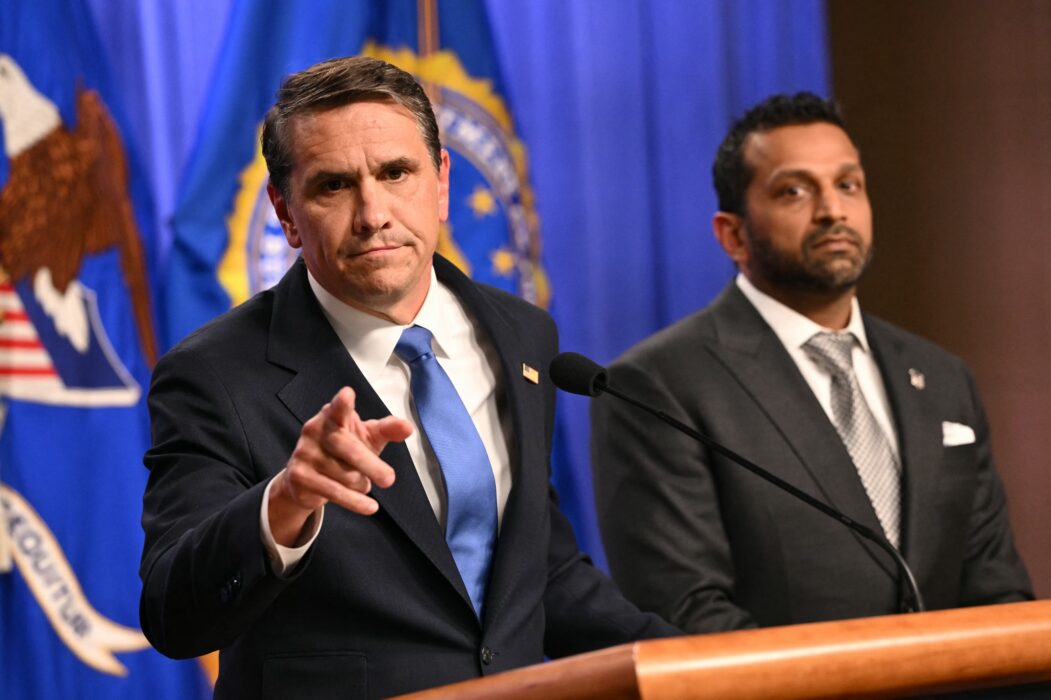

Alright, this is one of those stories where you almost have to slow it down and look at each piece, because taken all at once, it sounds like something pulled from a script rather than real life—but there are documented elements here mixed with claims that deserve a closer look.
Reminder that the Biden FBI was actively colluding with the SPLC to target traditional Catholics as domestic extremists.
They also labeled organizations like the Alliance Defending Freedom, Family Research Council, and Moms for Liberty as hate groups as well.
It turns out they… https://t.co/O0RMZRJSro pic.twitter.com/gQi44sU5tW
— Brandon Gill (@realBrandonGill) April 22, 2026
So let’s start with the Southern Poverty Law Center, the SPLC. For years, they’ve branded themselves as a watchdog group tracking extremism and hate organizations. That’s the public-facing identity. But critics—especially on the right—have argued for a long time that the group drifted away from neutral monitoring and into openly ideological territory, particularly in how it labels conservative organizations.
Now, one of the most serious incidents tied to that criticism goes back to 2012. Floyd Lee Corkins walked into the Family Research Council’s headquarters in Washington, D.C., armed and intending to carry out an attack. He was stopped before it turned into something far worse, but during the investigation, it came out that he had used the SPLC’s “hate map” to identify his target. That’s not speculation—that connection was established in court. And ever since then, critics have pointed to that case as an example of how labeling can have real-world consequences.
Charlottesville was Joe Biden's entire justification for running for president. His own words https://t.co/Pdfx6YOVeA
— Stephen L. Miller (@redsteeze) April 21, 2026
Fast forward, and you start seeing broader accusations aimed at the SPLC—not just about bias, but about internal conduct. There have been lawsuits, internal shakeups, and public reporting about workplace issues and financial management. However, claims that the organization “paid people to be racist” or ran a coordinated “false flag operation” are not established findings from the Justice Department. Those are serious allegations, and they haven’t been proven in any official legal outcome. It’s important to separate documented controversies from claims that are still unverified or disputed.
America wasn’t racist enough for SPLC to keep raising money, so SPLC decided to start sending funding to stoke racism
and keep the issue alive. Grotesque stuff. pic.twitter.com/5oohzeuvon— Katie Pavlich (@KatiePavlich) April 21, 2026
Then there’s Charlottesville in 2017—the Unite the Right rally. That event became a defining political flashpoint, especially after the violence that unfolded. Joe Biden later referenced Charlottesville as a key reason for entering the 2020 race. Whether every narrative detail around that event has been framed accurately is still debated in political circles, but it’s not accurate to say the entire event was “based on a lie.” There were real demonstrations, real clashes, and a fatal attack that was widely reported and investigated.
Incredible: the supply of right-wing "hate" was so low that a left-wing "anti-hate" group had to subsidize it, so it could then raise money to fight it. This is Thomas Sowell's "life support" theory in action. 10/10 work. https://t.co/ifUQHyWqO2
— Christopher F. Rufo ⚔️ (@christopherrufo) April 21, 2026
What you’re seeing across all of this is a collision between perception, politics, and selective interpretation. Different sides are pulling from the same events but building very different narratives around them.
"We pay people to be racist so we can fight racism" https://t.co/86X8DNY6fJ pic.twitter.com/pD2SopfutJ
— Flappr (@flapprdotnet) April 22, 2026