


You can always tell when something hits a nerve in Washington—not by what gets passed, but by how fast the lawsuits start flying.
And this one? It didn’t take long.
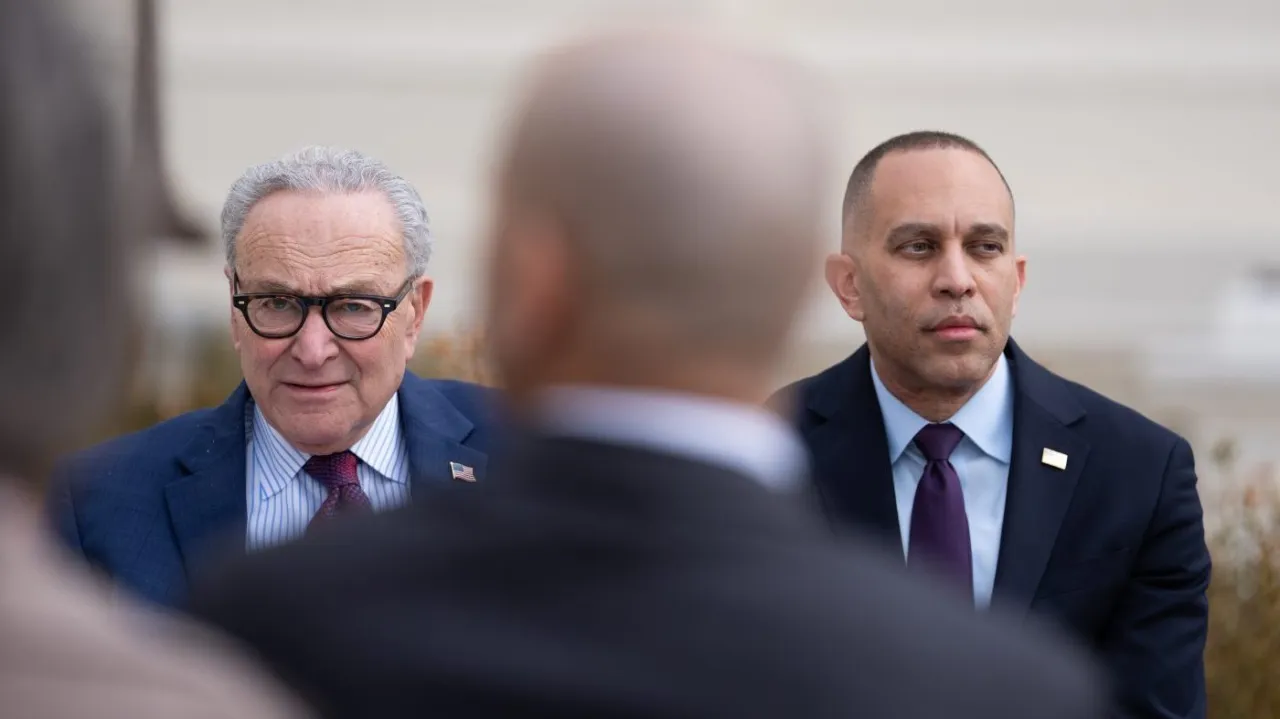
The Democratic National Committee, Chuck Schumer, Hakeem Jeffries, and their campaign machinery all jumped into federal court almost immediately after President Trump rolled out a new executive order targeting mail-in voting rules ahead of the midterms. Not a slow, cautious response. Not a wait-and-see approach. Straight to a lawsuit.
That kind of speed tells you something.
DNC and top Democratic leaders sue Trump over mail-in voting executive order https://t.co/56PRksPzB7
— CBS News (@CBSNews) April 2, 2026
Now, what’s actually in this order? It’s not some vague, abstract overhaul. It’s pretty specific. Federal agencies would be required to verify U.S. citizenship using Social Security and DHS data. The Postal Service would only send absentee ballots to voters who are already on approved state rolls. And every ballot would carry a unique barcode so it can be tracked.
That’s the framework. Identity verification, tighter control over distribution, and tracking.
Democrats are calling it a power grab. Their lawsuit claims Trump is trying to rewrite election rules for partisan advantage. They’re invoking the Constitution, warning about “absolute power,” and framing this as a direct threat to self-government.

But here’s where the temperature rises a bit.
Because for years, the same voices have described the current system as secure—locked down, reliable, nothing to worry about. So when a proposal comes along that adds layers of verification and tracking, the reaction isn’t “let’s debate the details.” It’s full legal resistance.
That contrast is what’s driving the political tension here.
Trump, for his part, isn’t hedging. He’s been blunt—arguing that voting in federal elections should be limited strictly to U.S. citizens, enforced with real verification. He’s also made it clear he’s willing to push this forward with or without Congress, especially after Republican efforts like the SAVE America Act stalled in the Senate.
And then there’s the messaging, which is… unmistakably Trump.
He’s accusing Democrats of opposing voter ID and citizenship checks because, in his words, they want to “continue to cheat in elections.” That’s not subtle. It’s not designed to be. It’s aimed squarely at voters who already have doubts about election security.
Scott Jennings INFURIATES the CNN panel by reading voter fraud headlines live on air — Democrat rolls her eyes and Abby Phillip immediately rushes to issue a defensive statement.
As Phillip was melting down about Trump’s executive order cracking down on mail-in ballot fraud,… pic.twitter.com/vO55zTZ2oi
— Overton (@overton_news) April 1, 2026
Meanwhile, Democrats are warning that this is exactly the kind of executive overreach the Constitution was designed to prevent—centralizing too much control over elections in the hands of the presidency.
So now it’s headed where these fights always seem to end up: the courts.
And that’s where things get complicated.
Because this isn’t just about whether voter ID or ballot tracking is a good idea. It’s about whether a president can impose these kinds of rules through executive authority, especially when election administration has traditionally been handled at the state level.
That’s the legal fault line.
With the midterms approaching, the timing raises the stakes even higher. Any ruling won’t just settle a constitutional question—it could directly shape how ballots are handled, verified, and counted in a live election cycle.
So now you’ve got both sides digging in.
One side saying this is basic election integrity—citizenship checks, controlled ballot distribution, traceability. The other saying it’s a federal power play that cuts into how elections are supposed to function.