

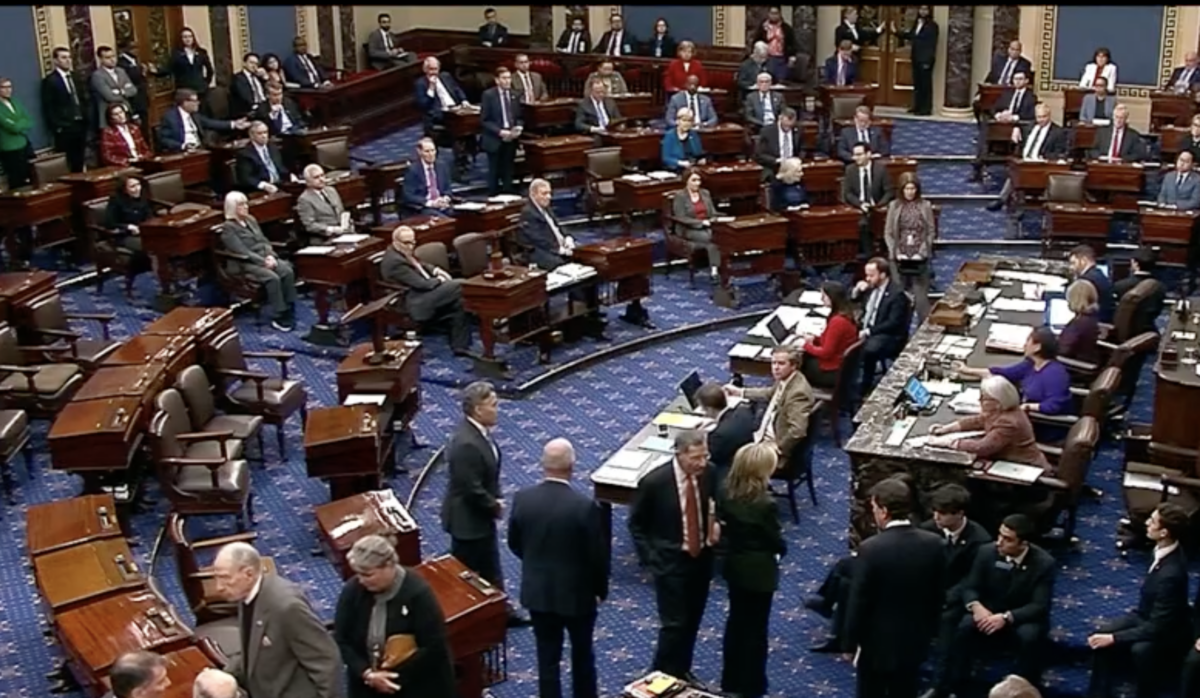

The Senate voted 49-50 to reject a resolution that would have limited President Trump's power to use force in Iran. This outcome occurred on Thursday after a heated debate on the floor. Four Republicans joined all Democrats to back the measure, yet it failed to pass.
Senators Susan Collins, Lisa Murkowski, Rand Paul, and Thom Tillis voted in favor of the bill. Only Senator John Fetterman voted against his party's general stance on the issue. Senator Angela Alsobrooks was absent from the final roll call. The vote marks over a dozen attempts to stop the President's actions in the region.
The vote came right after President Trump spoke to the United Nations General Assembly on Tuesday. He framed his options for the Islamic Republic in stark terms during his address. He questioned whether a deal with Iran would permit them to reconstruct and forge a nation far surpassing its former state.
He then posed a harder choice to the world leaders in the room. Or should I obliterate the Islamic Republic swiftly, ensuring they never again have the opportunity to murder and ravage nations and individuals. The President also inquired whether he ought to drive them into hell without any chance of survival. These comments followed the Operation Epic Fury attacks he ordered back in February.
Many voters now link the conflict to the high cost of fuel at the pump. Senate Majority Leader John Thune admitted that people are tired of paying more for gas. He remarked that voter fatigue exists among people due to elevated diesel and gas costs in his region.
Thune explained that the situation causes real economic pain for families in his state. This economic frustration explains why I urge the administration to focus intensely on opening the [Strait of Hormuz] and shipping lanes to aid global energy supply, which will eventually lower prices. The military action has become a major flashpoint for the upcoming midterm elections.
Congress possesses the authority under the War Powers Act of 1973 to compel the President to terminate a foreign conflict. This resolution was the latest in a long string of similar efforts by the Senate. The measure was introduced by Senator Tim Kaine to curb the President's authority. It failed by a single vote, which is not enough to override a potential veto.

The military action remains a central issue as the election cycle heats up. The Washington Times reported that fuel price spikes are largely blamed on the ongoing conflict. The New York Post noted that all but one of these resolutions have failed since the conflict began. The Senate will likely face this same question again before the election.