


Smart home devices can make everyday life easier. Lights can be switched off remotely, cameras can alert homeowners to someone in the driveway, and doorbells can show whether that long-awaited package finally arrived.
A smart thermostat sounds like another convenient addition to that list — right up until somebody other than the homeowner gets a say in the temperature.
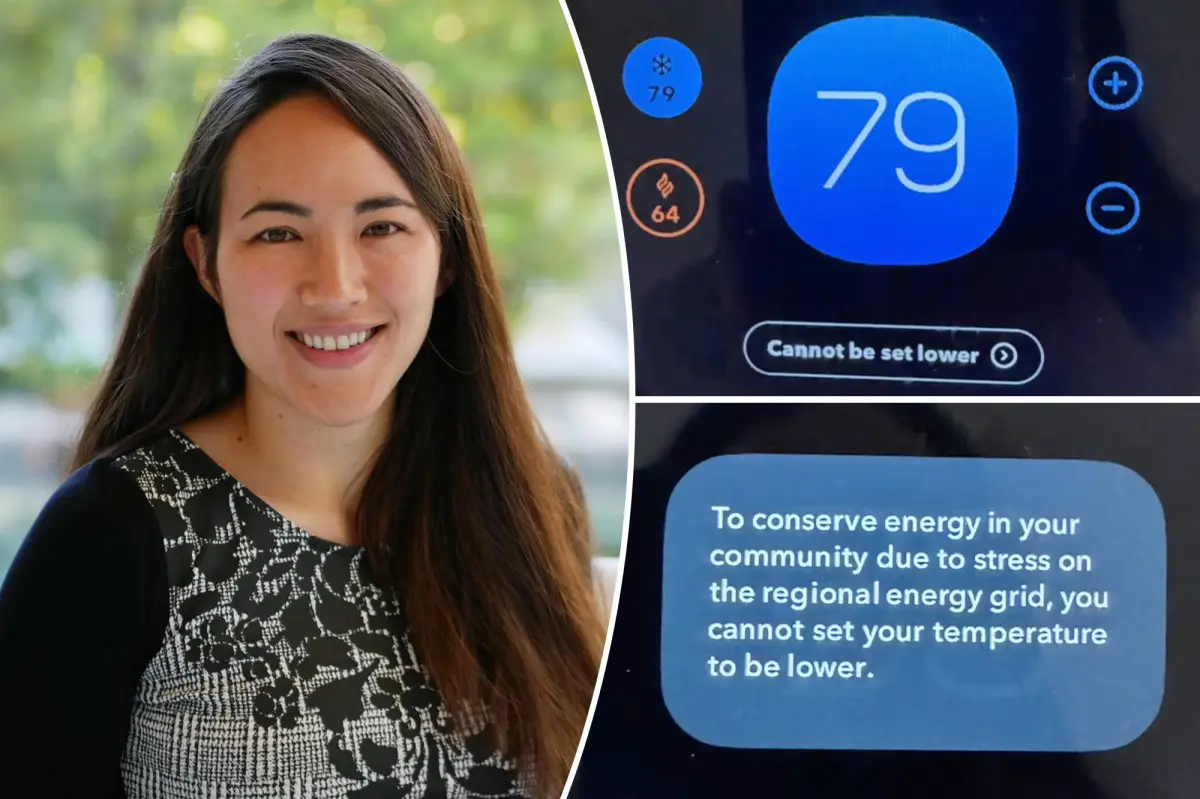
That is precisely the situation Colorado resident Kyri Baker encountered during a recent heat wave. Baker, an assistant professor at the University of Colorado Boulder, tried to lower the temperature in her home from 79 degrees to 75 degrees so her daughter could sleep.
Her internet-connected thermostat wouldn't let her.
🇺🇸 A Colorado woman tried to lower her AC from 79 degrees, but her smart thermostat told her she wasn’t allowed.
The warning cited stress on the regional power grid and temporarily blocked her from lowering the temperature.
She participates in Xcel Energy’s voluntary program,…
— NewsForce (@Newsforce) August 13, 2026
According to Baker, the device displayed a message explaining why her requested temperature wasn't available:
“To conserve energy in your community due to stress on the regional energy grid, you cannot set your temperature to be lower.”
That's quite a message to receive from a thermostat when temperatures outside are approaching triple digits.

Baker's experience occurred as Colorado dealt with extreme heat, with temperatures reportedly reaching 100 degrees Saturday and remaining in the 90s in portions of the state Monday and Tuesday.
“I just wanted to set it to 75, something very reasonable so my daughter could fall asleep,” Baker told Denver NBC affiliate 9 News.
There is an important detail here, however: Xcel Energy didn't simply seize control of a random customer's thermostat without permission.

Baker had voluntarily enrolled in an Xcel Energy program that provides incentives to customers who allow the utility to adjust their air conditioning during certain periods of high electricity demand. Such programs are intended to reduce pressure on the grid when large numbers of customers are running air conditioners simultaneously.
The problem, according to Baker, was that she didn't realize participating could mean temporarily losing the ability to override the temperature adjustment.
That distinction turned an abstract agreement about conserving electricity into a very tangible problem inside her house.
“It was kind of annoying,” Baker said. “I’m doing my part to help the grid, and I’m getting penalized for it in some way.”
She also argued that customers need a way around such restrictions when circumstances require it.
“There always needs to be an opt out feature.”
That's the part of the smart-device bargain worth examining closely.
Be happy we didn't set it to 84 degrees! pic.twitter.com/BlFoE2OXJH
— Charles R. Smith🔹 (@softwarnet) August 13, 2026
The technology itself isn't the villain. Remote controls, automated energy savings and demand-response programs can all be useful. Nor was Baker unknowingly placed into the program; she voluntarily joined it. But her experience demonstrates why the fine print matters when a homeowner gives an outside organization permission to control a device inside the home.
A thermostat isn't merely another gadget. During extreme temperatures, heating and air conditioning can become health and safety issues, particularly in homes with children, elderly residents or people with medical conditions.
Baker said she enrolled because she wanted to offset her carbon footprint during periods of high demand. What she apparently didn't expect was that her conservation effort could prevent her from making what she considered a modest four-degree adjustment.