

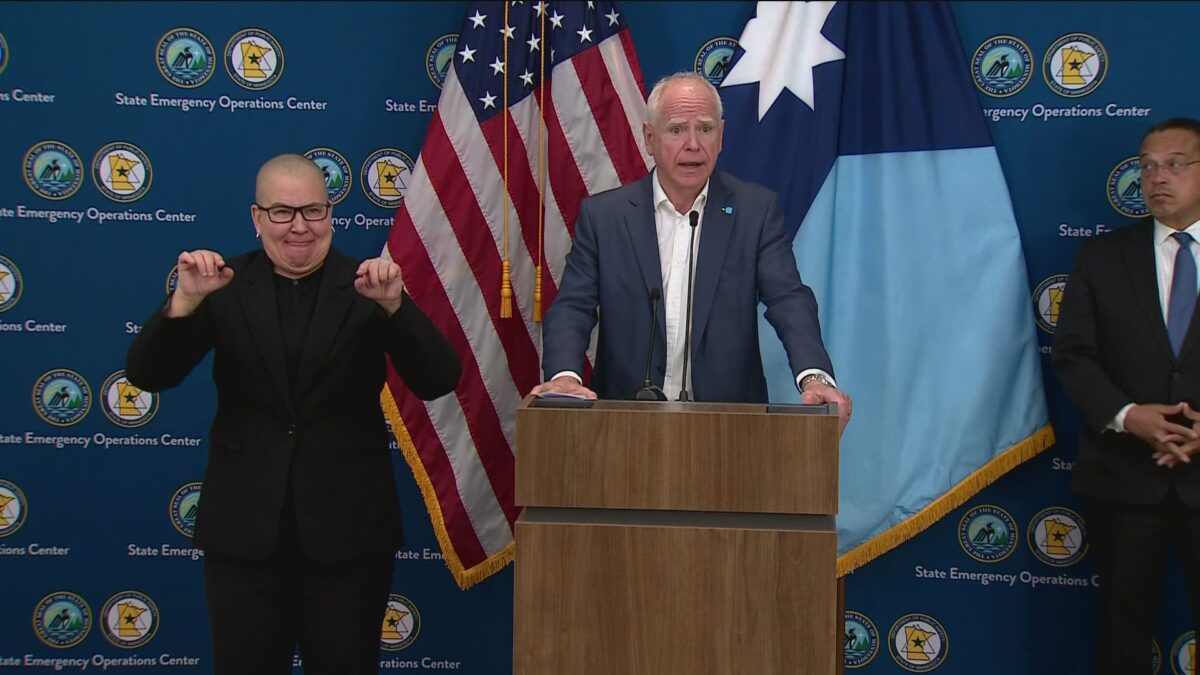

When Minnesota Governor Tim Walz stood behind a podium on Sunday and likened federal immigration enforcement to the Nazi regime, the political air grew thick — not just with outrage, but with consequence.
Drawing parallels between U.S. law enforcement officers and one of history’s most brutal totalitarian regimes, Walz referenced the story of Anne Frank, invoking imagery of children “hiding in their houses” across Minnesota, allegedly fearful of federal agents.
For a sitting governor to frame modern immigration policy through the lens of Nazi Germany is not just a rhetorical flourish — it’s a provocation, especially in a moment of real volatility.
His comments came just one day after the fatal shooting of Alex Pretti, a nurse who, according to DHS, approached officers during an ongoing operation while carrying a firearm.
Pretti’s supporters argue he was trying to help someone, not interfere. But the confrontation, like the one weeks earlier involving Renee Good — who was shot and killed after attempting to ram her car into an agent — has turned Minneapolis into a flashpoint of violence, fear, and political grandstanding.
Federal agents have faced mounting threats in the wake of these incidents. Protesters in the streets have been increasingly aggressive, with chants like “Kill an ICE, Save a Life” no longer fringe but disturbingly frequent. And yet, instead of condemning the rhetoric fueling this dangerous climate, Walz appears to be pouring gasoline on it — even as federal officials warn of growing hostility against their agents.
This is not Walz’s first incendiary statement. In 2025, he compared ICE to “Trump’s modern-day Gestapo.” Now, joined by figures like Illinois Governor JB Pritzker and New Jersey’s Mikie Sherrill, the governor seems committed to framing all federal immigration enforcement through a lens of historical oppression.

But there is a cost to that language — not just politically, but physically. Officers are being targeted. Cities are burning with rage. And federal officials, like Deputy Attorney General Todd Blanche, are now openly accusing state leaders of inciting terrorism.
What we’re seeing in Minnesota is not just a policy disagreement; it’s a breakdown of federal-state cooperation under the weight of ideology, fear, and rhetoric pushed to extremes. When law enforcement becomes the villain in political theater, and Nazis become the metaphor of choice, the result isn’t justice — it’s chaos.