


Casper said:
In a bold and unambiguous escalation of America’s war on narco-terrorism, Secretary of War Pete Hegseth announced that the U.S. military has conducted a lethal strike on a drug-smuggling vessel linked to Colombia’s notorious Ejército de Liberación Nacional (ELN). The move marks the most aggressive U.S. military action yet against Latin American insurgent cartels operating far beyond America's borders—but dangerously close to its national interests.
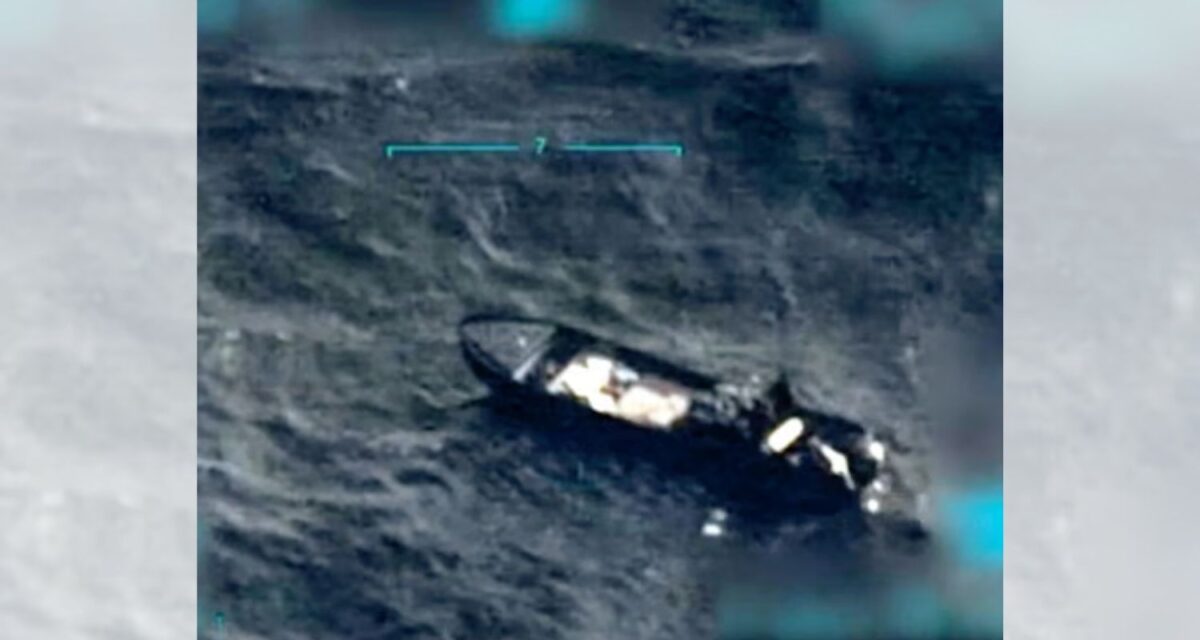
According to Hegseth, the operation was swift, targeted, and decisive. Acting on intelligence that tied the vessel directly to narcotics smuggling operations run by the ELN—a U.S.-designated terrorist group—the Department of War authorized a kinetic strike while the boat traveled through a known drug trafficking corridor in international waters. The result: three ELN-aligned narco-terrorists killed, substantial amounts of narcotics seized or destroyed, and zero American casualties.
This was not a rogue cell or a random shipment. The ELN has long been one of Colombia’s most entrenched insurgent groups, blending Marxist ideology with brutal criminal enterprise. With over 2,500 armed fighters, they exert de facto control over swathes of Colombian territory, where they manufacture and export cocaine through a network of guerrilla warfare, extortion, and terror. Their operations are not simply a regional concern—they are a hemispheric threat.
On October 17th, at the direction of President Trump, the Department of War conducted a lethal kinetic strike on a vessel affiliated with Ejército de Liberación Nacional (ELN), a Designated Terrorist Organization, that was operating in the USSOUTHCOM area of responsibility.
The… pic.twitter.com/1v7oR879LC
— Secretary of War Pete Hegseth (@SecWar) October 19, 2025
Hegseth’s tone left no room for ambiguity. “These cartels are the Al Qaeda of the Western Hemisphere,” he declared, invoking the darkest chapters of 21st-century terrorism to frame a new battleground. His message: the U.S. will no longer treat narco-traffickers as criminals alone—they are enemy combatants. And they will be “hunted and killed,” just as Islamic terrorists have been in the Middle East.
This latest strike also comes on the heels of the launch of a specialized counter-narcotics task force, aimed squarely at cartel operations in Latin America and the Caribbean. The timing is not incidental. Just days ago, President Trump announced an abrupt halt to all U.S. foreign aid to Colombia, accusing the South American nation of complicity in the drug trade. “They make drugs. They refine drugs. They have cocaine factories,” Trump said, adding pointedly: “We’re not going to be part of it.”
The geopolitical implications are significant. For years, Washington has tried to walk a diplomatic tightrope with Bogotá—providing aid, intelligence, and support for anti-cartel efforts while respecting Colombia’s sovereignty. But this strike suggests a sea change in doctrine: a readiness to act unilaterally when U.S. interests are threatened, regardless of borders.

Critics will no doubt raise questions about precedent, legality, and international diplomacy. But the administration seems less interested in optics than outcomes. With overdose deaths surging in American cities and cartel violence spilling into the U.S. borderlands, the logic is clear: if the poison flows north, the consequences will flow south.
Whether this marks the beginning of a broader military campaign against transnational cartels remains to be seen. But what is certain is that America’s war on drugs just entered a new and unmistakably kinetic phase—and for groups like the ELN, the rules of engagement have changed.