

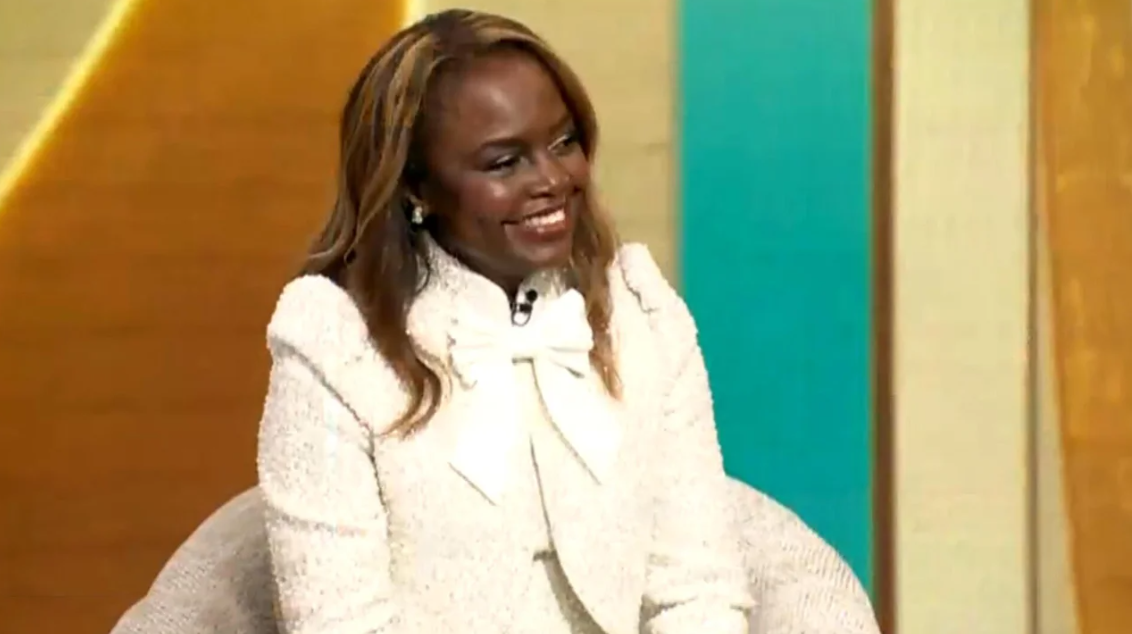

Former White House Press Secretary Karine Jean-Pierre has ignited a firestorm of disbelief—and raised eyebrows across the political spectrum—after telling CBS that she never saw signs of President Joe Biden’s decline until the infamous CNN debate with Donald Trump.
Promoting her new memoir, Independent: A Look Inside a Broken White House, Outside the Party Lines, Jean-Pierre appeared on CBS Mornings, where hosts Tony Dokoupil and Gayle King pressed her on the obvious: how could someone so close to the President—who traveled with him, briefed him, and defended him publicly almost every day—miss what so many Americans have been seeing for months, if not years?
“When I saw the subtitle of your book,” Dokoupil began pointedly, “I thought you were going to say you tried to convince Joe Biden to drop out… But instead, you’re angry at the people who tried to push him out. Some Americans are going to say: ‘Seriously!?’”
Jean-Pierre responded by shifting the conversation to frustrations with the Democratic Party at large. “That’s really what ignited the book,” she claimed, citing conversations with everyday Americans who, after 2024’s tumultuous election cycle, expressed disappointment in the party’s lack of preparedness and fight.
Biden's Press Secretary, Karine Jean-Pierre, claims she never saw any signs of mental decline with the former president:
“I never saw anyone who wasn’t there. I saw someone who was always engaged.”
This is a lie. Everyone saw the truth for four years. pic.twitter.com/oKYkejnQCC
— Media Lies (@MediasLies) October 20, 2025
But it wasn’t enough to satisfy the co-hosts—or viewers. Gayle King jumped in with sharper skepticism. “You even write, Karine, that you were on the plane with him going to the debate, and you didn’t see anything. It’s so hard to understand!” Her tone carried the disbelief many Americans likely felt watching the segment in real time.
Jean-Pierre tried to clarify. She hadn’t interacted with Biden much on that flight, she explained, because the campaign team and family were handling prep. “I didn’t really see him until after the debate,” she said.
But then came the most scrutinized part of her remarks: “I saw someone who was always engaged… who understood policy… who understood history.”

That claim directly contradicts not only voter concerns, but the opinions of many Democrats and former officials who’ve spoken off-the-record about Biden’s visibly faltering energy, memory lapses, and declining public presence in the months leading up to the debate. The idea that Biden's cognitive performance only became questionable during that single 90-minute CNN event is not just unconvincing—it strains credulity.
In truth, public concern about Biden’s mental acuity has been building for years. From awkward gaffes to hesitant press appearances, questions about his sharpness have persisted well before that night on CNN. Even Democratic strategists have admitted privately that shielding Biden from unscripted moments had become part of the communication strategy. Yet Jean-Pierre now says she saw “no decline”?
Her memoir may aim to distance her from what she calls “a broken White House,” but her credibility risks breaking under the weight of contradictions. Either she missed what millions of Americans saw on their screens, or she’s being far too careful in what she’s willing to admit. Neither possibility inspires much confidence.
And that’s the central tension: Jean-Pierre wants to tell her side of the story, but in doing so, she exposes the very crisis of perception the White House struggled to manage. When the official spokesperson says the President was “always engaged,” but the public saw something very different—who are voters more likely to believe?