

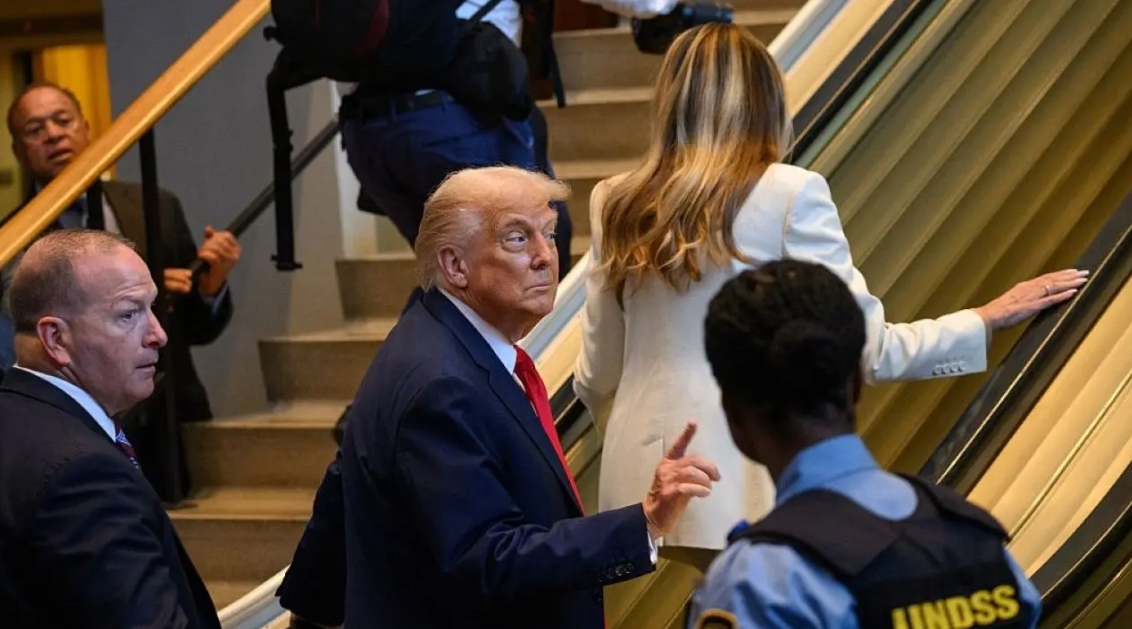

In a moment that was equal parts classic Trump and unintended symbolism, President Donald Trump veered off-script during his remarks at the United Nations this week — not to deliver a policy bombshell, but to vent about a broken escalator and a faulty teleprompter.
“All I got from the United Nations was an escalator that on the way up stopped right in the middle,” he said, slicing the air with his hand, equal parts amused and annoyed.
But as with many Trump anecdotes, the punchline had a twist. According to U.N. spokesman Stéphane Dujarric, it wasn’t the UN’s machinery that failed Trump — it was someone on his own team.
A videographer from the U.S. delegation reportedly ran ahead of the president and accidentally triggered a safety mechanism at the top of the escalator, which caused it to stop.
As for the teleprompter glitch? That too, according to U.N. officials, was not on them. The White House was operating the system, and the malfunction seems to have originated on their end. Trump, never one to miss a chance to blend performance with politics, cracked, “Whoever’s running the teleprompter is in big trouble.”
But beyond the light-hearted jabs and self-inflicted snafus, the setting itself tells a broader story. The UN’s headquarters in New York and its sister offices in Geneva have recently been turning off elevators and escalators — not due to malfunction, but due to budget constraints. Facing a mounting “liquidity crisis,” the global body has implemented cost-saving measures that include cutting back on basic operational infrastructure.
And why the shortfall? Part of it stems from delays in payments from the United States — the same nation whose president publicly mocked the facility for its dysfunction.

The irony writes itself. Trump, long a critic of the United Nations, inadvertently ran headfirst into the bureaucratic bottlenecks he’s decried for years — only this time, with the added twist that his own staff may have helped create the moment.
And while the quips about broken escalators may draw laughter, they also mirror a broader truth: the UN, weighed down by politics, funding gaps, and procedural sprawl, often struggles to operate smoothly — even on the way up.