

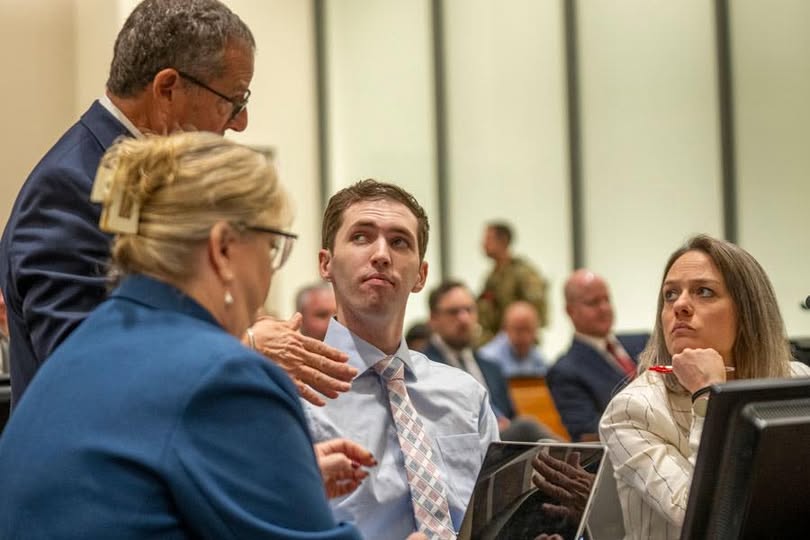

A tense pre-trial hearing in Utah this week pulled back the curtain on the legal and political pressures surrounding one of the most closely watched criminal cases in the country. Tyler Robinson’s defense team argued that the decision to seek the death penalty in the assassination of Turning Point USA founder Charlie Kirk had less to do with impartial justice and more to do with political signaling — including pressure they claim flowed from the very top.
During Tuesday’s hearing, defense attorney Richard Novak pressed Utah County Attorney Jeffrey S. Gray on whether his office moved unusually fast to pursue capital punishment because it aligned with what President Donald Trump had publicly called for. Trump had previously posted that he hoped Kirk’s killer would receive the death penalty, a statement Novak suggested may have influenced prosecutors eager to demonstrate resolve in a nationally charged case.
The defense framed Gray’s early announcement as emotionally driven rather than procedurally sound. Novak pointed to several factors he said could have inflamed the prosecution’s judgment: Gray’s campaign promise to pursue the death penalty when he deemed it appropriate, the presence of an adult child of a prosecutor at the scene of the shooting, and the political gravity of a case involving a conservative figure whose death drew immediate national attention.
Gray rejected each implication. Under oath, he acknowledged learning that a prosecutor’s adult child had witnessed the shooting, but emphasized that the matter had not been discussed internally and played no role in charging decisions.
In a prior filing, Gray argued that the defense’s claims overstated the emotional impact, noting that the individual returned to classes shortly after the incident and suffered no lasting trauma beyond fear in the moment. He characterized the conflict-of-interest motion as a delay tactic rather than a legitimate concern.
When questioned directly about Trump’s remarks, Gray said he was aware of them but did not consider the president’s social media statements in determining whether to seek capital punishment.
On the issue of campaign promises, Gray clarified that he had pledged to seek the death penalty only in cases where it was warranted, not as a blanket policy. He added that both he and Utah Governor Spencer Cox independently concluded that the facts of this case justified that decision.

Gray also addressed why his office announced the death penalty decision earlier than required. Rather than political theater, he said the intent was to reduce speculation and ease the emotional burden on victims’ families, particularly Charlie Kirk’s widow, Erika Kirk. Delaying the decision, he argued, would have fueled uncertainty and unnecessary anguish.
The defense also moved to restrict cameras and photography in the courtroom, signaling concerns about media influence and public perception as the case moves forward. As the legal battle continues, the hearing underscored how deeply law, politics, and public pressure are intertwined in a case that extends far beyond a single courtroom.