


For now, it is only one poll, and outlier surveys appear in every election cycle. Still, one was bound to surface eventually. Emerson College now shows Democrats holding a double-digit advantage on the generic congressional ballot, a number that naturally grabs attention even if it ultimately proves to be an outlier.
History offers some perspective. In the 2018 midterms, Democrats won back the House after generic ballot polling consistently placed them roughly seven to nine points ahead. Republicans have long viewed that range as dangerous territory. If the Democratic advantage remains under five points nationally, the GOP has a much more realistic path toward holding its House majority. At this stage, Republicans are still in a position where retaining control is possible, but the margin for error is becoming increasingly narrow.
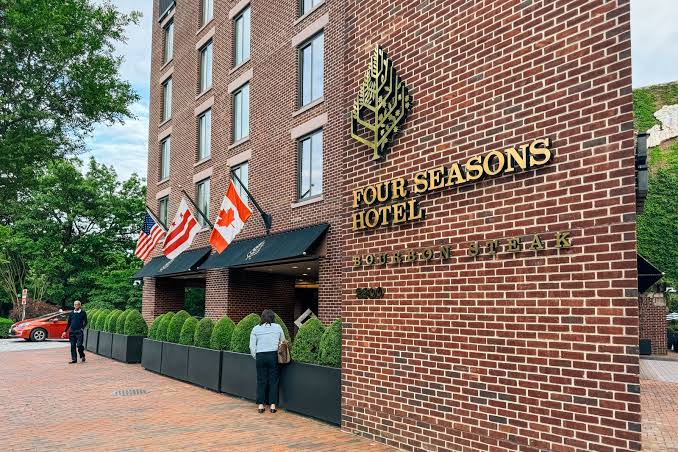
That reality is clearly on President Donald Trump's radar. According to Axios, senior members of Trump's political operation recently gathered at the Four Seasons hotel in Washington, D.C., for what has become a series of strategy meetings focused on the 2026 midterm elections. Trump himself did not attend, but many of his closest advisers did.
Among those participating were longtime pollster Tony Fabrizio, who presented the latest midterm polling landscape; political operations chief James Blair; White House Chief of Staff Susie Wiles; former campaign co-manager Chris LaCivita; and Republican National Committee Chairman Joe Gruters. Cabinet officials also attended, with Secretary of State Marco Rubio absent because of official travel to Manila.
The purpose of the meetings is straightforward: coordinate Republican messaging, campaign operations, and candidate support as the political environment becomes more competitive.
Republicans openly acknowledge the challenges ahead. Trump's approval numbers have softened amid higher gas prices and continued attention on the conflict involving Iran. Those issues could complicate efforts to defend the House, particularly in competitive districts where small shifts in voter sentiment often decide elections.
At the same time, GOP strategists argue that Democrats face significant internal problems of their own. Progressive activists continue to criticize the Democratic Congressional Campaign Committee for its involvement in primary contests, while disagreements within state parties, including in Maine, have added to broader tensions. The growing influence of Democratic Socialists of America-backed challengers has also created difficult strategic decisions for party leadership, particularly as fundraising concerns limit the resources available to defend incumbent Democrats from primary challenges.

Much of the political outlook may ultimately depend on developments outside the campaign itself. If the administration can bring the Iran situation to a close without further escalation, while energy prices move lower and Trump's standing with voters improves even modestly, Republicans would likely enter the heart of the midterm season in a stronger position.