

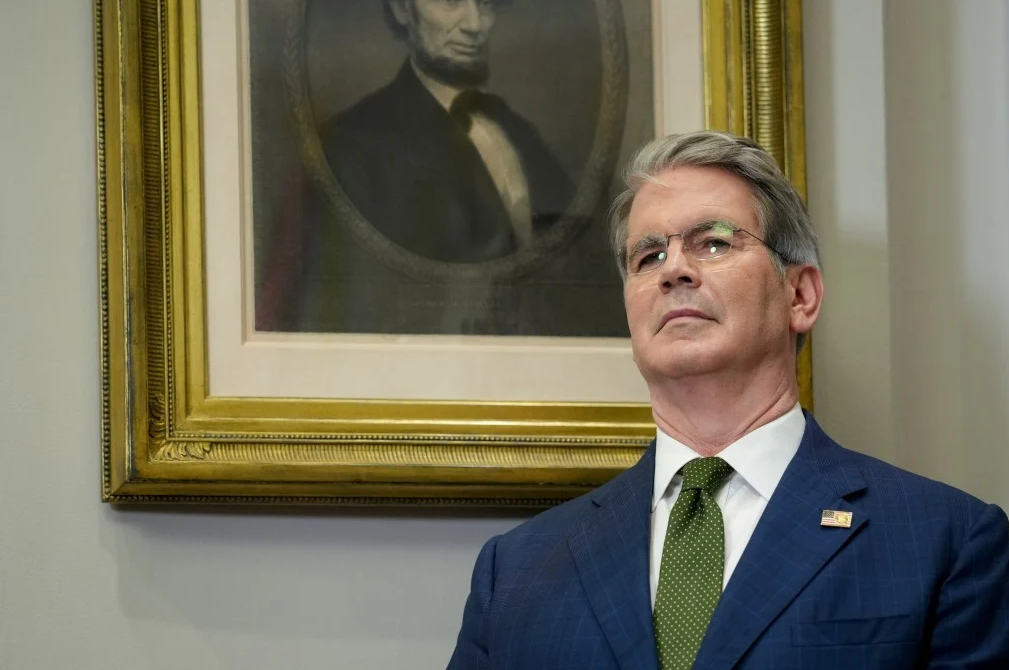

Treasury Secretary Scott Bessent didn’t mince words on Wednesday when he tore into several Democrat-led states for what he called a “deliberate blockade” against the full implementation of President Donald Trump’s One Big Beautiful Bill Act — legislation already being hailed by supporters as a cornerstone of Trump’s economic legacy.
Signed into law on July 4, the OBBB slashed taxes on tips and overtime pay, locked in the sweeping tax cuts from Trump’s first term, and introduced new deductions for seniors relying on Social Security. It’s being promoted as a generational breakthrough in tax reform — one aimed squarely at helping the working class and seniors keep more of what they earn. But, according to Bessent, that progress is being stifled in deep blue territory.
In a sharply worded statement, Bessent singled out New York, Colorado, Illinois, and Washington D.C. as refusing to align their state tax codes with the federal reforms — effectively denying their residents the full benefit of the OBBB. He framed the decision as not just partisan, but personal: a betrayal of the very workers Democrats often claim to support.
Thanks to @POTUS, ‘tis the season to be jolly – unless you’re a taxpayer in New York, Colorado, Illinois, or the District of Columbia.
For millions of hardworking Americans, @GovKathyHochul, @GovofCO @jaredpolis, and @GovPritzker are The Grinches Who Stole Christmas.
Courtesy… pic.twitter.com/eVtKYcHc4w
— Treasury Secretary Scott Bessent (@SecScottBessent) December 10, 2025
“This partisan stonewalling is a direct assault on the very families and workers liberal politicians claim to champion,” Bessent said, accusing these state governments of “robbing” Americans of well-earned financial relief.
The message from the Treasury was clear: while Trump delivers relief from Washington, Democratic governors are tightening the screws back home. Bessent went further on social media, branding Governors Hochul, Polis, and Pritzker as “The Grinches Who Stole Christmas,” claiming their opposition to the OBBB reforms has made this holiday season more expensive for their own citizens.
The politics behind this clash are unmistakable. For Republicans, the OBBB represents more than just tax policy — it’s a symbolic restoration of the “forgotten men and women” Trump championed in 2016. House Speaker Mike Johnson called it the most significant legislative victory for families and workers in U.S. history, while economist Steve Moore urged the GOP to go on offense, framing Democrat opposition to the bill as support for a $4 trillion tax hike.
But despite the federal momentum, states have discretion in how (or whether) they conform to federal tax law — and that’s where the current stalemate sits. By refusing to mirror the OBBB's tax breaks at the state level, governors like Hochul and Pritzker are, in effect, maintaining higher taxes on service workers, seniors, and overtime earners — the very groups the bill was meant to uplift.

The implications are far-reaching. In states like New York and Illinois, workers might see their federal tax bills shrink, only to watch state taxes swallow up the difference. It’s a frustrating paradox for those who believed July 4th would mark the dawn of real, practical relief.
In Bessent’s words:
“This is about fairness. This is about opportunity. And this is about putting America first.”
But for millions of Americans living in blue states, the promises of the OBBB remain largely theoretical — a promise of relief, still waiting on the doorstep, while political gridlock keeps the door locked tight.