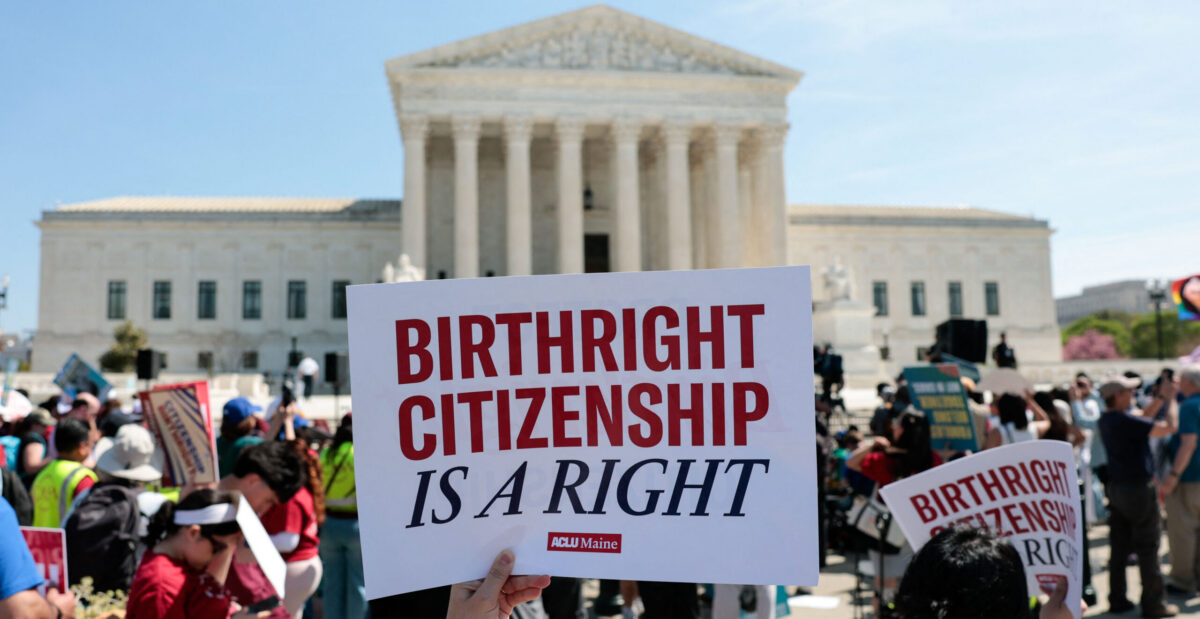

The Supreme Court recently rejected President Donald Trump's attempt to limit birthright citizenship, but he is not backing down. Trump is now urging Congress to pass legislation to end birthright citizenship, bypassing the need for a constitutional amendment.
"The Supreme Court upheld Birthright Citizenship, which is too bad for our Country, but we can easily make it up in Congress through Legislation, with the support of the President, that has now been determined during this process," Trump wrote on Truth Social.
No long and unwieldy Constitutional Amendment is necessary! Congress should start TODAY to work on ending expensive and unfair to our Country, Birthright Citizenship. They will have my Complete and Total Support!"
Context
Birthright citizenship, guaranteed by the 14th Amendment, grants automatic citizenship to anyone born on U.S. soil. Trump's executive order, signed on his first day in office, aimed to limit this right to children with at least one U.S. citizen or permanent resident parent. However, the Supreme Court ruled that this order violated the 14th Amendment in a 6-3 decision.
Justice Brett Kavanaugh, who joined the majority, suggested that Congress could clarify birthright citizenship through legislation. "Congress could—consistent with the Fourteenth Amendment—amend existing law or otherwise enact new legislation establishing exceptions to birthright citizenship for children born to foreign citizens unlawfully or temporarily in the country," Kavanaugh wrote.
Lawmakers have already introduced bills to address birthright citizenship without a constitutional amendment, but the likelihood of passage remains uncertain given the current political climate.
Why This Matters
This development is significant for several reasons. First, it shows that despite the Supreme Court's ruling, Trump and his supporters are still pushing for changes to birthright citizenship. This could have far-reaching implications for families and immigration policies.

House Speaker Mike Johnson echoed Trump's concerns, stating, "It’s been abused. It’s one of those things that was intended to serve a noble, important purpose, and has been thwarted and overused and abused."
The push for legislation also highlights the ongoing debate over the interpretation of the 14th Amendment. Some argue that the amendment clearly guarantees birthright citizenship, while others believe it can be reinterpreted or clarified through legislative action.
Key Takeaways
- Trump calls on Congress to pass a law ending birthright citizenship after Supreme Court loss.
- Justice Kavanaugh suggests Congress could clarify birthright citizenship through legislation.
- Conservative lawmakers argue the current system is abused and needs reform.