

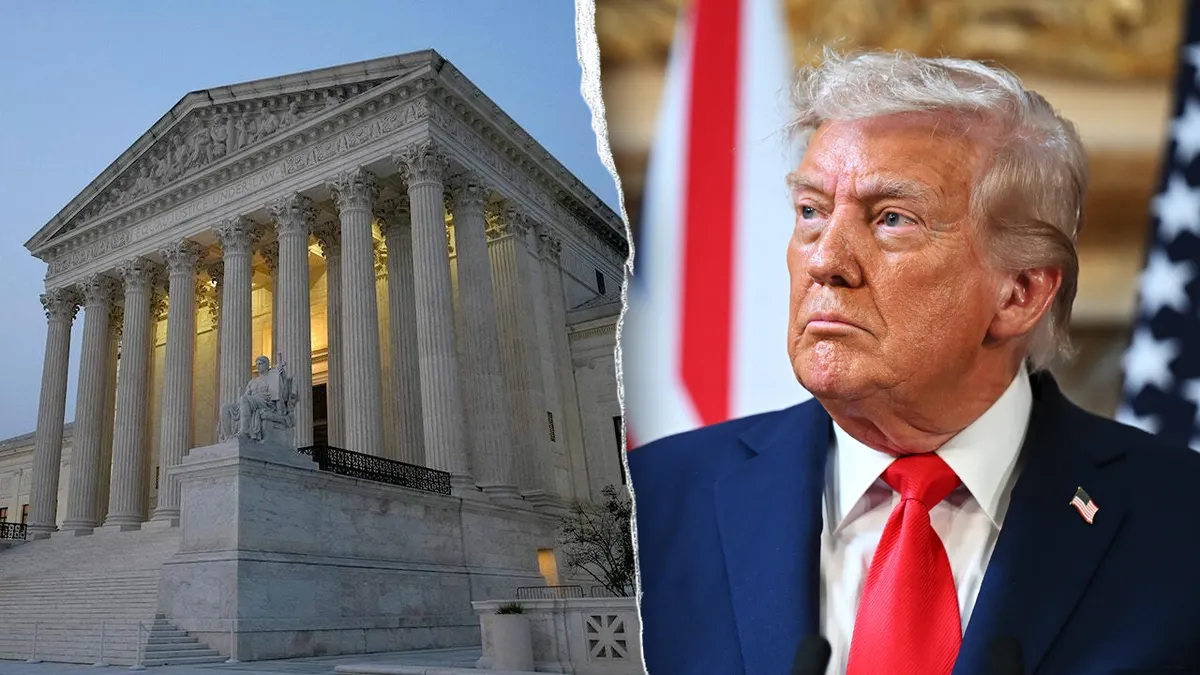

A federal appeals court will hear a major test on Tuesday regarding President Trump's power to install prosecutors without Senate approval. Former FBI Director James Comey and New York Attorney General Letitia James face revived prosecution efforts, which the 4th U.S. Circuit Court of Appeals will review. These cases were dismissed after a judge ruled that the interim U.S. Attorney Lindsey Halligan was unlawfully appointed.
A related dispute with potential nationwide consequences is also being asked by the administration to be taken up by the Supreme Court. Just one week prior, they petitioned the justices to examine a ruling barring Sigal Chattah from leading federal prosecutions in Nevada. The justices have not yet decided whether to hear this case.
These cases arise under different laws but center on the same underlying conflict. The core issue concerns whether an administration can maintain a preferred prosecutor via temporary appointments without obtaining Senate confirmation. Thomas Berry, director of the Cato Institute's Robert A. Levy Center for Constitutional Studies, told the Washington Examiner that judges will focus on incentives.
Berry argued that if a president could continually reset the clock or immediately fire a court's pick, there would be no reason to nominate permanent attorneys. He declared, "You want these prosecutorial decisions to be made by people who have been vetted by the Senate." He added that anyone not vetted should be a placeholder for as limited a time as possible.
Other legal experts say these appointments should fall squarely within the executive branch's authority. Mike Davis, founder of the Article III Project, characterized these disputes as a test of presidential control over the executive branch. He told the Washington Examiner that these cases will decide if the president gets to run his branch.
Davis, a close ally of Trump, argued that if Democratic senators refuse to confirm picks, the president must be able to appoint his own people to acting positions. He believes unelected Democratic judges should not control who runs the Justice Department. This stance supports the view that the president needs full control over his team.
The outcome will determine if the president can protect his team from political opposition in the Senate. If the court rules against the administration, it could block the revival of these high-profile cases. The decision will define the balance of power between the White House and the Senate for years to come.

Senior U.S. District Judge Cameron McGowan Currie, an appointee of former President Bill Clinton, made the initial ruling that dismissed the cases.