

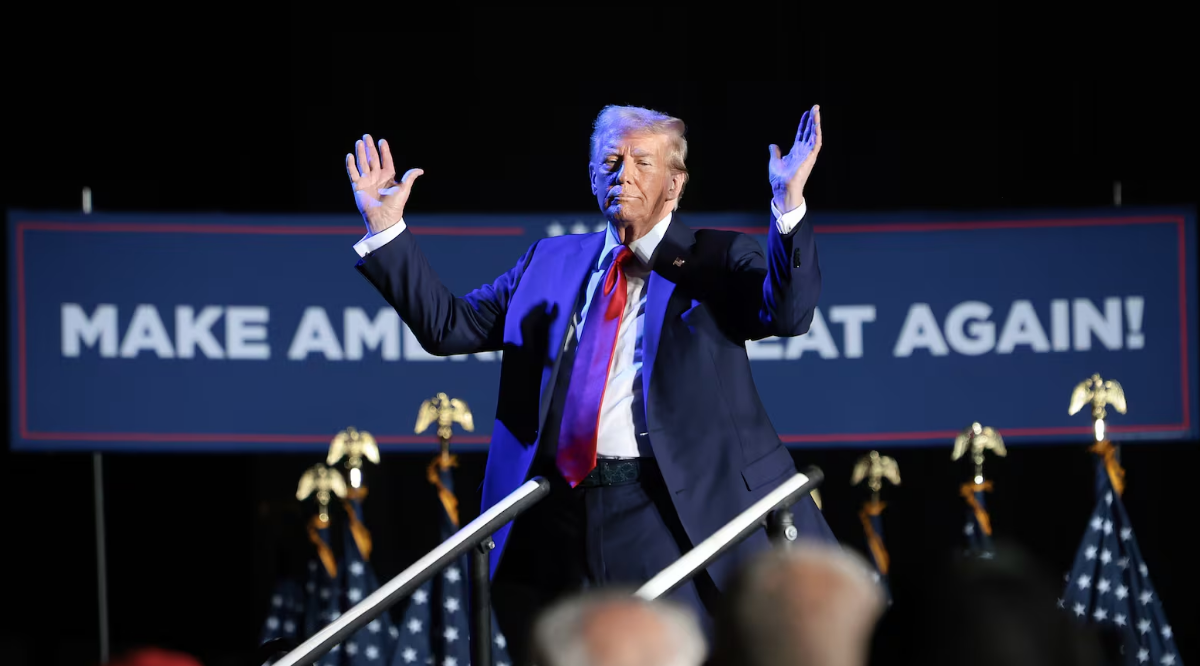

California's election system has been controversial for years, and every election cycle seems to reignite the same debate. Ballots continue arriving and being counted long after Election Day, races remain unresolved for days or even weeks, and critics argue the process creates unnecessary confusion and suspicion among voters. Supporters insist the system is functioning exactly as intended. Opponents see something very different.
That tension surfaced again over the weekend during President Donald Trump's interview with NBC's Kristen Welker on "Meet the Press." The discussion turned to California's lengthy vote-counting process, a subject Trump has repeatedly criticized. The president argued that the media has largely ignored what many voters see as a serious problem.
Welker's response was straightforward: that's simply how California counts votes.
And that's exactly the answer that frustrates critics.
.@POTUS bodies @kwelkernbc on California's pathetic excuse for an election system:
"Do you think it's appropriate that they have an election and five days later they're nowhere close to picking a winner!? They're crooked — just like you're crooked." pic.twitter.com/a4gwNUm7gC
— Rapid Response 47 (@RapidResponse47) June 7, 2026
For many observers, saying "that's how it's done" doesn't address the larger question of why it's done that way in the first place. California routinely takes far longer than most states—and many countries—to produce final election results. While election officials point to mail-in voting rules and ballot-processing requirements, skeptics argue that the prolonged counting period naturally fuels public distrust.
The debate isn't new. It's become a recurring feature of California politics, with critics arguing that the system leaves too much room for uncertainty and creates an environment where voters are left wondering why outcomes remain unresolved long after polls close.
As the interview continued, the exchange between Trump and Welker grew increasingly tense. Eventually, the president appeared to decide he had heard enough.

Trump informed Welker that he was ending the interview.
This is the greatest end of an interview I’ve ever seen. Bar none! 🤣
Trump just didn’t drop the mich, he buried it. Like nuclear dust in Iran. Deep!
This man is Legend. Soak it up. pic.twitter.com/FWaLRbVpKb
— Buzz Patterson (@BuzzPatterson) June 7, 2026
Welker objected, noting that she had traveled all the way to Wisconsin for the conversation. Trump wasn't particularly moved by the complaint. He pointed out that he had already spent roughly an hour speaking with her in rainy conditions and that he, too, had traveled to Wisconsin, albeit for reasons beyond the interview itself.
The setting reportedly wasn't exactly luxurious either. The conversation took place in what appeared to be a barn-like structure while rain fell outside, hardly an ideal backdrop for a lengthy television interview.

But what happened next may end up being the moment that gets remembered.
As Trump wrapped up the interview and prepared to leave, cameras captured him removing his microphone. In a move that immediately caught attention online, he dropped the microphone to the ground before walking away.
That alone would have been enough to generate headlines.
Then came the sequel.
As Welker continued speaking, Trump stepped on the microphone while exiting. The audio reportedly captured the sound, turning what might have been a routine departure into a moment that social media users quickly seized upon.
If this is her being impartial, imagine her face when you leave the seat up pic.twitter.com/NhXSkB5vZ7
— The Drunk Republican (@DrunkRepub) June 8, 2026
A microphone drop is a familiar symbol of finality. A microphone stomp is a different category altogether.
The clip quickly circulated online, with supporters celebrating the moment as a perfect expression of Trump's frustration with both the media and what they view as dismissive responses to legitimate concerns. Critics, meanwhile, saw it as another example of the president's combative relationship with journalists.
Regardless of where people fall on the issue, the visual was unmistakable. The interview ended. The microphone hit the ground. Then the president walked out, leaving behind a visibly stunned host and a clip that immediately became social-media fuel.
For a presidency filled with memorable media confrontations, this one managed to add a new variation to the collection: not just a mic drop, but a mic stomp.