

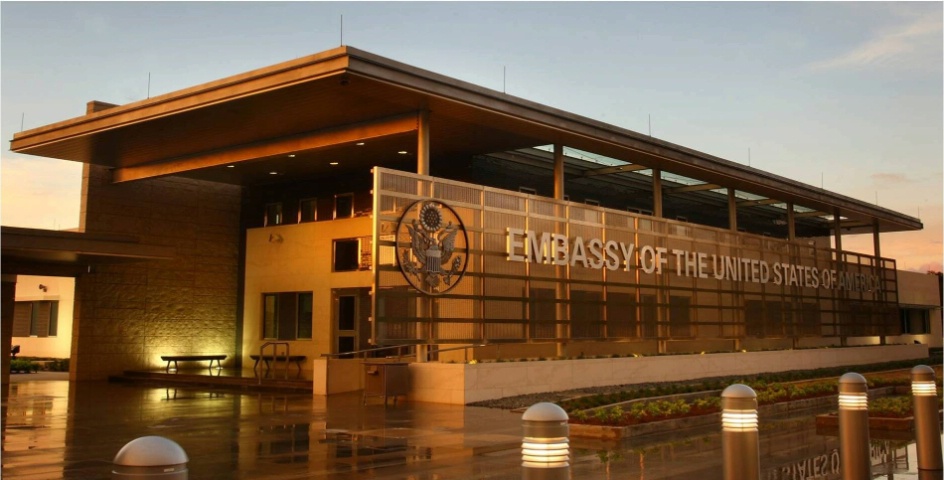

In a sweeping recalibration of American diplomacy, President Donald Trump’s administration has reportedly recalled dozens of career U.S. ambassadors from overseas posts — a striking move that breaks from diplomatic tradition and underscores the White House’s renewed push to realign foreign policy with its “America First” doctrine.
According to multiple sources, including The Associated Press and Politico, at least 29 ambassadors serving in countries across Africa, Asia, Europe, and Latin America received formal notifications beginning December 17, instructing them to vacate their posts by January. These are not political appointees — they are career Foreign Service professionals, many of whom began their assignments under President Joe Biden and were expected to serve full terms. The recalls come not at the start of Trump’s second term, when a clean sweep might be expected, but well into the administration’s tenure — and that timing has raised eyebrows within diplomatic circles.
The Trump administration is recalling nearly 30 career diplomats, including the U.S. ambassador to Sri Lanka, as part of a global reshuffle to align with its “America First” agenda, with Africa, Asia-Pacific, Europe, the Middle East, South Asia, and the Western Hemisphere all… pic.twitter.com/TRmIKYtpOZ
— NewsWire 🇱🇰 (@NewsWireLK) December 22, 2025
A State Department spokesperson attempted to frame the move as routine: “An ambassador is a personal representative of the president and it is the president’s right to ensure that he has individuals in these countries who advance the America First agenda.” That much is technically true. Ambassadors serve at the pleasure of the president. But in practice, career diplomats are usually spared from mass reshuffles, precisely because they are seen as nonpartisan professionals tasked with ensuring continuity in U.S. foreign policy, regardless of the administration in power.
This time, however, continuity is taking a backseat to alignment.
The impact has been felt most heavily in Africa, where ambassadors in 13 countries — including Nigeria, Somalia, and Senegal — are being recalled. Additional changes span the globe: the Philippines and Vietnam in Asia, Slovakia and Montenegro in Europe, and Egypt and Algeria in the Middle East. From Suriname to Sri Lanka, the pattern is clear — this is not a narrow reshuffling but a global repositioning of American diplomatic presence.
What remains murky is the rationale for the timing and scope. While the recalled ambassadors will retain their Foreign Service status and may be reassigned to domestic or future international posts, the lack of clear justification has stirred unease. John Dinkelman, president of the American Foreign Service Association, said diplomats were blindsided, receiving their notices without explanation. He warned that such abrupt transitions could disrupt relationships painstakingly built over years and undermine America’s credibility abroad.
Indeed, diplomatic capital — unlike political capital — is not easily replaced. Ambassadors build trust with foreign leaders, oversee delicate negotiations, and navigate the nuances of bilateral relationships. To withdraw so many, all at once, and without offering replacements or reasons, sends a strong signal: ideological alignment now takes precedence over institutional stability.

This strategy fits squarely within President Trump’s broader effort to recenter U.S. foreign policy around nationalist principles. In past speeches, he’s expressed skepticism toward the career diplomatic corps, often characterizing them as relics of a “globalist” mindset out of sync with American interests. These latest moves put that philosophy into action — systematically replacing even nonpartisan diplomats with voices more likely to echo Trump’s strategic worldview.
The global diplomatic chessboard has just been reconfigured. Who replaces the departing ambassadors — and what values they bring — may determine whether the “America First” agenda reasserts American strength or isolates it further on the world stage.