

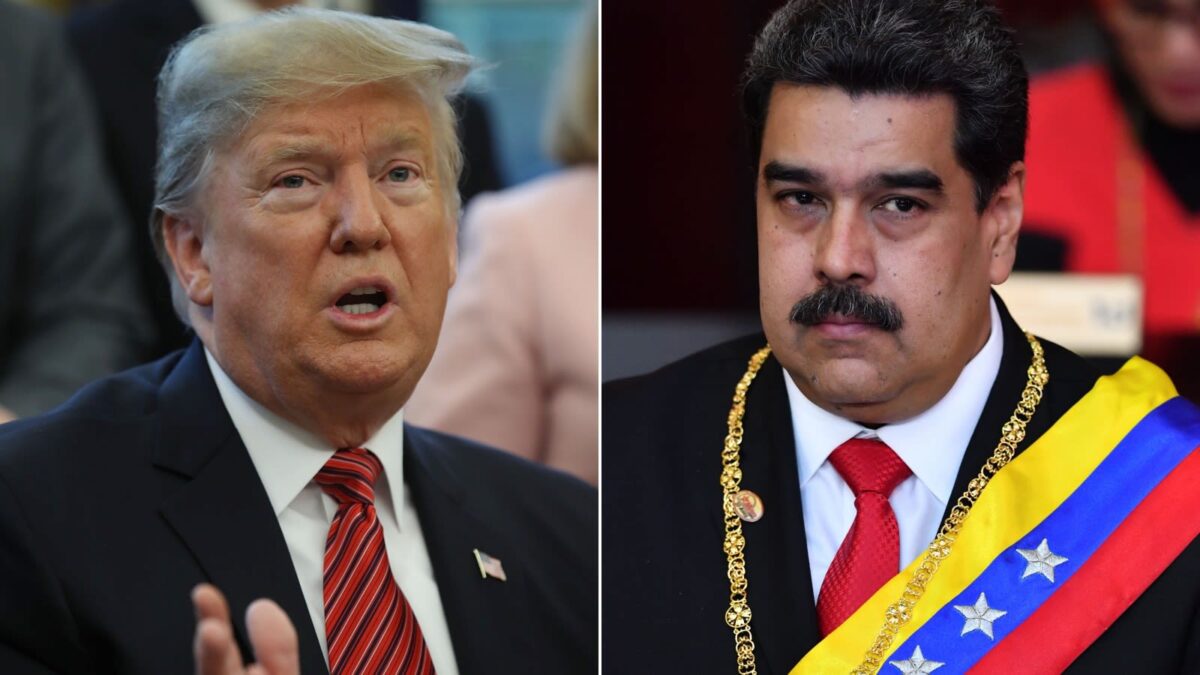

Deportation flights to Venezuela resumed this past Sunday, breaking through a tense diplomatic stalemate that had briefly frozen U.S. efforts to return Venezuelan nationals, including violent gang members, to their home country. The arrival of a flight carrying 199 deportees—among them confirmed members of the infamous Tren de Aragua (TDA) gang—signals that a high-stakes agreement between the Trump administration and the Maduro regime has, at least temporarily, been struck.
The developments mark a significant turning point in a delicate geopolitical dance. President Nicolás Maduro had previously refused to accept deportation flights from the United States after President Trump moved to terminate a key Biden-era oil deal that allowed Chevron to export Venezuelan crude.
The cancellation cut off a vital financial lifeline to Caracas, and in response, Maduro retaliated—grounding repatriation efforts almost entirely. Only four deportation flights had landed in Venezuela since Trump's return to office.
But that standoff appears to have ended with the announcement, late Saturday, from Jorge Rodríguez, president of Venezuela's National Assembly and the government’s lead negotiator. In a statement posted to X, Rodríguez declared that, under the “Return to the Homeland Plan,” Venezuela would resume receiving its nationals, beginning with a coordinated flight on Sunday. And that’s precisely what happened.
Flight data shows a U.S. Immigration and Customs Enforcement (ICE) plane leaving El Paso and arriving at Soto Cano Air Base in Honduras, where it appeared to coordinate a handoff with a Venezuelan Conviasa aircraft. The choreography of the exchange suggests a well-rehearsed, if politically fraught, arrangement between both governments.
The diplomatic breakthrough comes in the wake of stern warnings from Secretary of State Marco Rubio, who had made clear that continued refusal by Venezuela to take back its citizens would result in “new, severe, and escalating sanctions.” Rubio insisted that accepting deportees is not a favor but a legal obligation, and made it clear that any further delays would be met with swift consequences.
This latest flight also follows an extraordinary maneuver last week, when over 200 Venezuelan migrants were flown to a high-security prison in El Salvador—an operation coordinated with Salvadoran President Nayib Bukele, despite a federal judge’s temporary block on such deportations.

The Trump administration proceeded anyway, a move that drew sharp criticism from Caracas. Both Rodríguez and Maduro referred to the deportees held in El Salvador as “kidnapped,” and promised continued efforts to return them to Venezuela.
Still, not everyone is resisting. In his Fox News Radio interview, Rubio thanked Bukele for stepping in. “We are fortunate to have a friend like President Bukele,” he said, noting that El Salvador offered to house the migrants for a fraction of the cost it would take to detain them in U.S. facilities.