


A dispute over a local holiday has erupted in the small Spanish town of Albanchez de Mágina, where Socialist councilors have approved a calendar change that opponents and hundreds of residents say separates the community’s annual celebrations from its centuries-old Catholic traditions.
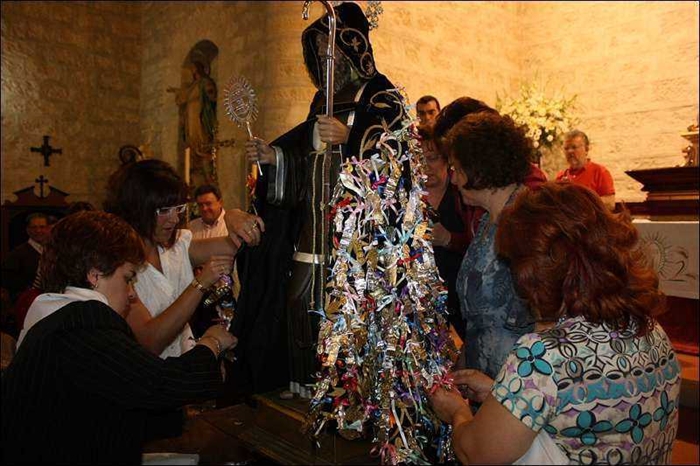
Albanchez de Mágina, an agricultural town of roughly 900 residents in the province of Jaén, Andalusia, has celebrated Saint Francis of Paola, its patron saint, for more than four centuries. The traditional festivities take place from May 3 through May 6, with religious ceremonies and other events concentrated around May 4.
The observances begin on the night of May 3 with the Procession of the Rosary of the Torches, leading into the main events honoring Saint Francis of Paola. Because of the celebration’s historical importance to the community, May 4 has traditionally been designated a local holiday.
Beginning in 2027, however, that arrangement will change.
The town council’s absolute majority from the Spanish Socialist Workers’ Party, or PSOE, approved moving the local holiday from May 4 to April 30. The decision effectively places the municipal day off several days before the traditional early-May religious festivities.
That has drawn a fierce response from the center-right People’s Party, or PP, which accused the Socialist councilors of attempting to separate the town’s celebrations from their Christian foundation.
Mario León, the PP’s local spokesperson, described the decision as “unilateral, authoritarian, and without consensus.” He argued that moving the holiday amounts to an effort to “decouple the festivities from the Christian faith and invent a secular holiday weekend.”

According to the PP, the proposed change had been under consideration since 2025 but was not agreed upon with opposition councilors or the Brotherhood of Saint Francis of Paola.
León also argued that making May 4 a normal working day will have practical consequences for residents who want to participate in the traditional observances. Workers and teachers who previously had the day off could instead be required to work while religious events are underway.
“The Socialist Party’s desire to move it to April 30th and completely separate it from the religious events is solely aimed at severing the festivities from the Christian faith and inventing a weekend of secular holiday,” León wrote.

He called on the mayor to reverse the decision and restore May 4 as the local holiday.
“That is the day [May 4] that corresponds to it by history, tradition and faith, and we request that traditions not be politically instrumentalized for political purposes,” León said.
The PP has pledged to continue challenging the change, saying it will do “everything necessary and knock on every door” to prevent the PSOE from altering the traditional calendar.
The controversy is not confined to the town council.
According to Spanish newspaper ABC, residents have also organized in opposition to the decision. A citizens’ group with approximately 350 members has reportedly formed with the stated purpose of preserving Albanchez de Mágina’s traditions — a substantial number in a municipality of only about 900 people.
Members of the group told ABC that Socialist councilors proceeded with the calendar change despite numerous discussions over the issue during the previous year.
Another local citizens’ group is reportedly preparing a formal motion seeking to annul the decision.