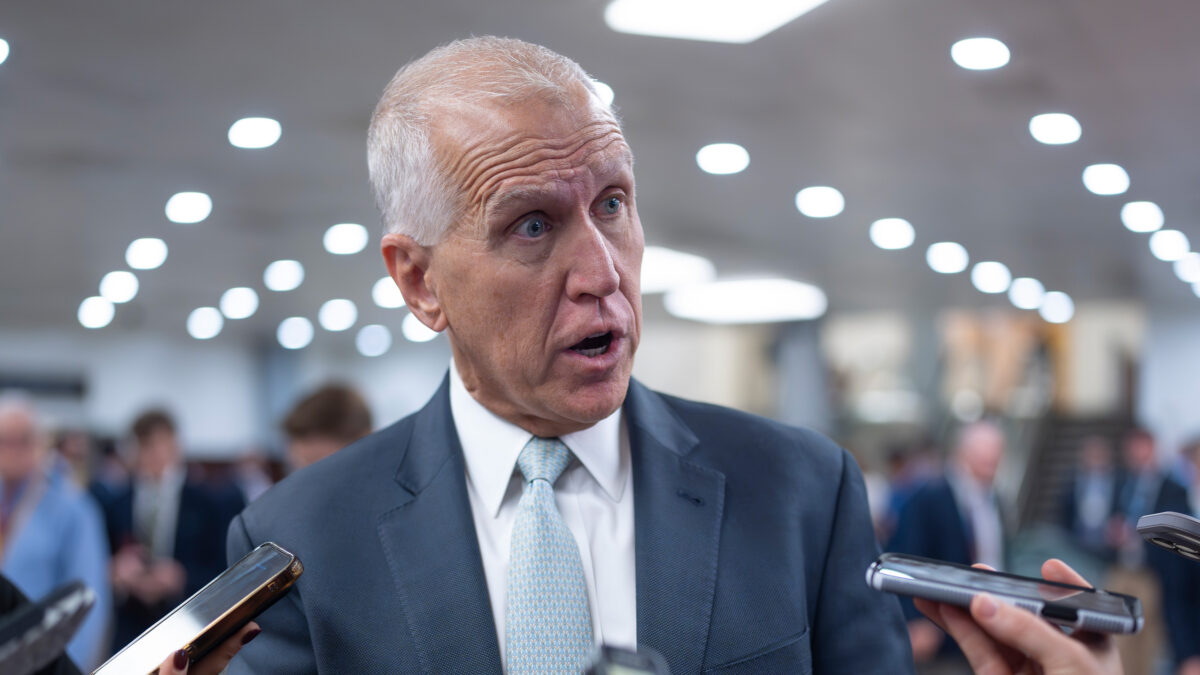

The frustration had been building for months, and by the time Sen. Thom Tillis made it clear he wouldn’t seek re-election, the split between him and much of the Republican base in North Carolina was already out in the open. What followed wasn’t a quiet exit. Instead, it became a drawn-out standoff, with Tillis signaling that his final stretch in the Senate would come with conditions.
Thom Tillis says he'll vote no on Trump's next AG nominee if they don't agree that January 6 was worse than Pearl Harbor, 9/11, and the Trail of Tears in every single facet. pic.twitter.com/U3pt85xX42
— Breitbart News (@BreitbartNews) April 4, 2026
For years, Tillis had managed to hold onto his seat in a state that increasingly demanded alignment with its party base. That balance began to unravel as key votes and political maneuvers drew sharper scrutiny.
His perceived role in opposing Pete Hegseth’s nomination for Secretary of War and resistance to Ed Martin’s potential appointment as U.S. Attorney for Washington, D.C., became focal points for critics who already viewed him as out of step.
Now, the stakes have shifted. With Attorney General Pam Bondi out, attention has turned to who might fill the role and whether that nomination can pass through a narrowly controlled Senate. In that environment, a single senator willing to break ranks carries outsized influence.
Tillis has made it clear that his support will hinge on specific views — particularly surrounding the events of January 6 — setting up a potential flashpoint before a nominee is even announced.
🚨Report: North Carolina Senator Thom Tillis said he will not support any nominee for Attorney General if they make excuses for the January 6th Capitol riot pic.twitter.com/y1PTEX8W5z
— The Calvin Coolidge Project (@TheCalvinCooli1) April 4, 2026
That posture has only deepened tensions. A departing senator typically fades into the background, allowing the party to recalibrate and move forward. Instead, Tillis appears positioned to leverage his remaining time for maximum impact, even if it complicates confirmation efforts.
The underlying issue is less about a single nomination and more about control in a tightly divided chamber. When margins are slim, individual defections aren’t symbolic — they’re decisive. Tillis, no longer accountable to voters in an upcoming race, operates without the usual political constraints, and that reality is shaping how his colleagues and party strategists are approaching the next steps.