

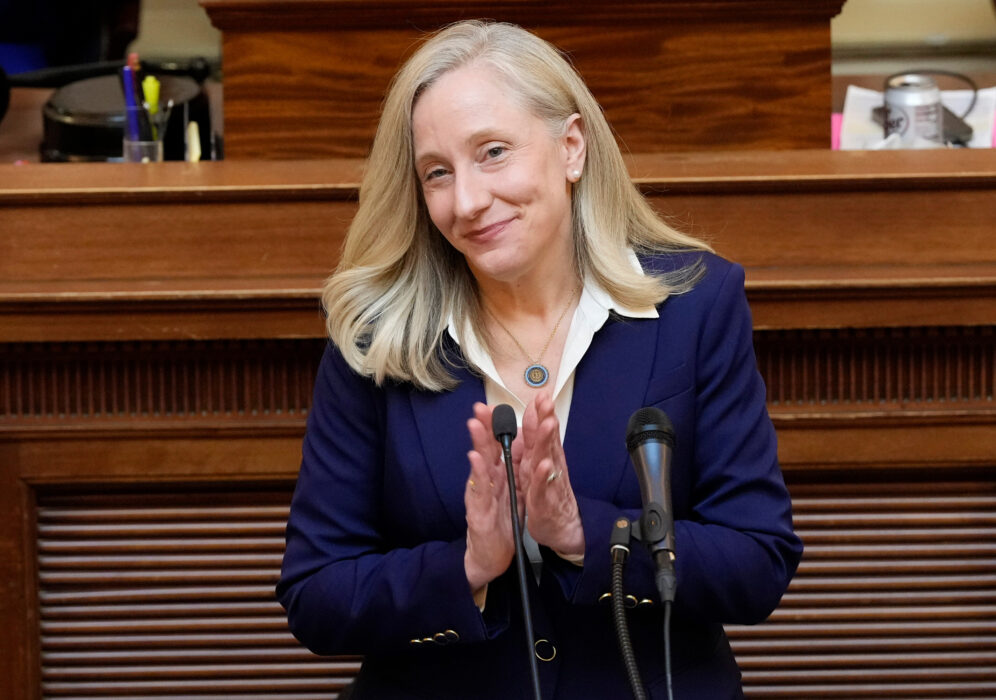

Fresh off what many observers described as a high-energy and unapologetic State of the Union address from President Donald Trump, Democrats turned to Virginia Governor Abigail Spanberger to deliver their official response. The contrast was immediate—and striking.
Trump’s speech leaned heavily into patriotic themes, economic resilience, and a sharp critique of what he characterized as Democratic priorities skewed toward illegal immigration over public safety. By the time he concluded, the tone had been firmly set. Spanberger, stepping into the national spotlight, faced the difficult assignment of reframing the narrative for a party that had just endured a bruising evening.
Abigail Spanberger's counter-SOTU from Williamsburg Va. is triggering. pic.twitter.com/CwBGqdtzI5
— Tim Carney (@TPCarney) February 24, 2026
Her setting alone sparked controversy. Delivering the rebuttal from Colonial Williamsburg’s historic House of Burgesses, Spanberger drew criticism from elements of her own party who questioned the symbolism of the location. The backdrop, steeped in early American history, became an unexpected flashpoint. For a governor newly elected and already navigating tensions within her coalition, the moment carried added pressure.
The substance of her remarks focused heavily on affordability. Spanberger accused the president of pushing “reckless policies” that she claimed were driving up costs for American families. Yet critics were quick to note that her own administration in Virginia has advanced a slate of new taxes, including levies affecting ride-share services, mattress recycling, and food delivery platforms. The affordability argument, therefore, became a point of sharp contrast rather than consensus.
Abigail Spanberger can spare us the sanctimonious bullshit.
For Spanberger, criminal illegals > Americans.
FACT: Weeks after becoming Governor, she swiftly terminated Virginia’s agreement with ICE, halting state law enforcement cooperation with federal immigration enforcement —…
— Rapid Response 47 (@RapidResponse47) February 25, 2026
Immigration proved to be another central dividing line. Spanberger praised what she described as the “brave people of Minnesota” for resisting federal immigration enforcement actions. That praise aligned with her own early executive decision to end Virginia’s cooperation agreement with Immigration and Customs Enforcement. The move effectively halted state-level collaboration with federal authorities on immigration matters, a decision applauded by progressive activists and condemned by opponents who argue it weakens public safety.
The White House responded forcefully, citing her congressional record on border security. During her time in Congress, Spanberger voted against the Secure the Border Act, supported legislative efforts providing pathways to citizenship for millions of undocumented immigrants, and opposed Trump’s national emergency declaration at the southern border. These votes, now resurfacing under the glare of a national audience, form a central part of the Republican critique.
Most SOTU responses are failures; however, the 3-second applause limit on Abigail Spanberger's speech was just downright bad.
— Kevin McKeever (@bankofkev) February 25, 2026
Yet beyond policy specifics, what stood out most during Spanberger’s rebuttal was the presentation. The applause appeared measured, almost choreographed, and the delivery at times seemed tightly scripted. For a speech intended to introduce her to a broader national electorate, the performance carried an air of caution rather than momentum.

Democratic strategists reportedly view Spanberger as a rising figure with potential influence in the 2026 midterms and possibly beyond. The rebuttal was meant to elevate her profile. Instead, it underscored the challenge facing a party attempting to recalibrate its message while navigating internal divisions and a deeply polarized national climate.