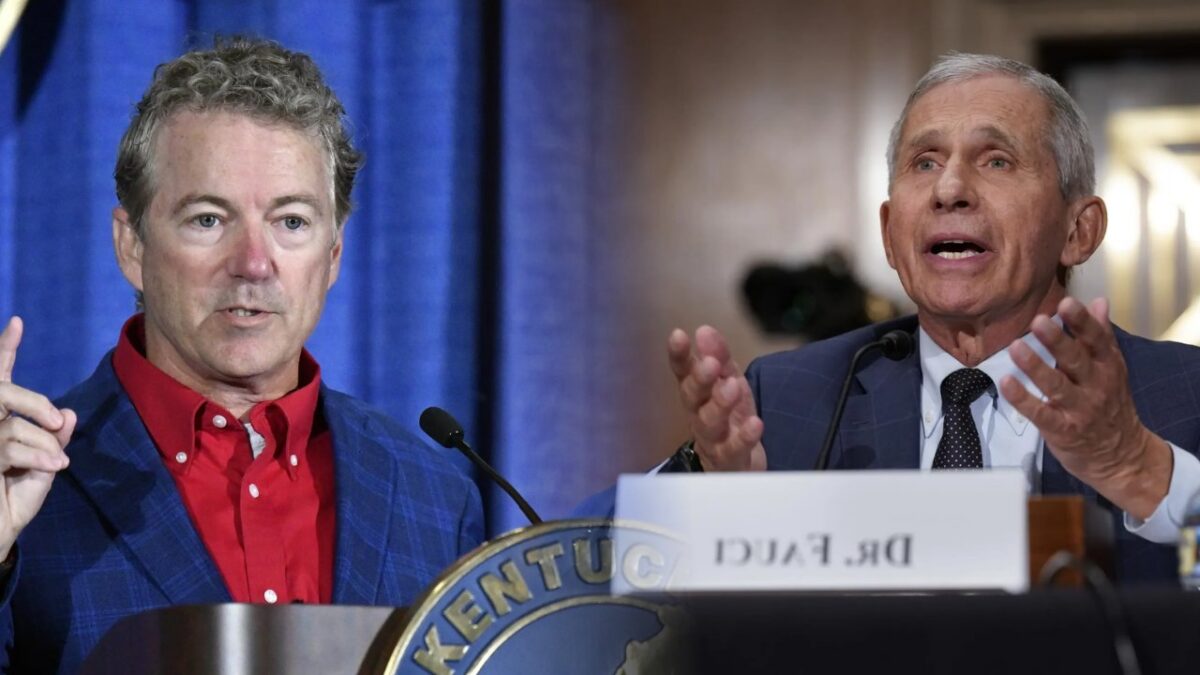

Senator Rand Paul has escalated his long-running confrontation with Dr. Anthony Fauci by issuing a subpoena that will require the former director of the National Institute of Allergy and Infectious Diseases to appear before the Senate Homeland Security and Governmental Affairs Committee next month.
The move follows Fauci's reported withdrawal from a previously agreed voluntary appearance, transforming what might have been a routine hearing into a potentially high-profile showdown over some of the most contentious questions surrounding the COVID-19 pandemic.
Last week, Anthony Fauci notified us he will NOT voluntarily testify before the Senate Homeland Security and Governmental Affairs Committee, even though he had previously agreed to do so.
Therefore, today I have issued a subpoena requiring him to testify before the Committee,…
— Rand Paul (@RandPaul) June 22, 2026
For years, Paul has been one of Fauci's most persistent critics in Congress, repeatedly challenging his testimony, questioning federal funding connected to coronavirus research in China, and pressing for greater scrutiny of the government's pandemic response. The upcoming hearing is expected to revisit many of those disputes, including gain-of-function research, the origins of COVID-19, and allegations that federal officials worked to discourage discussion of the lab-leak theory during the early stages of the pandemic.
The subpoena comes shortly after Director of National Intelligence Tulsi Gabbard announced the declassification of documents related to the government's handling of COVID-19 origin investigations. According to Gabbard, the materials shed new light on discussions involving Fauci, federal agencies, and research funding connected to the Wuhan Institute of Virology.
Today, on my final day as Director of National Intelligence, I’m releasing never-before-seen communications and documents exposing how Dr. Fauci provided millions in US taxpayer dollars to fund dangerous gain-of-function research at the Wuhan lab, worked with politicized elements… pic.twitter.com/ZMdliW4zyS
— DNI Tulsi Gabbard (@DNIGabbard) June 19, 2026
The significance of those documents, however, is likely to become a major point of debate. Critics of Fauci argue they support longstanding concerns about transparency and accountability. Supporters of Fauci have maintained that many allegations against him either mischaracterize the scientific research involved or oversimplify complex questions that remain disputed within the scientific community.
Regardless of where the facts ultimately lead, the declassified records have renewed interest in controversies that many Americans assumed had largely faded into the background.
Paul has repeatedly argued that Fauci provided misleading testimony regarding gain-of-function research. One of the senator's central claims stems from Fauci's 2021 congressional testimony in which he stated that the National Institutes of Health "has not ever and does not now fund gain-of-function research in the Wuhan Institute of Virology."

Dr. Anthony Fauci to @GStephanopoulos: “Wear masks all the time when you're outside. Social distancing, six feet at least. Avoid crowds...There's no question about that so that's something that's not really arguable.” https://t.co/JgCvhTifYS pic.twitter.com/hf4nrSqr0M
— Good Morning America (@GMA) July 28, 2020
Subsequent document releases and internal communications have fueled years of arguments over precisely how gain-of-function research should be defined and whether projects connected to Wuhan fell within that category. Those disagreements have remained at the center of congressional investigations and public debate ever since.
🚨BREAKING🚨
New emails reveal that Dr. Fauci was aware of risky gain-of-function research occurring in Wuhan, China prior to the emergence of COVID-19.
Why didn’t he tell the American people?@COVIDSelect is demanding answers👇 pic.twitter.com/pvxtaCRB5s
— Select Subcommittee on the Coronavirus Pandemic (@COVIDSelect) July 13, 2023
The senator has also focused heavily on Fauci's pandemic-era guidance regarding social distancing and masking. During later congressional testimony, Fauci faced questions about the origins of certain public health recommendations, including the widely promoted six-foot distancing guideline. Critics contend that some recommendations lacked sufficient scientific support, while defenders argue that public health officials were forced to make decisions amid rapidly evolving information during an unprecedented crisis.
The upcoming hearing is expected to revisit those issues in detail.