


The political fallout following the attempted assassination of President Donald Trump and members of his cabinet has unfolded almost as quickly as the incident itself, with reactions hardening along familiar lines. Within hours, a number of prominent voices shifted focus away from the attacker and toward the broader climate of political rhetoric in the United States.
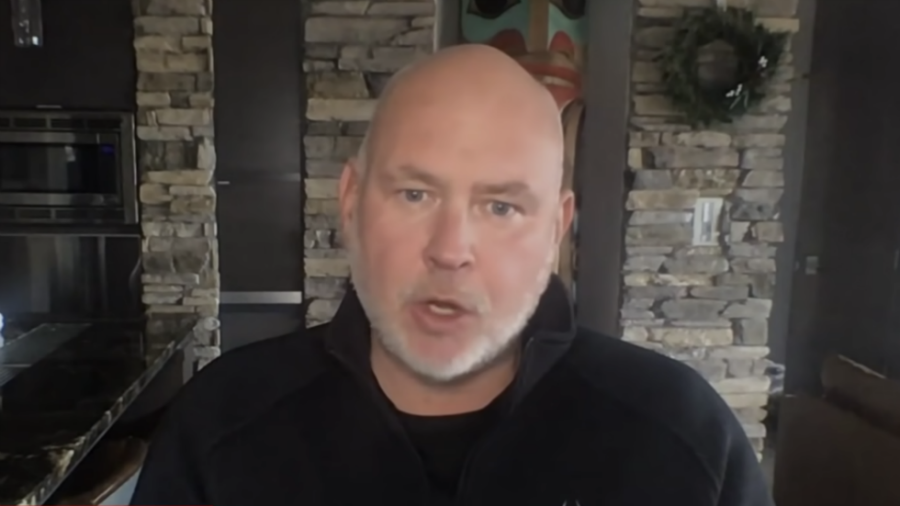
Immediately after a gunman opened fire at the White House Correspondents' Dinner, Lincoln Project co-founder @SteveSchmidtSES blamed President Trump for "poisoning the rhetoric" in America:
"He is a vile and disgusting man." pic.twitter.com/dUG2XrcCDl
— Daily Wire (@realDailyWire) April 26, 2026
Among the most widely circulated responses was from Lincoln Project co-founder Steve Schmidt, who argued that Trump bears responsibility for escalating tensions through his own language over the years. That framing—placing the root cause in rhetoric rather than the individual act—has been echoed in varying forms by commentators and media figures aligned with the political left.
In a new NYT interview, Hasan Piker says that many “understand” Luigi Mangione killing United Healthcare CEO Brian Thompson because Thompson himself was guilty of “social murder” pic.twitter.com/4f9bPdsxU5
— Pirate Wires (@PirateWires) April 22, 2026
At the same time, critics have pointed to statements from influential progressive voices that appear to complicate that argument. Hasan Piker, a popular online commentator, drew attention earlier in the week after discussing the killing of healthcare CEO Brian Thompson in terms that stopped short of outright condemnation. His remarks, particularly references to “social murder,” have been cited by opponents as an example of rhetoric that blurs moral lines rather than clarifying them.
🚨 UPDATE: The attempted Trump assassin Cole Allen BOUGHT ALL the left’s *MAINSTREAM LIES* about President Trump
“I am no longer willing to permit a p*dophile, r*pist, traitor to coat my hands with his crimes”
That’s MAINSTREAM DEMOCRAT LIES
NOT fringe.
NOT a minority.
The… https://t.co/9FOPAqUZLH pic.twitter.com/y9YC3cj1yY
— Eric Daugherty (@EricLDaugh) April 26, 2026
Layered onto this environment are recent comments from late-night television and political leadership. Jimmy Kimmel’s on-air jokes about Trump’s death, delivered just days before the shooting, have resurfaced in the aftermath, drawing scrutiny over tone and timing. Similarly, remarks from House Minority Leader Hakeem Jeffries calling for “maximum warfare” have been interpreted by critics as inflammatory, even if intended in a political, not literal, sense.
This assassin was acting on basic, everyday Democrat talking points. There are tens of millions just like him. People who have been radicalized by left wing anti-Trump arguments. He believed he was a hero & acting logically and morally to kill Hitler & his enablers. https://t.co/YIFVPYxd9c
— Clay Travis (@ClayTravis) April 26, 2026
Investigators are now examining the attacker’s background, including a reported manifesto that suggests he had absorbed a range of political narratives. While the full details remain under review, early indications point to a mix of ideological influences rather than a single, easily defined motive.
Did Jimmy Kimmel, in his fake WHCD routine from a few days ago, really say, "Mrs. Trump, you have a glow like an expectant widow."? Yes, he did. https://t.co/NMcITkp2gVhttps://t.co/68BV3g38Hx
— Byron York (@ByronYork) April 26, 2026
This incident marks yet another in a series of threats and attempts targeting high-profile political figures in recent years, raising persistent concerns about security and the broader climate in which these events occur. Despite the severity of the situation, footage from the scene showed Trump maintaining composure during the chaos, an image that has circulated widely as part of the public response.