

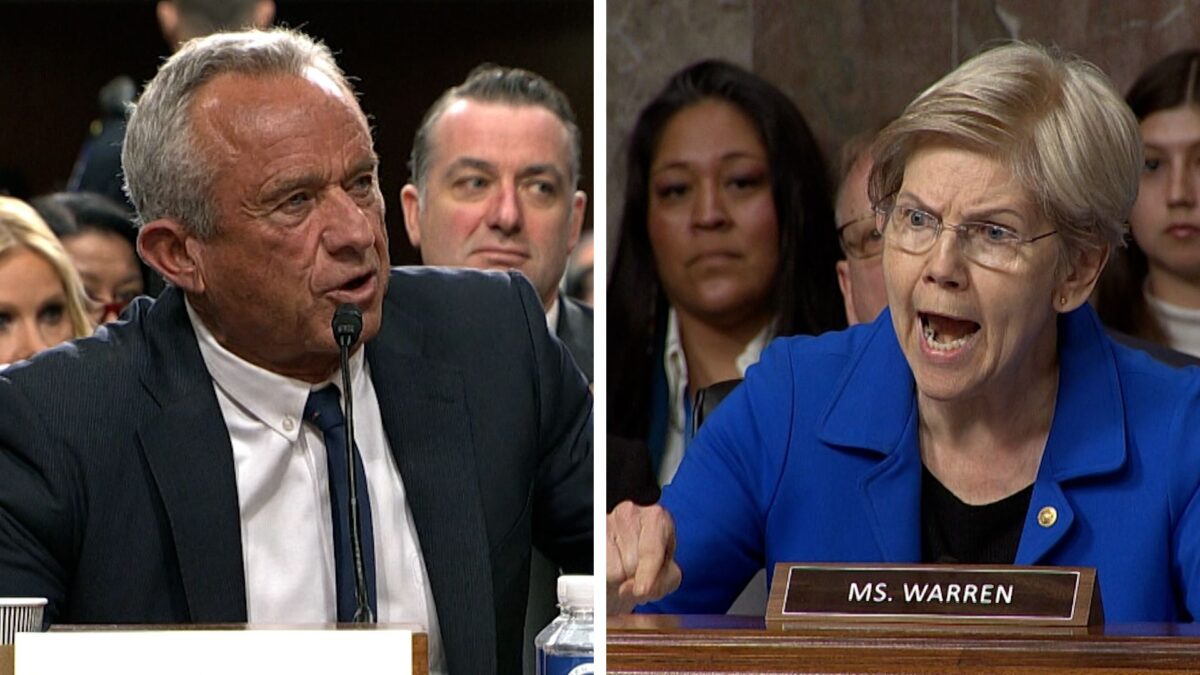

The Senate Finance Committee erupted into sharp exchanges Thursday as Health and Human Services Secretary Robert F. Kennedy Jr. went head-to-head with Democratic senators over COVID-19 vaccine policy — and, in one heated moment, turned the spotlight on Sen. Elizabeth Warren’s financial ties to Big Pharma.
The clash came as Warren pressed Kennedy on his decision to reclassify access to the COVID-19 vaccine. She accused him of breaking a pledge he allegedly made during his confirmation process: that he would not restrict vaccine access. “What you should be doing is honoring your promise,” Warren charged, arguing that Kennedy had undercut public trust.
🚨RFK JR to WARREN: "I know you've taken $855,000 from pharmaceutical companies, Senator!" pic.twitter.com/nALvhID7kc
— Daily Caller (@DailyCaller) September 4, 2025
Kennedy, visibly frustrated, fired back. “I’m not taking them away from people, Senator,” he said. “Most Americans are going to be able to get it from their pharmacy for free.”
He went further, accusing Warren of hypocrisy given her own campaign support. “And I know you’ve taken $855,000 from pharmaceutical companies, senator.”
The figure Kennedy cited comes close to numbers tracked by OpenSecrets, which shows Warren received $818,997 from employees and PACs tied to the pharmaceutical industry during the 2020 election cycle. While Warren has long presented herself as a critic of corporate power and drug companies, Kennedy’s charge suggested that her financial entanglements muddy her credibility on the issue.
The exchange grew even more tense when Democratic Sen. Maggie Hassan accused Kennedy of deliberately limiting vaccine availability for children. Kennedy flatly denied it. “Everybody can get the vaccine … You’re making things up to scare people and it’s a lie,” he shot back. “You are lying right now.”
The backdrop to this showdown is the FDA’s updated guidance, announced in August, which recommends COVID-19 vaccines for anyone over age 65 and for children as young as six months if they have high-risk health conditions. Warren and Hassan framed Kennedy’s approach as an attempt to scale back protections.

Kennedy framed his role differently — as ensuring that government only recommends products supported by clear clinical data. “We’re not going to recommend a product for which there’s no clinical data for that indication,” he said.