

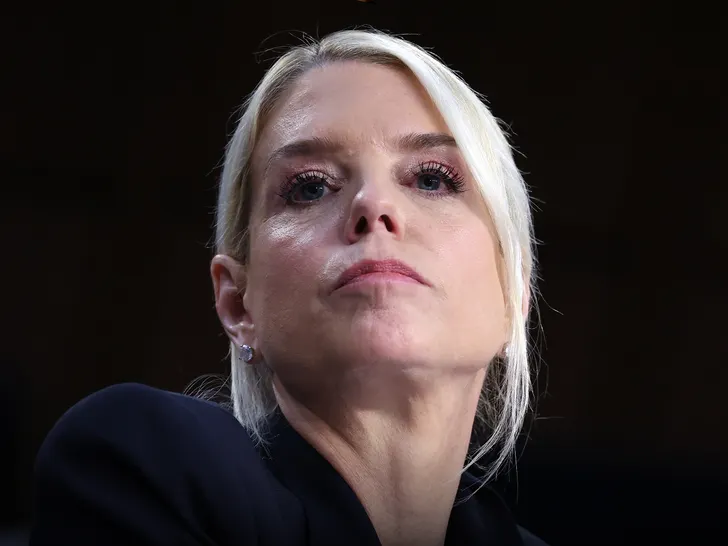

In Washington’s increasingly volatile political climate, the line between public duty and private life for senior government officials is becoming harder to maintain. Attorney General Pam Bondi is the latest example. According to reports, Bondi has recently moved onto a military installation in the Washington, D.C. area after federal investigators warned of credible threats tied to her role at the Justice Department.a
The relocation reportedly occurred within the past month after law enforcement assessed that threats directed at Bondi had escalated enough to raise serious security concerns. While high-ranking officials often receive protective details, moving onto a secure military base represents a significant step that underscores how seriously those threats are being treated.
Bondi’s situation is not unique within the current administration. Several senior figures connected to President Donald Trump’s government have also taken up residence on military installations or other highly secured government housing.
Secretary of State Marco Rubio has reportedly stayed at Fort McNair’s historic “Generals’ Row,” a residential area long used to house senior military leaders. Defense Secretary Pete Hegseth has also resided there, while Homeland Security Secretary Kristi Noem previously stayed in government housing associated with the Coast Guard commandant’s residence before leaving the administration.
The moves reflect a broader pattern developing around Washington’s political leadership. In several cases, security concerns have extended beyond the officials themselves and into their neighborhoods and families. One prominent example involved White House adviser Stephen Miller.
Activists reportedly circulated flyers containing Miller’s home address and organized protests in the Arlington neighborhood where his family lived. The demonstrations prompted concerns for safety and ultimately led the family to relocate to military housing.
Historically, political protests in the United States focused largely on public venues—government buildings, city squares, or organized rallies in parks and civic spaces. Over time, however, some demonstrations have increasingly targeted the private residences of public officials. When that shift occurs, neighbors and family members often find themselves drawn into conflicts they did not choose.

Security experts note that once a public official’s home address becomes widely circulated, the risks can escalate quickly. Organized demonstrations outside private homes can create unpredictable situations, especially when emotions run high in an already polarized political environment.
The controversy surrounding Kristi Noem’s housing arrangement highlighted similar tensions. Critics initially questioned the optics of her staying at the Coast Guard commandant’s residence, but those close to the situation pointed to security concerns. A spokesperson explained that Noem had been extensively targeted and doxxed, making it difficult to safely remain in her personal apartment.