

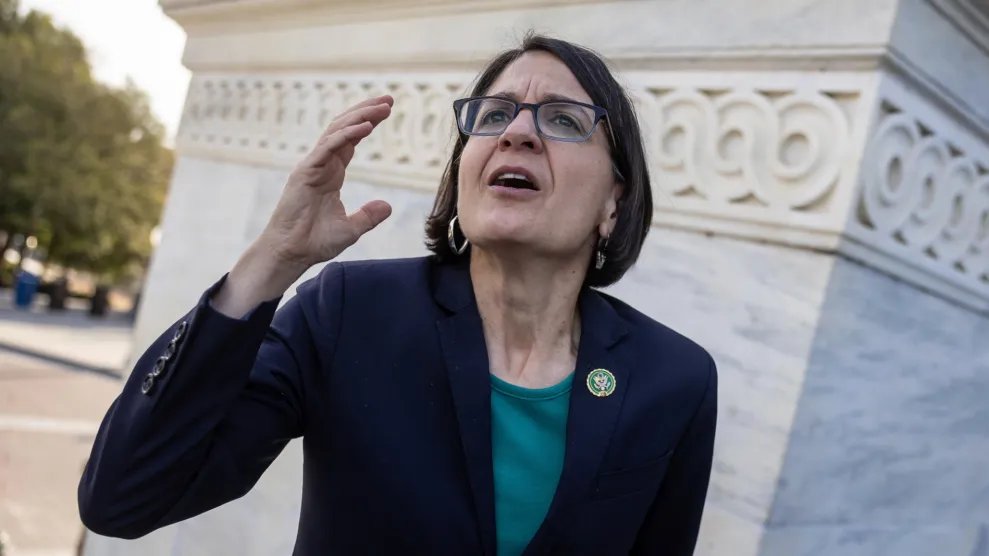

The political temperature in Washington has rarely stayed low for long, but moments like the recent House Judiciary Committee hearing reveal just how combustible the atmosphere has become. What was technically a congressional oversight session featuring Homeland Security Secretary Kristi Noem quickly turned into something else entirely: a stage for political warnings about what may come after the Trump era ends.
.@RepBeccaB to DHS Secy. Noem: "You think you're immune from accountability, but I promise you this: one day, he is not going to be President anymore. He is not going to be in charge. And when that day comes, we will still be here—and we will still be seeking accountability." pic.twitter.com/KnAZkXtUSr
— CSPAN (@cspan) March 4, 2026
Rep. Becca Balint’s brief but pointed exchange with Noem captured the tone. During her allotted two minutes, Balint delivered a message that sounded less like a question and more like a forecast. One day, she said, “he” will no longer be president, and when that day arrives, there will be accountability. The remark was framed as a reminder that political power shifts in Washington, but it also echoed a broader theme circulating among some Democratic lawmakers and activists — the belief that a future Democratic administration could pursue investigations and prosecutions tied to the Trump administration’s policies and personnel.
It sounds like she is saying ahead of time that the Democrats will, once again, use the power of government to punish their political enemies.
— Jim (@Ifitsthisname) March 4, 2026
The setting amplified the moment. C-SPAN’s unfiltered coverage of congressional hearings often provides raw glimpses of political theater, and this exchange was no exception. Lawmakers know the cameras are rolling, the clips will circulate online, and a two-minute statement can quickly become a viral soundbite. In that sense, hearings frequently serve two audiences at once: the officials seated at the witness table and the millions watching from home.
Basically, toe the line or we'll put you in jail. Sounds like what they did to Trump and that didn't work out so well for them.
— roti124 (@Roti_124) March 4, 2026
Balint’s comments also landed amid an ongoing debate about what critics in conservative circles describe as “lawfare” — the use of legal and investigative mechanisms as tools in broader political battles. Supporters of that argument point to past investigations of Trump and his allies as evidence that legal scrutiny has become increasingly intertwined with partisan conflict. Opponents counter that investigations and accountability are part of the normal functioning of government institutions.
Basically, toe the line or we'll put you in jail. Sounds like what they did to Trump and that didn't work out so well for them.
— roti124 (@Roti_124) March 4, 2026
The irony, noted frequently by commentators, is that Trump’s critics spent years describing his presidency — particularly a potential second term — as a “revenge presidency.” Yet moments like the Judiciary Committee exchange highlight how the language of retribution now appears across multiple sides of the political divide.
Another layer to the conversation involves the future leadership of the Republican Party. Some supporters speculate about scenarios in which Vice President JD Vance could eventually lead the ticket after Trump, potentially continuing key figures from the current administration. Whether that speculation proves accurate remains uncertain, but it underscores a deeper reality: both parties are already thinking far beyond the present moment and into the political battles of the next decade.