


It started with a flat denial. Iran said there were no talks with the United States—none at all—despite President Donald Trump openly stating that discussions were underway. Within hours, familiar voices in the media and political circles echoed that denial, taking Tehran at its word without much hesitation.
Then the details began to slip out.
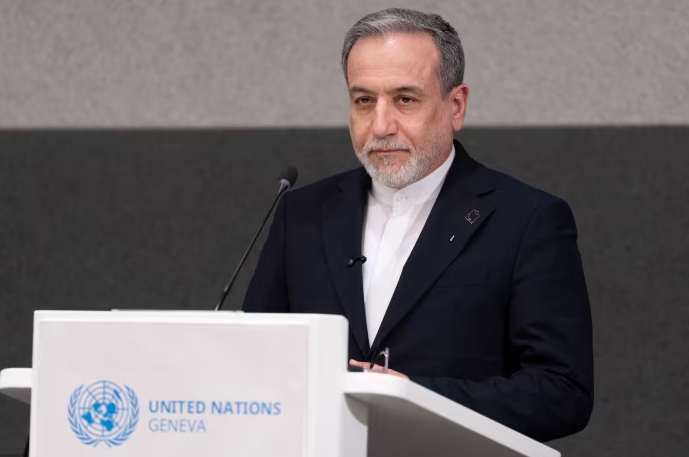
Iranian Foreign Minister Abbas Araghchi attempted to draw a distinction that didn’t hold up under even minimal scrutiny. Messages, he said, were being passed through intermediaries, but that did not constitute negotiations. The wording was careful, but the substance was clear: communication was active, structured, and ongoing. Calling it something else didn’t change the mechanics.
Former CIA Director John Brennan: "I tend to believe Iran more than Donald Trump." pic.twitter.com/W2fPiKmtOf
— TheBlaze (@theblaze) March 24, 2026
That gap between denial and reality narrowed further when Pakistan’s Foreign Minister Ishaq Dar publicly confirmed that indirect talks were in progress. According to Dar, the United States had already delivered a set of fifteen points to Iran, and those points were under consideration. Messages were being relayed through Pakistan, with additional support from countries like Türkiye and Egypt. This wasn’t a vague or casual exchange—it was an organized diplomatic channel with multiple countries involved.
Trump, for his part, added another layer. He stated plainly that negotiations were happening and suggested that Iranian officials wanted a deal but were constrained by internal risks. He also pointed to a tangible development: the passage of oil tankers through the Strait, described as an “oily gift.” That detail carried weight. It suggested coordination and intent, not just passive communication.
There has been unnecessary speculation in the media regarding peace talks to end ongoing conflict in the Middle East. In reality, US-Iran indirect talks are taking place through messages being relayed by Pakistan. In this context, the United States has shared 15 points, being…
— Ishaq Dar (@MIshaqDar50) March 26, 2026
Names began to surface as well. Araghchi was already in the picture, but reports pointed to Iranian Parliament Speaker Mohammad Ghalibaf as another key figure tied to the discussions. Their involvement came with an unusual condition. According to reporting from The Wall Street Journal and Reuters, both men were temporarily spared from potential targeting due to their roles in the negotiations. The pause, described as lasting only a few days, underscored the stakes.
That detail reframed the urgency. If those involved understood that their status depended on ongoing talks, the incentive to keep negotiations alive becomes obvious. The alternative wasn’t abstract. Both the United States and Israel have demonstrated precision in targeting leadership figures, and that capability sits in the background of any such discussion.

What began as a denial unraveled into confirmation, then into specifics. Messages became negotiations. Intermediaries became active participants. And what was initially dismissed as speculation turned into a structured, high-stakes exchange playing out across multiple countries.