


The Sydney synagogue shooting has jolted Australia in ways the country has not experienced in decades. It has also ignited a political and social reckoning — one centered not only on firearms, but on extremism, security policy, and the rise of antisemitism in a country long thought insulated from such violence.
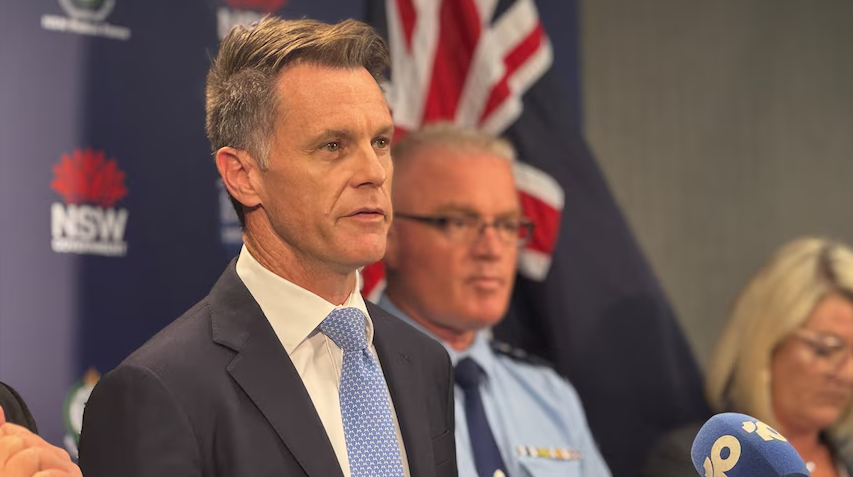
In response to what is now the deadliest mass shooting in Australia in over 30 years, New South Wales Premier Chris Minns has taken the extraordinary step of recalling the state parliament ahead of the holiday recess. On December 22, lawmakers will convene to debate and pass sweeping reforms aimed at tightening gun laws and controlling protests in the wake of terrorism.
The catalyst: the tragic shooting that took place Sunday night at a Hanukkah celebration on Sydney’s Bondi Beach, where alleged gunmen Sajid Akram, 50, and his son Naveed Akram, 24, opened fire on a crowd of Jewish Australians. The attack, which left multiple people dead and at least 22 injured, has reverberated globally — not just for its scale, but for the clear targeting of a Jewish holiday and community.
🚨BREAKING: NSW Premier Chris Minns says Parliament will be recalled on 22-23 December to pass stronger gun laws, including limits on weapon ownership, shotgun reclassifications and reduced ammunition capacity.
He will also explore prohibiting protests about “international… pic.twitter.com/nsaoUzOg9O
— Australians vs. The Agenda (@ausvstheagenda) December 17, 2025
The elder Akram was shot and killed by police at the scene. His son, also wounded, only recently emerged from a coma and remains under armed guard in a Sydney hospital. He is expected to be charged in the coming days. Both men had reportedly traveled to the southern Philippines shortly before the attack — a region notorious for jihadist activity — and Naveed had previously been flagged by Australia’s domestic intelligence services for potential extremist ties in 2019.
In his remarks, Premier Minns acknowledged the magnitude of the situation. "We’ve got a monumental task in front of us," he said, announcing immediate steps to cap firearm ownership, limit access to certain shotguns, and make it more difficult to organize large-scale public protests following terror attacks — a measure aimed at minimizing retaliatory tensions.
But even as reforms are fast-tracked, scrutiny is intensifying.
Prime Minister Anthony Albanese now faces growing criticism for his government’s perceived sluggishness in confronting rising antisemitism, particularly amid the ongoing Israel-Gaza conflict. In a moment of contrition, he vowed to work closely with Jewish communities and “eradicate antisemitism from our society.” Still, questions linger over how Sajid Akram was able to legally obtain the high-powered weapons used in the attack, and why red flags about his son were seemingly dismissed.

Beyond the political aftermath, the human cost is devastating.
Among the victims: Rabbi Eli Schlanger, a father of five and widely respected community figure, and Matilda, a 10-year-old Ukrainian immigrant remembered by her father as “the most Australian name that can ever exist.” Also killed were a Holocaust survivor and a couple who approached the gunmen moments before the violence erupted. The stories emerging from the attack are harrowing, yet also rich with courage.
Police officer Jack Hibbert, on the job for only four months, was shot twice and lost vision in one eye. His family described his actions as “selfless,” saying he continued to protect others even after being wounded. Another hero: Ahmed al-Ahmed, a 43-year-old Syrian immigrant who tackled one of the shooters and was shot for his efforts. He is expected to undergo surgery and has already been praised internationally for his bravery.
President Donald Trump, speaking at a Hanukkah event at the White House, called the shooting a “horrific and antisemitic terrorist attack,” offering prayers for the victims and their families.