

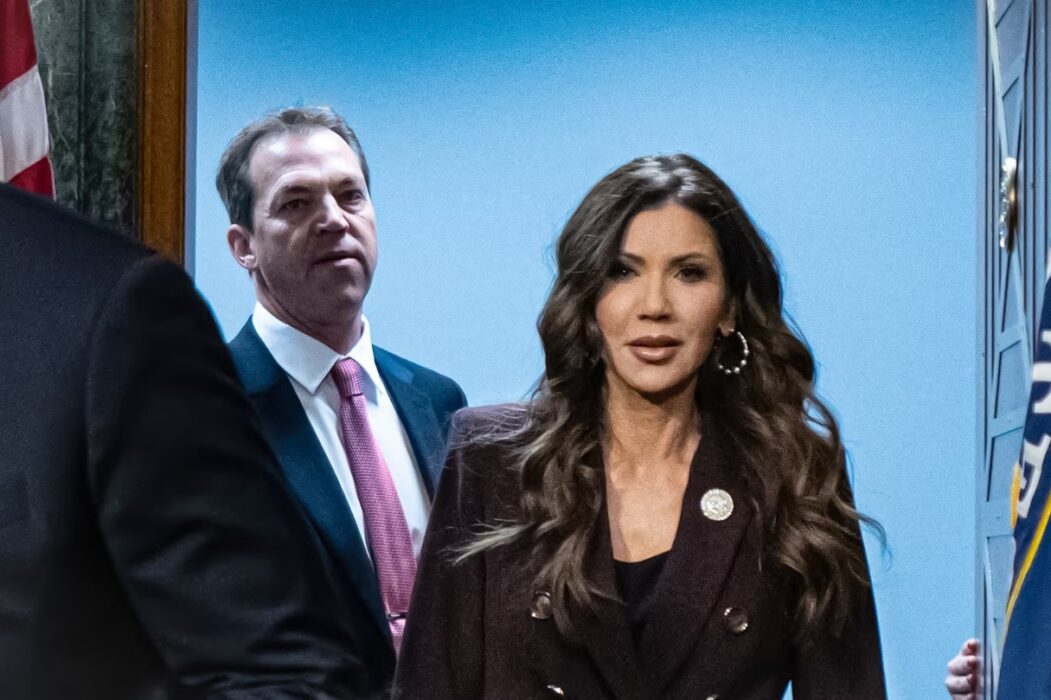

At the center of this controversy is not Kristi Noem herself, but her husband, Bryon Noem, whose alleged online activity—if accurately described—raises concerns that move beyond embarrassment and into the realm of potential vulnerability.
According to the report, Bryon Noem maintained a long-running pattern of interactions with individuals in a niche adult online space, sending money, engaging in explicit conversations, and operating under an alias while still leaving a trail that, over time, pointed back to his real identity. The details outlined are specific: payment records, message logs, and even a voicemail greeting tied to a family business. The publication states it verified images and metadata associated with the activity, placing them within a recent timeframe.
On its own, such behavior would remain a private matter, albeit one with reputational consequences. The complication arises from proximity to power. During the period in question, Kristi Noem was serving as Secretary of Homeland Security, overseeing agencies responsible for border enforcement, intelligence coordination, and domestic security. That context changes the stakes. Any undisclosed activity that could be leveraged for coercion—financial, personal, or reputational—becomes a point of concern in standard security assessments.
The Daily Mail ran the obtained photos of Bryon Noem, husband of Kristi Noem, through special software to check for any signs they had been generated by AI.
Their analysis found, “No evidence of digital tampering, with consistent lighting across the face, chest, fabric &… pic.twitter.com/VCPSnpgiUm
— Marla Hohner (@marlahohner) March 31, 2026
Former intelligence officials and legal experts have long pointed to this exact category of risk during background investigations. Not because of moral judgment, but because undisclosed or concealed behavior can create pressure points. The reporting suggests repeated financial transactions, escalating demands, and at least one instance where frustration from a recipient spilled into public posting before being deleted. That pattern, if accurate, aligns with the kind of exposure security professionals are trained to identify early.
There is also the unresolved question of disclosure. The federal vetting process for cabinet-level positions is designed to surface not only the actions of nominees but also potential liabilities within their immediate circles. Whether this situation was known, partially known, or entirely missed remains unclear. The report leans heavily on the idea that it should have been flagged, but without access to the actual vetting file, that claim remains speculative.
Complicating matters further are the surrounding allegations and rumors referenced in the reporting—claims that exist in the public sphere but remain unverified. Their inclusion adds noise, but also illustrates how quickly multiple narratives can converge once a vulnerability is exposed.
What is not speculative is the strategic value of such information. Intelligence services, criminal networks, and political adversaries routinely exploit personal weaknesses when available. The concern outlined by figures like former spy Jack Barsky follows a familiar logic: access plus leverage equals risk. Whether that risk was ever actively exploited is unknown, but the existence of the potential alone is enough to draw scrutiny.

The response from those involved has been restrained. Donald Trump, when asked, distanced himself from the details. A representative for Kristi Noem described the family as blindsided and asked for privacy. Neither response addresses the underlying national security questions, but both reflect an effort to contain the situation as a personal matter rather than a structural failure.